

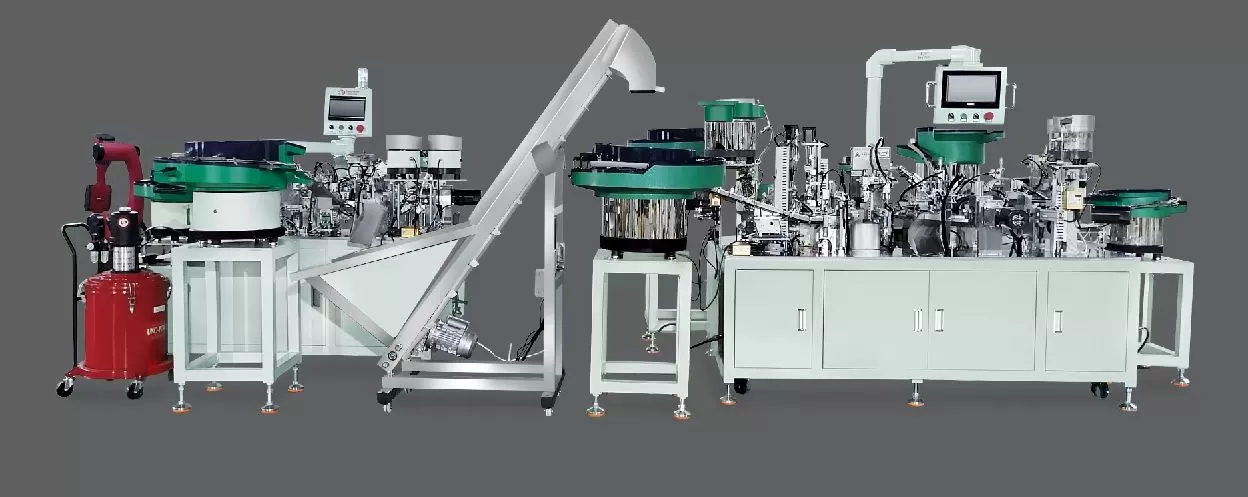
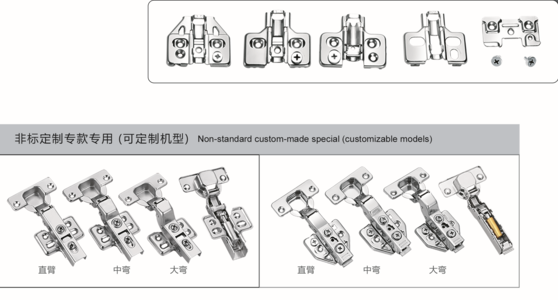
In the dynamic landscape of hinge manufacturing, the demand for enhanced efficiency, precision, and consistency has propelled the adoption of automated solutions. Central to this shift is the automated loading process, a critical component of the Jieyang hinge automatic assembly machine. As a specialized manufacturer of hinge assembly machines, telescopic drawer slide assembly machines, and roll forming machines, Sanyhore has dedicated itself to refining how material handling integrates with production workflows, ensuring seamless and optimized manufacturing.
Key Components of the Automated Loading System
The automated loading process relies on a sophisticated interplay of advanced components, each designed to handle specific stages of material feeding. At its core is a high-precision vibration feeder, which uses controlled oscillatory motion to separate and orient hinge components, ensuring they are fed in the correct orientation. Adjacent to this, a linear conveyor system with adjustable speed settings transports the hinges at a steady pace, while vision sensors mounted along the line verify part alignment and presence, eliminating misfeeds before they reach the assembly machine. A servo-driven pick-and-place mechanism then executes the final transfer, placing each hinge into the machine’s workholding fixture with sub-millimeter accuracy. Together, these components form a system that minimizes downtime and maximizes throughput.
Integration with the Hinge Automatic Assembly Machine
The true potential of the automated loading process lies in its seamless integration with the hinge automatic assembly machine. Through synchronized control systems, the loading unit communicates with the assembly machine’s PLC, adjusting its动作 to match the machine’s production cycle. For example, if the assembly machine pauses for maintenance, the loading system automatically halts to prevent material buildup. Conversely, during peak production, it accelerates to maintain a steady supply, reducing bottlenecks. This integration also enables real-time monitoring: operators can track feed rates, component counts, and potential issues via a user-friendly HMI, ensuring proactive maintenance and quick issue resolution.
Operational Benefits of the Automated Loading Process
Implementing the automated loading process delivers tangible advantages for manufacturers. By eliminating manual handling, it reduces labor costs and the risk of human error, such as misalignment or damage to delicate hinge parts. Production speed increases significantly—with a typical setup, the Jieyang hinge automatic assembly machine can process up to 500 hinges per minute, a marked improvement over manual lines. Additionally, consistent feeding ensures uniform component placement, directly enhancing the quality of the final assembled hinges, including tighter tolerances and fewer defects. Over time, these benefits translate to lower operational costs and higher customer satisfaction.
Technical Considerations for Reliable Performance
To ensure the automated loading process operates reliably, careful attention to technical details is essential. Material compatibility is a key factor: the system must accommodate different hinge materials, such as stainless steel or brass, and handle variations in size and weight. Customizable parameters, like conveyor speed and pick-and-place coordinates, allow the system to adapt to new product specifications without extensive retooling. Regular maintenance, including lubrication of moving parts and calibration of sensors, is also critical to prevent wear and maintain accuracy. Sanyhore addresses these needs through modular design, ensuring the loading system remains flexible and easy to service.
Future Trends in Hinge Assembly Automation
Looking ahead, advancements in automation are set to further enhance the loading process. Artificial intelligence (AI) and machine vision are being integrated to enable adaptive learning, where the system adjusts to minor variations in hinge dimensions or material properties in real time without manual intervention. The rise of Industry 4.0 is also driving the adoption of IoT connectivity, allowing the loading system to share data with other machines on the production floor, enabling predictive maintenance and overall production optimization. As demand for flexible manufacturing grows, automated loading processes will increasingly support multi-variety, small-batch production, making them a cornerstone of modern hinge manufacturing.
Conclusion
The automated loading process is a game-changer for hinge production, and Sanyhore is at the forefront of delivering cutting-edge, reliable solutions. As a professional manufacturer of hinge assembly machines, telescopic drawer slide assembly machines, and roll forming machines, we understand the unique needs of modern manufacturers. Whether you’re looking to upgrade an existing production line or start a new project, our team of experts is ready to provide customized support. Contact us today at +86 13425506550 or via email at info@sanyhore.com to explore how our automated loading systems can elevate your manufacturing capabilities.


