

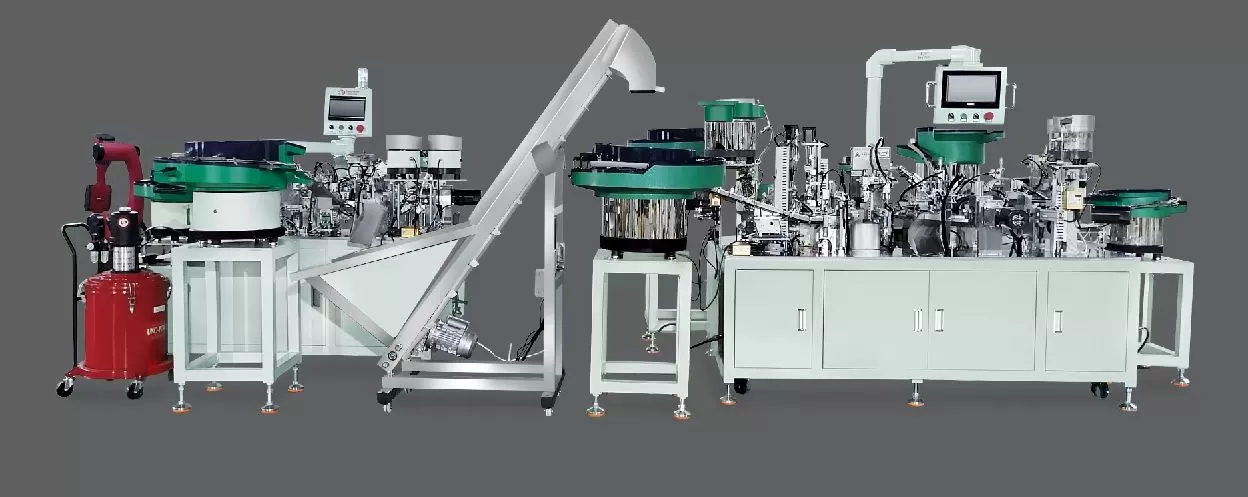
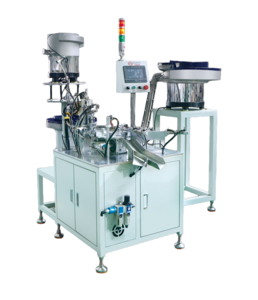
Big data has transformed manufacturing by enabling data-driven decision-making, and its application in automatic assembly machines, such as the Jieyang hinge automatic assembly machine, is no exception. By integrating big data analysis into the assembly process, manufacturers can gain actionable insights, enhance operational efficiency, and reduce production costs. This analysis process involves collecting, processing, and interpreting vast amounts of operational data to optimize machine performance, predict potential issues, and improve product quality. For companies like Sanyhore, a professional manufacturer specializing in hinge assembly machines, telescopic drawer slide assembly machines, and roll forming machines, leveraging big data analysis has become a critical strategy to stay competitive in the industry.
Key Stages of Big Data Analysis for Hinge Automatic Assembly Machines
The big data analysis process for hinge automatic assembly machines follows a structured sequence of stages, each designed to extract meaningful insights from operational data. These stages—data collection, preprocessing, analysis, and application—form a continuous cycle that drives iterative improvements in machine performance and product quality. Understanding each stage is essential for manufacturers looking to fully leverage data analytics in their production lines.
Data Collection: Capturing Operational Metrics in Real Time
Effective big data analysis begins with comprehensive data collection. For the Jieyang hinge automatic assembly machine, sensors are strategically placed throughout the system to monitor critical operational parameters. These include assembly force, positioning accuracy, press duration, and component feeding speed, as well as auxiliary data like material batch information and machine temperature. High-frequency data loggers ensure that each parameter is recorded at regular intervals, creating a detailed timeline of machine behavior. This multi-source data capture provides a complete picture of the assembly process, enabling engineers to identify correlations between variables and machine performance.
Data Preprocessing: Cleaning and Structuring Raw Data
Raw operational data is often unstructured, noisy, or incomplete, making it unsuitable for direct analysis. Data preprocessing transforms this raw data into a clean, structured format. This involves removing outliers caused by sensor errors, interpolating missing values using historical trends, and normalizing data units to ensure consistency. For example, force measurements might be converted from kg to Newtons, and positional deviations from millimeters to percentage of target value. Feature engineering is also performed to highlight relevant variables, such as the relationship between feeding speed and hinge alignment accuracy. Tools like Apache Spark and TensorFlow are used to process large datasets efficiently, ensuring the data is ready for advanced analytics.
Real-time Monitoring and Anomaly Detection
With preprocessed data, real-time monitoring systems continuously analyze the assembly process to identify deviations from normal operation. These systems use statistical methods and machine learning models to flag anomalies, such as sudden spikes in assembly force indicating a misaligned component or a gradual drop in production speed signaling mechanical wear. Anomaly detection algorithms, trained on historical normal operation data, can distinguish between random fluctuations and meaningful deviations. When an anomaly is detected, alerts are sent to operators via the machine’s HMI (Human-Machine Interface), prompting immediate action to prevent quality issues or machine breakdowns.
Predictive Maintenance: Anticipating Machine Failure Proactively
Big data analysis enables predictive maintenance, a proactive approach to equipment upkeep that reduces downtime and repair costs. By analyzing historical data on machine performance, including vibration patterns, temperature readings, and component usage, the system predicts when parts are likely to fail. For instance, analyzing vibration data from the hinge assembly machine’s motor might reveal increasing amplitude, indicating bearing degradation. This insight allows maintenance teams to schedule repairs during planned downtime, ensuring minimal disruption to production. Predictive maintenance not only extends machine lifespan but also optimizes inventory by reducing the need for emergency spare parts.
Optimizing Assembly Parameters Through Data Insights
Beyond monitoring and maintenance, big data analysis optimizes assembly parameters to enhance product quality and efficiency. By correlating operational data with quality outcomes, engineers identify the optimal settings for critical variables. For example, data might show that increasing the press time by 0.15 seconds reduces hinge failure rates by 12%, while adjusting the feeding speed based on material thickness data minimizes alignment errors. This data-driven optimization ensures the assembly process consistently meets quality standards while operating at peak efficiency, reducing waste and rework.
Challenges and Solutions in Big Data Implementation
Implementing big data analysis in hinge automatic assembly machines presents challenges, but with careful planning, these can be overcome. One key challenge is data integration, as different machines and systems may use incompatible protocols. Sanyhore addresses this by designing machines with standardized data interfaces, enabling seamless connection to existing data management platforms. Another challenge is ensuring operators can effectively use the insights generated. The company provides tailored training programs to build data literacy, empowering teams to interpret analytics and make informed decisions. Data security is also prioritized, with encryption and access controls protecting sensitive production information.
Conclusion: Driving Innovation in Hinge Assembly with Big Data
Big data analysis is revolutionizing hinge automatic assembly machine operations, enabling manufacturers to achieve unprecedented levels of precision and efficiency. By following a structured process—from real-time data collection to predictive optimization—companies can transform raw operational data into actionable insights. As a leading manufacturer of hinge assembly machines, Sanyhore is committed to integrating big data capabilities into its solutions, helping clients stay ahead in today’s competitive market. To learn how we can tailor big data analysis to your production needs, contact our sales manager at +86 13425506550 or email info@sanyhore.com. Partner with Sanyhore to unlock the full potential of data-driven manufacturing.


