

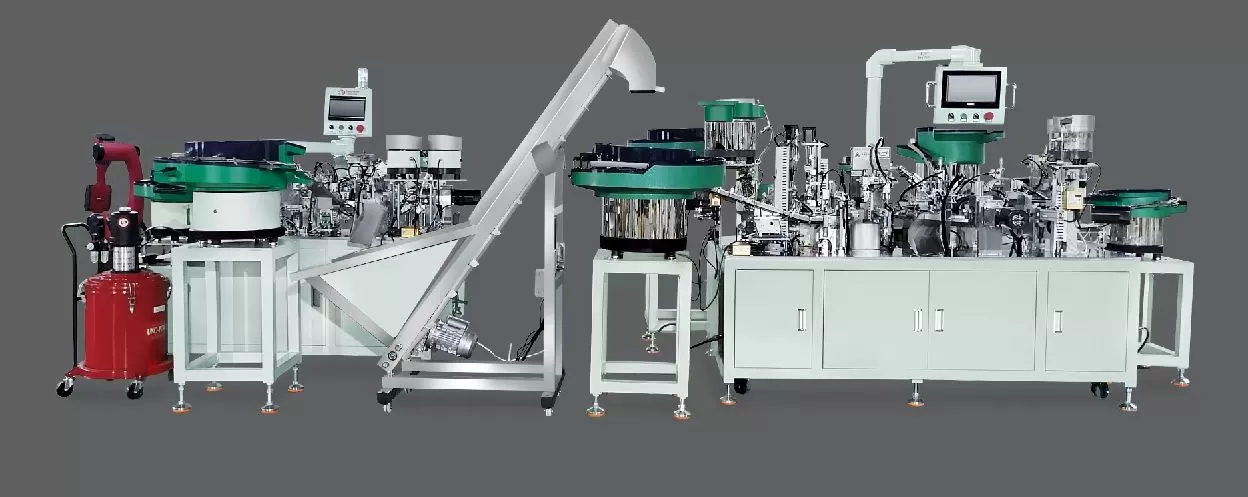
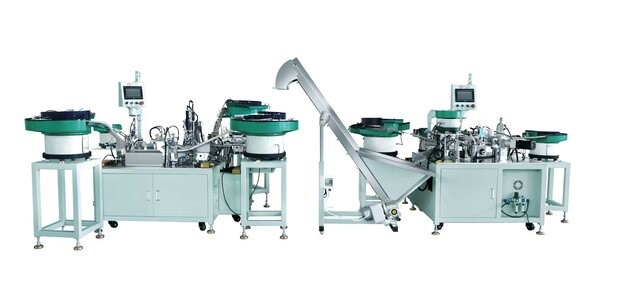
In the fast-paced landscape of hinge production, reliability and efficiency are critical for maintaining operational success. The Jieyang hinge automatic assembly machine, a key piece of equipment in modern manufacturing, relies on robust fault warning systems to prevent unplanned downtime and ensure consistent output. This guide explores the comprehensive fault warning process for such machines, outlining how they detect, analyze, and resolve issues, while highlighting the expertise of Sanyhore—your trusted partner in hinge assembly machine innovation.
Understanding the Core of Fault Warning Systems in Hinge Assembly Machines
A hinge automatic assembly machine’s fault warning process is underpinned by a sophisticated integration of hardware and software. At its core lies a network of sensors strategically placed throughout the machine, including vibration sensors, temperature transmitters, pressure transducers, and vision inspection systems. These sensors continuously monitor critical operational parameters: for instance, vibration levels detect misalignment in moving components, while temperature sensors flag overheating in motors or hydraulic systems. The collected data is processed in real time by a centralized control unit, which compares it against predefined thresholds and operational benchmarks. When a deviation exceeds these limits, the system initiates a warning sequence, ensuring timely intervention before minor issues escalate into major failures.
Key Warning Signals: How the Machine Communicates Issues
Effective fault warning systems translate complex operational data into clear, actionable signals. Common warning indicators include visual alerts on the machine’s HMI (Human-Machine Interface), such as color-coded lights (yellow for caution, red for critical) and text prompts detailing the issue. Audible signals, like beeps or chimes, complement visual cues to ensure operators are aware even in noisy environments. Additionally, modern systems often send notifications via mobile apps or email, allowing remote monitoring and proactive response. For example, an unexpected increase in product defect rates might trigger a vision system alert, while abnormal noise from the gearbox could activate a vibration sensor warning. These signals are designed to be intuitive, guiding operators to identify the root cause quickly.
Step-by-Step Fault Warning Process: From Detection to Resolution
The fault warning process follows a structured sequence to minimize downtime and ensure thorough resolution. First, detection: sensors capture anomalies, and the control unit analyzes the data to confirm if the deviation is genuine (e.g., distinguishing between a temporary blip and a persistent fault). If confirmed, the system classifies the warning as either Level A (immediate shutdown required) or Level B (operational with caution). For Level A warnings, the machine halts automatically, and the HMI displays a detailed error code, such as “E003: Overheating in Bearing Unit.” Operators then follow the resolution protocol: referencing the machine’s manual, using diagnostic tools to isolate the faulty component, and replacing or repairing it as needed. For Level B warnings, operators address the issue during the next maintenance window, with the control unit logging the event for future analysis. Post-resolution, the system resets, and the machine resumes operation.
Proactive Maintenance: Integrating Warning Data for Long-Term Reliability
Beyond reactive resolution, the fault warning process plays a vital role in proactive maintenance. By analyzing historical warning data, manufacturers can identify recurring issues, predict potential failures, and optimize maintenance schedules. For instance, if the system frequently warns of low lubrication in the guide rails, it may indicate a need for adjusted lubrication intervals or a design flaw in the lubrication system. Sanyhore, as a leader in hinge assembly machine production, incorporates advanced data analytics into its machines, allowing users to access detailed reports on warning trends. This data-driven approach transforms the machine from a passive tool into an active partner in operational efficiency, reducing the risk of unexpected breakdowns and extending the machine’s service life.
Why Sanyhore Hinge Assembly Machines Stand Out in Fault Warning
Sanyhore’s hinge automatic assembly machines are engineered with a focus on reliability and user-friendliness, making their fault warning systems a standout feature. Equipped with high-precision sensors and adaptive control algorithms, our machines accurately detect even subtle deviations, ensuring minimal false alarms and reliable alerts. The intuitive HMI design simplifies error interpretation, while seamless integration with digital tools (e.g., remote monitoring via mobile apps) enhances responsiveness. As a professional manufacturer of hinge assembly machines, telescopic drawer slide assembly machines, and roll forming machines, Sanyhore combines technical expertise with a customer-centric approach, offering tailored support to ensure optimal machine performance.
Contact Sanyhore: Your Partner in Hinge Assembly Machine Optimization
For manufacturers seeking to enhance the reliability of their hinge automatic assembly machines, Sanyhore is the ideal choice. Our commitment to innovation and quality ensures that every machine is built to deliver consistent results, with robust fault warning systems that keep production on track. If you’re experiencing issues with your current equipment or looking to upgrade, reach out to our team today. Call +86 13425506550 or email info@sanyhore.com to discuss how we can support your hinge production needs. Trust Sanyhore to keep your assembly line efficient, reliable, and profitable.


