

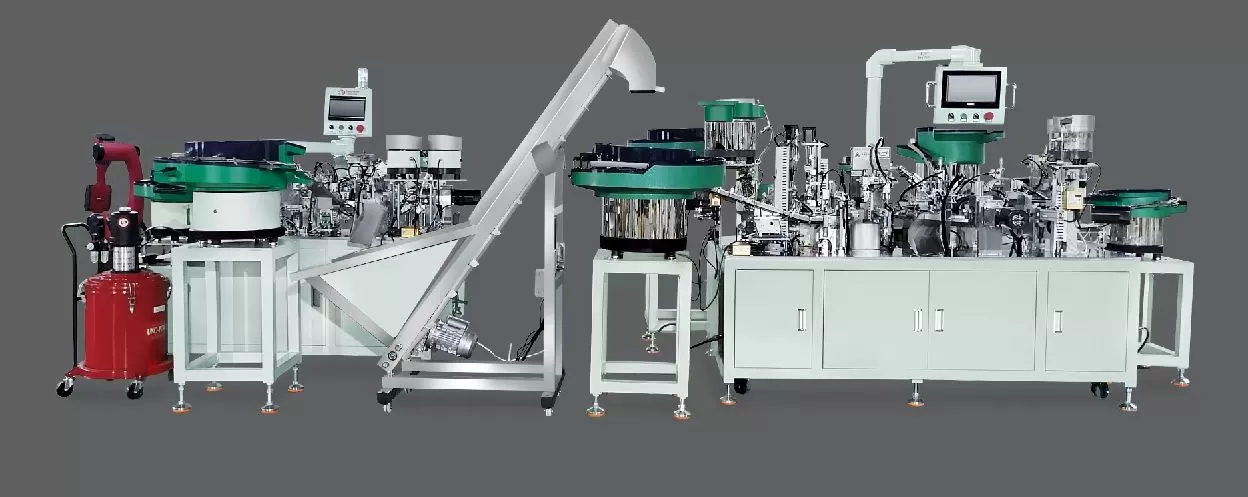
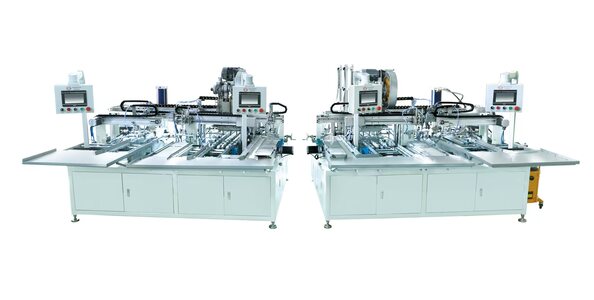
The shift from manual to automated manufacturing isn’t just a technological upgrade—it’s a paradigm shift that redefines operational excellence. For decades, the global manufacturing sector grappled with the limitations of manual production: slow cycle times, inconsistent quality, and rising labor costs, especially as demand for precision components like hinges and drawer slides surged. Recognizing these challenges, Sanyhore, a trusted name in industrial machinery, embarked on a journey to transform its production lines, integrating cutting-edge automation to meet the demands of modern markets. This transition wasn’t merely about adopting new tools; it was about reimagining how manufacturing could deliver speed, precision, and scalability—all while staying true to the core values of quality and reliability that define the industry.
The Pain Points of Manual Production: When Speed and Consistency Clashed
Before automation, Sanyhore’s manual production relied on skilled operators assembling hinges and telescopic drawer slides by hand. While this approach worked for small-scale orders, it hit a wall as client demands grew more stringent. “Manual assembly led to bottlenecks in our production line,” recalls a senior engineer at Sanyhore. “Each hinge or slide required precise alignment, but human error—even minor—affected consistency. A single misaligned component could compromise the entire batch, leading to rework, delays, and higher material waste.” As the market expanded, with clients across industries—from furniture to automotive—needing faster turnarounds and tighter quality standards, manual methods became unsustainable, forcing Sanyhore to seek a more robust solution through automation technology, including its own hinge assembly machine and telescopic drawer slide assembly machine.
The Decision to Automate and the First Steps of Transformation
Sanyhore’s leadership analyzed industry trends and operational data to justify the automation investment. “We realized that to scale without sacrificing quality, we needed machines that could replicate human precision but with the speed and consistency machines offer,” explains the company’s Production Director, Mr. Zhang. The first step was to identify which processes were most critical for automation. Hinge assembly, with its intricate pin insertion and alignment, and telescopic drawer slide assembly, involving multiple components that must glide smoothly, were top priorities. Sanyhore partnered with engineering experts to develop tailored automated systems, including a specialized hinge assembly machine that uses robotic arms for component placement and vision systems for real-time quality checks, and a telescopic drawer slide assembly machine that integrates feeding, crimping, and testing modules into a single, continuous process.
Building the Automated Production Line: Integrating Cutting Technology
The heart of Sanyhore’s transformation lies in its integrated automated production line, which includes not only assembly machines but also a roll forming machine for producing high-precision slide rails. Roll forming, a process that shapes metal sheets into complex profiles with minimal waste, was critical for ensuring the structural integrity of telescopic slides. By combining these machines—all designed and manufactured in-house—Sanyhore created a seamless workflow. “Our roll forming machine, for example, can produce slide rails at 20 meters per minute, a rate 15 times faster than manual bending,” notes Mr Zhang. “And the hinge assembly machine reduces cycle time by over a third, while cutting defect rates to less than one percent.” This integration eliminated manual handling between stages, further reducing errors and boosting overall efficiency.
The Ripple Effects: Quality, Cost, and Client Satisfaction
The impact of automation has been transformative for Sanyhore and its clients alike. On the production side, cycle times have dropped by 40%, allowing the team to fulfill larger orders without expanding the workforce, and material waste has decreased by nearly 25% due to the precision of automated cutting and assembly. On the client side, the consistency of the final products—hinges that open and close smoothly, slides that withstand heavy use—has led to repeat orders and referrals. “Clients now trust us for on-time delivery and uniform quality, even for large batches,” says Mr. Li, Sales Manager at Sanyhore. “Our automated systems ensure that every hinge and slide meets the exact specifications, whether it’s for a luxury furniture brand or a commercial cabinetry manufacturer.”
Looking Forward: Sustaining Innovation and Client Collaboration
Sanyhore’s manufacturing revolution isn’t a destination but a journey. The company continues to invest in R&D to enhance its automated systems, exploring AI-driven predictive maintenance to minimize downtime and integrating IoT sensors for real-time production monitoring, which will further refine its hinge assembly and slide assembly processes. “We believe automation is just the start,” Mr Zhang adds, “and we’re committed to collaborating with clients to develop custom solutions that align with their unique needs.”
For inquiries about Sanyhore’s automated manufacturing solutions—including hinge assembly machines, telescopic drawer slide assembly machines, and roll forming machines—contact Sales Manager Mr. Li at + +86 134


