
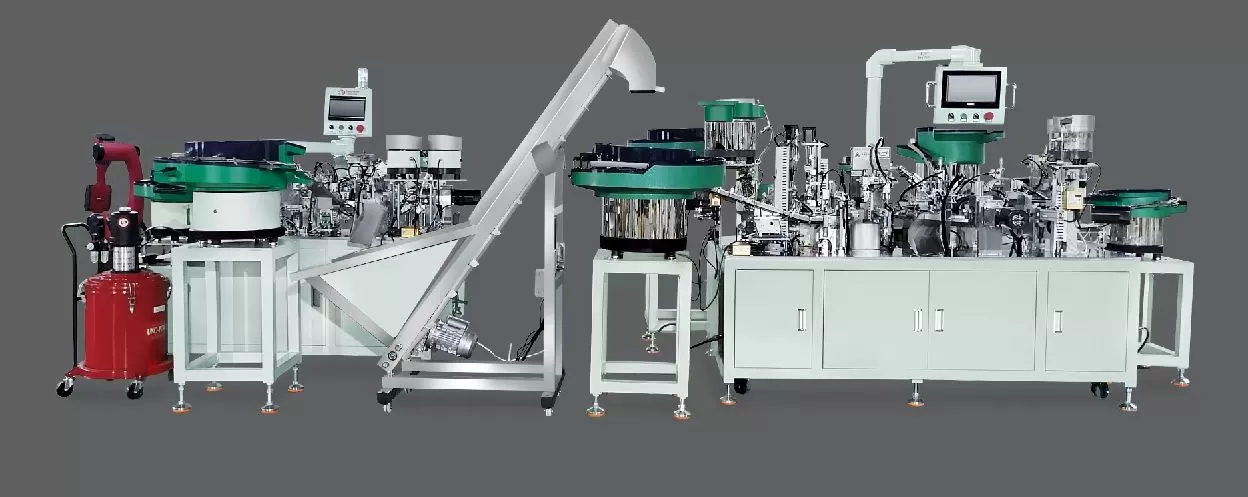
From Traditional to Transformational Manufacturing

2025-12-10


The manufacturing industry stands at a critical inflection point, where the line between conventional and cutting-edge production is blurring rapidly. Traditional manufacturing, rooted in manual labor, standardized processes, and limited data integration, has long been the backbone of industrial output. However, today’s market demands—for faster turnaround, greater customization, and enhanced sustainability—are forcing a fundamental shift. This transition, from traditional to transformational manufacturing, is not merely an upgrade but a complete reimagining of how products are designed, produced, and delivered. It hinges on integrating advanced technologies, fostering data-driven decision-making, and prioritizing adaptability. For businesses aiming to stay relevant, this shift is no longer optional; it’s a necessity.

The Limitations of Traditional Manufacturing

Traditional manufacturing often operates within rigid frameworks. Production lines rely heavily on manual labor, leading to inconsistencies in quality and output. Workers, despite their skill, are prone to human error, especially in repetitive tasks like assembling components. This not only increases defect rates but also extends production cycles, making it hard to meet tight deadlines. Additionally, traditional systems lack real-time data visibility. Managers depend on post-shift reports, which means issues are identified too late to prevent delays or losses. Inventory management is another challenge—excess stock ties up capital, while stockouts disrupt operations. In an era where consumers expect personalized products, traditional batch-and-queue methods struggle to scale, limiting growth potential.

The Catalysts Driving Transformational Shift

Several forces are propelling the shift to transformational manufacturing. Global competition has intensified, with players worldwide vying for market share, driving the need for operational efficiency. Consumer expectations have evolved too; today’s buyers demand tailored products, shorter lead times, and transparent supply chains. Technological advancements, particularly in automation, AI, and IoT, have made transformation feasible and affordable. For instance, the rise of Industry 4.0 has introduced smart factories where machines communicate, data is collected in real time, and decisions are optimized. Sustainability is another key driver—governments and consumers increasingly prioritize eco-friendly production, pushing manufacturers to reduce waste and energy consumption. Together, these factors create a compelling case for change.

Key Technologies Powering the Transformation

At the heart of transformational manufacturing lies a suite of technologies that redefine production. Automation, in the form of collaborative robots (cobots) and automated machinery, handles repetitive tasks with precision, reducing human error and freeing workers for creative or complex roles. Computer-Aided Design (CAD) and Computer-Aided Manufacturing (CAM) systems streamline product development, enabling faster prototyping and iteration. Data analytics and the Internet of Things (IoT) connect machines to central systems, allowing predictive maintenance, real-time quality checks, and performance tracking. AI further enhances this by analyzing data to identify bottlenecks, optimize workflows, and even predict demand. These technologies collectively turn manufacturing from a linear process into a dynamic, interconnected ecosystem.

Benefits of Embracing Transformational Manufacturing

The rewards of this shift are substantial. For starters, efficiency soars. Automated assembly lines reduce production time by up to 50% compared to manual operations, while data-driven insights cut waste by minimizing defects and rework. Customization becomes manageable, as flexible systems can adapt to small-batch or one-off orders without significant setup costs. Agility improves too—factories can quickly adjust to market changes, whether scaling up for peak demand or pivoting to new product lines. Quality control becomes proactive, not reactive, with real-time monitoring catching issues before they impact output. Over time, these improvements translate to lower costs, higher customer satisfaction, and a stronger competitive edge in the global market.

Sanyhore: Your Partner in Manufacturing Evolution

To successfully navigate this transition, manufacturers need reliable, innovative equipment that integrates seamlessly into their operations. Sanyhore, a trusted name in manufacturing solutions, specializes in creating cutting-edge machinery tailored for transformation. Our range includes advanced hinge assembly machines, engineered to automate component joining with precision and consistency, reducing manual effort by 60% and boosting throughput by 40%. For those in the furniture or automotive sectors, our telescopic drawer slide assembly machines combine high-speed production with adaptive control systems, ensuring every slide meets exacting standards. Additionally, our roll forming machines offer efficient, continuous production of metal components, ideal for scaling up operations while maintaining quality.

At Sanyhore, we understand that transformation is a journey, not a destination. That’s why we work closely with clients to design solutions that align with their unique goals, whether upgrading existing lines or building new smart factories. Our commitment to innovation means our machines are built with the latest technologies—AI-driven diagnostics, IoT connectivity, and modular designs—ensuring long-term reliability and adaptability. Ready to leave traditional manufacturing behind and embrace the future? Contact us today at +86 13425506550 or via email at info@sanyhore.com to discuss how we can help your business evolve. The future of manufacturing is transformational—let’s build it together.

We use cookie to improve your online experience. By continuing to browse this website, you agree to our use of cookie.

Cookies

Please read our Terms and Conditions and this Policy before accessing or using our Services. If you cannot agree with this Policy or the Terms and Conditions, please do not access or use our Services. If you are located in a jurisdiction outside the European Economic Area, by using our Services, you accept the Terms and Conditions and accept our privacy practices described in this Policy.
We may modify this Policy at any time, without prior notice, and changes may apply to any Personal Information we already hold about you, as well as any new Personal Information collected after the Policy is modified. If we make changes, we will notify you by revising the date at the top of this Policy. We will provide you with advanced notice if we make any material changes to how we collect, use or disclose your Personal Information that impact your rights under this Policy. If you are located in a jurisdiction other than the European Economic Area, the United Kingdom or Switzerland (collectively “European Countries”), your continued access or use of our Services after receiving the notice of changes, constitutes your acknowledgement that you accept the updated Policy. In addition, we may provide you with real time disclosures or additional information about the Personal Information handling practices of specific parts of our Services. Such notices may supplement this Policy or provide you with additional choices about how we process your Personal Information.


Cookies

Cookies are small text files stored on your device when you access most Websites on the internet or open certain emails. Among other things, Cookies allow a Website to recognize your device and remember if you've been to the Website before. Examples of information collected by Cookies include your browser type and the address of the Website from which you arrived at our Website as well as IP address and clickstream behavior (that is the pages you view and the links you click).We use the term cookie to refer to Cookies and technologies that perform a similar function to Cookies (e.g., tags, pixels, web beacons, etc.). Cookies can be read by the originating Website on each subsequent visit and by any other Website that recognizes the cookie. The Website uses Cookies in order to make the Website easier to use, to support a better user experience, including the provision of information and functionality to you, as well as to provide us with information about how the Website is used so that we can make sure it is as up to date, relevant, and error free as we can. Cookies on the Website We use Cookies to personalize your experience when you visit the Site, uniquely identify your computer for security purposes, and enable us and our third-party service providers to serve ads on our behalf across the internet.

We classify Cookies in the following categories:
 ●  Strictly Necessary Cookies
 ●  Performance Cookies
 ●  Functional Cookies
 ●  Targeting Cookies


Cookie List
A cookie is a small piece of data (text file) that a website – when visited by a user – asks your browser to store on your device in order to remember information about you, such as your language preference or login information. Those cookies are set by us and called first-party cookies. We also use third-party cookies – which are cookies from a domain different than the domain of the website you are visiting – for our advertising and marketing efforts. More specifically, we use cookies and other tracking technologies for the following purposes:

Strictly Necessary Cookies
These cookies are necessary for the website to function and cannot be switched off in our systems. They are usually only set in response to actions made by you which amount to a request for services, such as setting your privacy preferences, logging in or filling in forms. You can set your browser to block or alert you about these cookies, but some parts of the site will not then work. These cookies do not store any personally identifiable information.

Functional Cookies
These cookies enable the website to provide enhanced functionality and personalisation. They may be set by us or by third party providers whose services we have added to our pages. If you do not allow these cookies then some or all of these services may not function properly.

Performance Cookies
These cookies allow us to count visits and traffic sources so we can measure and improve the performance of our site. They help us to know which pages are the most and least popular and see how visitors move around the site. All information these cookies collect is aggregated and therefore anonymous. If you do not allow these cookies we will not know when you have visited our site, and will not be able to monitor its performance.

Targeting Cookies
These cookies may be set through our site by our advertising partners. They may be used by those companies to build a profile of your interests and show you relevant adverts on other sites. They do not store directly personal information, but are based on uniquely identifying your browser and internet device. If you do not allow these cookies, you will experience less targeted advertising.

How To Turn Off Cookies
You can choose to restrict or block Cookies through your browser settings at any time. Please note that certain Cookies may be set as soon as you visit the Website, but you can remove them using your browser settings. However, please be aware that restricting or blocking Cookies set on the Website may impact the functionality or performance of the Website or prevent you from using certain services provided through the Website. It will also affect our ability to update the Website to cater for user preferences and improve performance. Cookies within Mobile Applications

We only use Strictly Necessary Cookies on our mobile applications. These Cookies are critical to the functionality of our applications, so if you block or delete these Cookies you may not be able to use the application. These Cookies are not shared with any other application on your mobile device. We never use the Cookies from the mobile application to store personal information about you.

If you have questions or concerns regarding any information in this Privacy Policy, please contact us by email at . You can also contact us via our customer service at our Site.