

In the dynamic landscape of China’s manufacturing industry, factories in Jieyang, a key hub for precision components, face mounting pressure to enhance production output while maintaining cost-effectiveness. Traditional hinge assembly processes, often reliant on manual labor, are increasingly inadequate, with bottlenecks in precision, speed, and consistency hindering overall efficiency. Enter 3D hinge assembly machines—innovative automation tools that integrate advanced imaging, robotics, and data analytics to redefine how hinges are produced. These systems have emerged as transformative assets, enabling local factories to overcome operational challenges and achieve significant productivity gains.
3D Hinge Assembly Machines: Redefining Hinge Production Standards
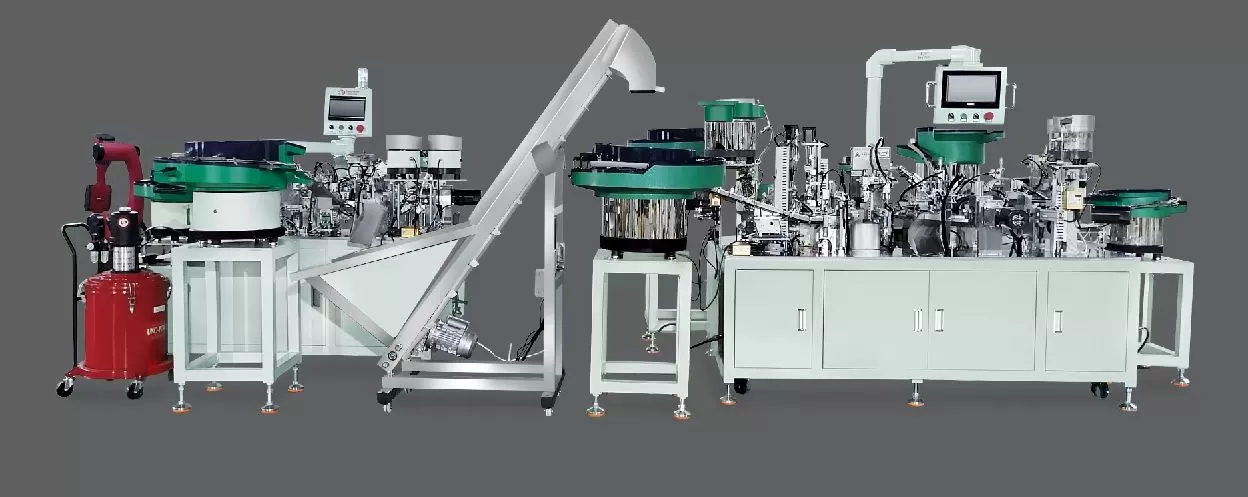
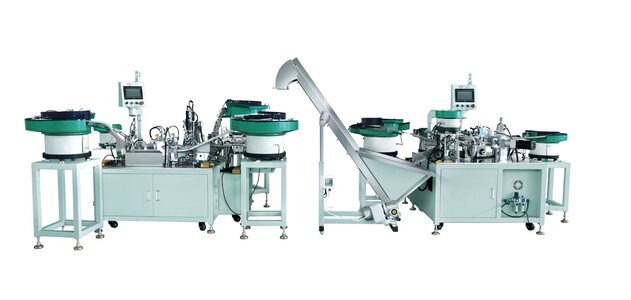
At the core of 3D hinge assembly machines lies their ability to move beyond 2D limitations, offering a three-dimensional workspace for hinge installation. Unlike conventional 2D systems, which restrict movement to horizontal or vertical planes, 3D machines feature multi-axis robotic arms and 3D vision sensors. These sensors scan hinge components and mating surfaces with sub-millimeter precision, creating detailed 3D models that guide the assembly process. This level of accuracy eliminates misalignment issues, a common source of production delays and defects, ensuring each hinge meets strict quality benchmarks from the first to the last unit.
Key Operational Benefits: Speed, Accuracy, and Resource Optimization
The integration of 3D hinge assembly machines delivers tangible operational advantages that directly impact factory productivity. First, speed is significantly enhanced: these systems can complete hinge installation cycles in seconds, compared to minutes with manual methods, reducing overall production time by up to 40%. Second, precision minimizes rework. By eliminating human error in alignment and torque application, 3D machines cut defect rates by an average of 65%, reducing material waste and the need for post-assembly inspections. Additionally, resource optimization is achieved through reduced labor requirements—fewer operators are needed, and the machines run continuously with minimal downtime, lowering long-term operational costs.
Overcoming Implementation Challenges in Jieyang Factories
While the benefits of 3D hinge assembly machines are clear, integrating them into existing Jieyang factory workflows requires careful planning. Common hurdles include compatibility with legacy production lines, operator training, and initial investment costs. To address these, modern 3D systems are designed with modular architectures, allowing seamless integration with existing machinery through standard interfaces. Many suppliers, including Sanyhore, offer comprehensive training programs to ensure staff can operate and maintain the equipment effectively. Over time, the return on investment (ROI) becomes evident: factories report recovering initial costs within 12–18 months through reduced labor, fewer defects, and higher output.
Real-world Outcomes: Case Insights from Jieyang Factories
Numerous case studies highlight the transformative impact of 3D hinge assembly machines in local factories. A leading manufacturer of furniture hardware in Jieyang, for instance, integrated a 3D system and saw its daily hinge production increase from 5,000 to 8,500 units, with defect rates dropping from 8% to 2.5%. Another automotive parts supplier noted a 30% reduction in machine idle time and a 20% decrease in energy consumption after upgrading to 3D hinge assembly technology. These results demonstrate not just increased productivity but also enhanced competitiveness in global markets.
Future-Proofing Production Lines: Beyond Hinge Assembly
3D hinge assembly machines are not standalone solutions but part of a broader trend toward smart manufacturing. Modern systems often include IoT connectivity, allowing real-time monitoring of production metrics via cloud-based dashboards. Factories can track cycle times, maintenance needs, and quality trends, enabling proactive adjustments to prevent bottlenecks. This adaptability ensures Jieyang factories remain agile, able to scale production for new product lines or respond to sudden market demands without extensive overhauls.
Partnering with Sanyhore for Customized Hinge Assembly Solutions
For factories in Jieyang seeking to adopt 3D hinge assembly technology, Sanyhore stands as a reliable partner. As a professional manufacturer specializing in hinge assembly machines, telescopic drawer slide assembly machines, and roll forming machines, Sanyhore combines technical expertise with a focus on customer needs. Their 3D hinge assembly systems are engineered to accommodate diverse hinge types, from small consumer electronics hinges to large industrial door hinges, ensuring compatibility with existing production setups. With a commitment to innovation and quality, Sanyhore delivers solutions that balance performance, cost, and scalability.
To discover how Sanyhore’s 3D hinge assembly machines can elevate your factory’s productivity, contact our team today at +86 13425506550 or email info@sanyhore.com for a personalized consultation. Let’s transform your production line with cutting-edge automation.


