
Jieyang, a cradle of manufacturing in the Pearl River Delta, has long been a hub for precision component production. In recent years, the city’s factories have undergone a profound transformation, particularly in the realm of 3D hinge assembly—a critical process in industries ranging from furniture to electronics. Central to this shift is the integration of automation, which has not only redefined production standards but also set new benchmarks for efficiency and quality. This article explores how Jieyang’s manufacturing ecosystem is embracing automated solutions in 3D hinge assembly, the technologies driving this change, and the role of local expertise in shaping the future of assembly line operations.
Challenges of Manual 3D Hinge Production
Traditional 3D hinge assembly relied heavily on manual labor, a process that was both time-consuming and error-prone. Workers, tasked with aligning hinge components, calibrating angles, and ensuring structural integrity, often faced limitations in consistency. Even with years of experience, human precision could not match the repeatability required for 3D hinges, where minute misalignments in X, Y, and Z axes directly impact functionality. Additionally, high-volume production demands strained labor resources, leading to longer lead times and increased operational costs. These challenges prompted Jieyang factories to seek alternatives—automation emerged as the logical solution.
Automation: The Catalyst for Transformation
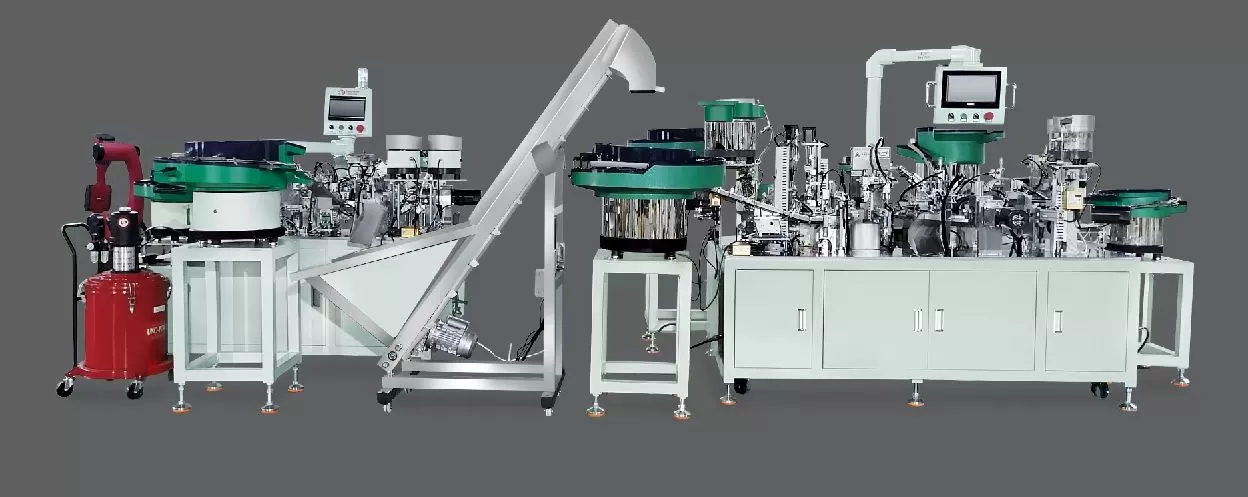
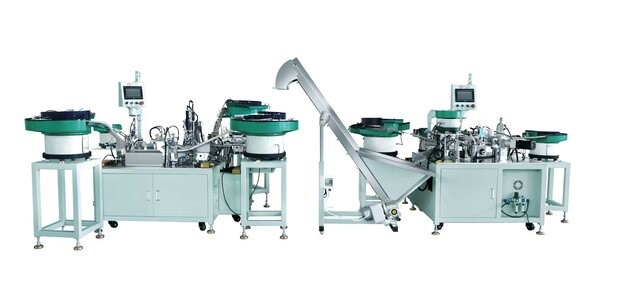
Automation in 3D hinge assembly began with the introduction of specialized machinery designed to handle the complexity of the process. hinge assembly machines, equipped with advanced servo motors and precision guides, replaced manual alignment tasks. These machines use computer-aided design (CAD) integration to input hinge specifications, ensuring each component is positioned within micrometer tolerances. Collaborative robots (cobots) further enhanced flexibility, working alongside human operators to load/unload parts and perform final quality checks.
A key innovation in this integration is the adoption of vision inspection systems. Cameras mounted above the assembly line capture real-time images of each hinge, comparing them to preprogrammed 3D models. Any deviations in dimensions, such as misaligned pin holes or uneven gaps, trigger immediate alerts, preventing defective products from moving to the next stage. This not only reduces waste but also minimizes the need for post-production rework, a common pain point in manual processes.
Precision and Control: The Role of 3D Hinge Assembly Automation
3D hinge assembly automation in Jieyang factories prioritizes precision at every step. The core of this lies in the synchronization of multiple systems: the assembly machine, robotic arms, and inspection tools. For instance, when assembling a 3D hinge, the machine first feeds the base plate and cover plate into designated stations. A robotic gripper, guided by a 3D LiDAR scanner, identifies the exact location of each component, adjusting its position in milliseconds. Once aligned, ultrasonic welding or press-fit mechanisms secure the hinge with consistent force, ensuring the joint can withstand repeated opening and closing cycles.
This level of control extends to material handling as well. Factories now use automated conveyor systems with RFID tags to track each hinge’s journey through the production line. Data collected from sensors—monitoring temperature, pressure, and torque—are fed into a central control system, enabling operators to optimize parameters in real time. For example, if a batch of hinges shows slightly higher torque during assembly, the system can adjust the press-fit pressure to maintain quality without halting production.
Expanding Automation to Complementary Systems
Beyond 3D hinge assembly, Jieyang factories are integrating automation across their broader production lines, particularly for related components like telescopic drawer slides and roll-formed metal parts. Telescopic drawer slide assembly machines, for instance, use similar automation principles—robotic arms with end-effectors designed to crimp slide rails and install ball bearings—resulting in consistent performance and reduced assembly time by 40% compared to manual methods.
roll forming machines, which shape metal strips into precise slide rail profiles, have also seen significant automation upgrades. These machines now feature adaptive roll tooling, which adjusts to material thickness and hardness in real time, reducing setup time from hours to minutes. Combined with in-line cutting and deburring tools, the entire process is streamlined, allowing factories to handle diverse slide specifications without sacrificing speed.
Efficiency Metrics: Quantifying the Impact
The shift to automation in 3D hinge assembly has yielded tangible results for Jieyang factories. Industry reports indicate that production lines with integrated automation systems now operate at 60% higher output rates compared to manual lines. Defect rates have dropped by an average of 75%, as automated systems eliminate human error in alignment and assembly. Labor costs, a major expense in traditional manufacturing, have decreased by 30% to 40% as fewer workers are needed for repetitive tasks, allowing staff to focus on supervision and maintenance.
These improvements have not only strengthened Jieyang’s reputation as a high-quality manufacturing hub but have also positioned local factories to meet the demands of global clients. Buyers increasingly seek partners with automated capabilities to ensure scalability, consistent quality, and cost-effectiveness—traits that 3D hinge assembly automation in Jieyang delivers.
Partner with Sanyhore for Advanced Assembly Solutions
As a leading manufacturer of hinge assembly machines, telescopic drawer slide assembly systems, and roll forming machines, Sanyhore brings decades of expertise to the table. Our solutions are designed to replicate the efficiency and precision of Jieyang’s automated factories, helping clients achieve similar production gains. Whether you need to upgrade your 3D hinge assembly line or optimize your telescopic slide production, our team of engineers can tailor systems to your specific requirements.
To learn more about how automation can transform your manufacturing process, contact Sanyhore today. Reach out via phone at +86 13425506550 or email at info@sanyhore.com to discuss your project needs.
Jieyang’s manufacturing legacy is built on innovation, and with Sanyhore, your factory can be part of that legacy.


