

Article Content
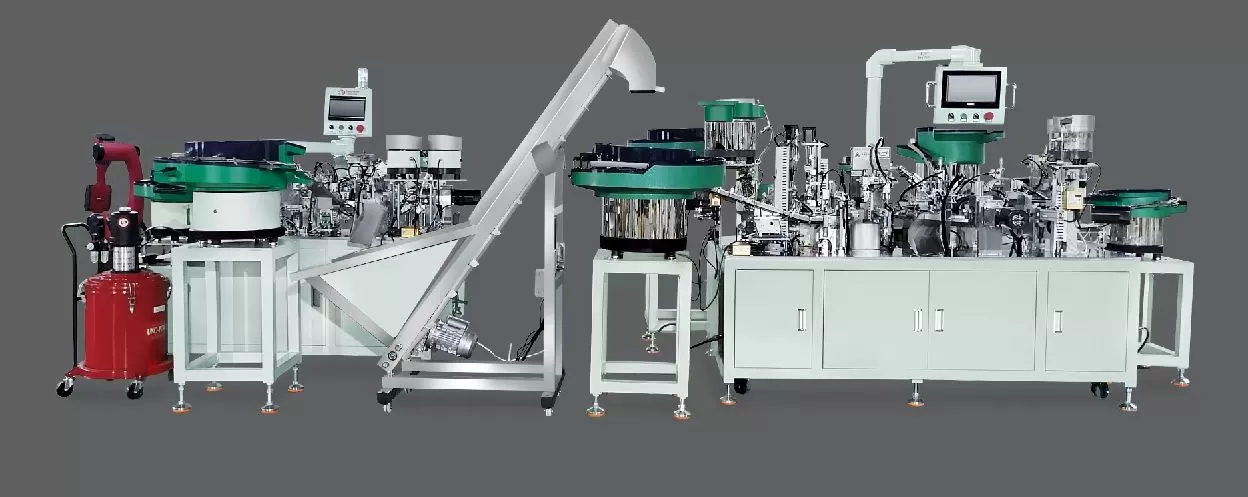
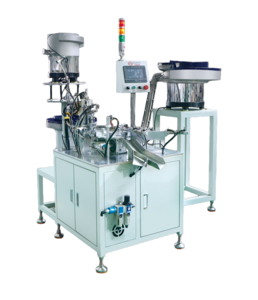
In the competitive landscape of precision manufacturing, 3D hinge assembly machines play a pivotal role in producing components for electronics, furniture, and automotive industries. As a key manufacturing hub, Jieyang, China, has established itself as a leader in 3D hinge production, with factories renowned for their ability to maintain consistent quality across large-scale production runs. This article explores the core strategies Jieyang-based factories employ to ensure consistency in 3D hinge assembly machines, from technological investments to process controls, and highlights how partnering with experienced manufacturers like Sanyhore can elevate production reliability.
#Technological Infrastructure: The Foundation of Precision
At the heart of Jieyang’s consistency lies advanced technological infrastructure. Leading factories invest in state-of-the-art CNC (Computer Numerical Control) machines calibrated to sub-micron precision, ensuring each hinge component meets exact dimensional tolerances. These machines are integrated with automated robotic arms and vision inspection systems, which continuously monitor critical parameters like alignment, torque, and material placement. For instance, 3D coordinate measuring machines (CMMs) scan hinge surfaces in real time, capturing thousands of data points to detect deviations before they escalate. Additionally, servo-driven assembly systems eliminate manual variability, as they operate at fixed, pre-programmed speeds and pressures, reducing human error to near-zero.
#Standardized Production Processes: Minimizing Variables
To sustain consistency, Jieyang factories implement rigorous standardized operating procedures (SOPs). These SOPs, developed through years of production experience, outline every step of the 3D hinge assembly process—from material loading to final testing. Each workstation is equipped with labeled checklists, tooling jigs, and reference samples, ensuring operators follow identical workflows. For example, a dedicated team of engineers regularly audits assembly lines to verify compliance, using time-motion studies to refine SOPs and eliminate redundant or inefficient steps. This standardization not only reduces variability in output but also streamlines training, allowing new operators to quickly adapt to production requirements without compromising quality.
#Robust Quality Control Systems: Rigorous Checks at Every Stage
Quality control is a cornerstone of consistency in Jieyang’s 3D hinge production. Factories employ a multi-layered inspection protocol, starting with incoming material inspection (IQC) to ensure raw components like metal alloys and plastics meet strict material specifications. In-process quality control (IPQC) involves 100% testing of critical dimensions using precision tools, while final quality control (FQC) subjects each hinge to functional testing—including opening/closing cycles, load-bearing capacity, and durability under simulated real-world conditions. For instance, some factories use environmental test chambers to simulate temperature and humidity variations, ensuring hinges perform consistently across diverse operating environments. These checks, combined with statistical process control (SPC) tools that track production data over time, enable factories to identify and address anomalies promptly.
#Supply Chain and Material Management: Ensuring Raw Material Stability
Consistency in 3D hinge assembly depends heavily on the stability of raw materials. Jieyang factories partner with certified suppliers who adhere to strict material standards, providing consistent material properties like hardness, tensile strength, and surface finish. To further mitigate risks, factories maintain optimized inventory systems, ensuring a steady supply of materials to prevent production interruptions. For example, some factories use barcode tracking and RFID technology to monitor material batches, linking them directly to production runs. This traceability allows manufacturers to quickly trace any quality issues back to specific suppliers or batches, maintaining the integrity of the entire production chain.
#Continuous Improvement: Adapting to Evolving Demands
The most successful Jieyang factories view consistency not as a static goal but as an ongoing process. They invest in employee training, equipping operators with skills to troubleshoot equipment and adapt to new production requirements. Additionally, factories leverage data analytics to identify trends in production data, such as recurring deviations in hinge dimensions or tool wear patterns. By analyzing this data, engineers can proactively adjust machine parameters, replace aging tools, or update SOPs—ensuring production remains consistent even as market demands for smaller, lighter, or more durable hinges evolve.
For manufacturers seeking reliable 3D hinge assembly machines, partnering with a trusted factory like Sanyhore offers a competitive edge. As a leading producer of hinge assembly machines, telescopic drawer slide assembly machines, and roll forming machines, Sanyhore combines cutting-edge technology, rigorous quality control, and a commitment to consistency to deliver components that meet global standards. Whether you require custom hinge solutions or standard production lines, Sanyhore’s expertise ensures your production process remains efficient, reliable, and consistent.
To learn more about how Sanyhore can support your 3D hinge assembly needs, contact our sales manager at +86 13425506550 or email info@sanyhore.com today.


