
In today’s competitive manufacturing landscape, 3D hinge assembly machines play a pivotal role in producing high-precision components for electronics, furniture, and automotive industries. However, the complexity of integrating multi-axis movements, tight tolerances, and consistent output has long challenged manufacturers. This is especially true for factories in Jieyang, a key manufacturing hub in southern China, where demand for efficient, scalable hinge production continues to rise. Many facilities in the region have successfully optimized their 3D hinge assembly workflows by combining advanced engineering, automated systems, and collaborative production strategies. This article explores how Jieyang’s leading factories leverage these approaches to streamline operations, reduce costs, and maintain industry-leading quality—with insights rooted in practical manufacturing experience.
Understanding the Core Challenges of 3D Hinge Assembly
3D hinge assembly involves aligning multiple components with sub-millimeter precision, often requiring simultaneous handling of three-dimensional movements. Traditional workflows in the region historically struggled with bottlenecks: manual component placement led to inconsistent alignment, manual inspection delayed production cycles, and lack of real-time data hindered proactive adjustments. For example, a typical 3D hinge assembly line might require 15–20 manual steps, each prone to human error, resulting in rework rates of 8–12% and production delays of up to 30 minutes per batch. This not only increased operational costs but also limited output capacity, making it challenging for manufacturers to meet growing market demands.
Implementing Lean Manufacturing Frameworks to Eliminate Waste
To address these issues, Jieyang factories have increasingly adopted lean manufacturing principles, focusing on value stream mapping and waste reduction. By analyzing production flows, engineers identified non-value-added steps such as excessive material handling, waiting times between processes, and redundant inspections. For instance, one leading manufacturer in Jieyang reorganized its workshop layout to minimize component travel distance, reducing material transfer time by 40%. They also introduced 5S management practices—Sort, Set in Order, Shine, Standardize, and Sustain—to maintain clean, organized workspaces, which directly cut down on search time for tools and components. These changes, combined with the integration of specialized machinery, created a foundation for smoother, more predictable workflows.
Automated Integration: The Backbone of Workflow Optimization
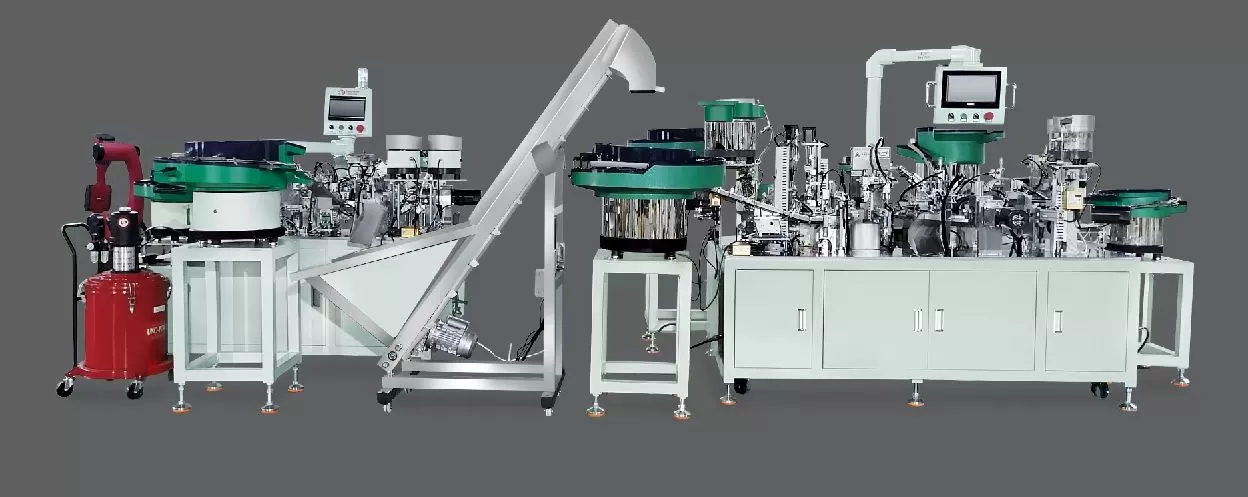
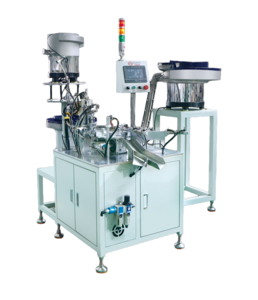
A critical shift in Jieyang’s 3D hinge assembly processes has been the adoption of automated systems. Factories now rely on advanced hinge assembly machines from local and international suppliers, but the most effective setups combine in-house engineering with tailored automation. For example, Sanyhore, a Jieyang-based manufacturer of specialized assembly equipment, has developed 3D hinge assembly machines equipped with multi-axis robotic arms and vision-guided positioning systems. These systems handle tasks like component feeding, alignment, and initial clamping with 99.5% precision, eliminating manual errors. Additionally, telescopic drawer slide assembly machines from the same supplier integrate seamlessly with hinge lines, ensuring downstream compatibility and reducing transition time between production stages. By automating 70–80% of manual steps, factories have seen production speeds increase by 50–60% while lowering labor costs by 25%.
Balancing Speed and Precision: Advanced Quality Control Systems
While automation accelerates production, maintaining quality remains non-negotiable. Jieyang factories have responded by implementing integrated quality control systems that operate in real time. These systems include inline vision inspection cameras, force sensors, and laser measurement tools that check critical parameters—such as hinge torque, pivot alignment, and surface finish—during assembly. For example, a 3D hinge assembly machine might use a laser scanner to capture 3D component data, comparing it to pre-programmed CAD models to flag deviations within milliseconds. This not only reduces post-production rework but also ensures every unit meets strict industry standards, from consumer electronics to industrial machinery. roll forming machines, used for producing precision slide rails, are often paired with these systems to maintain material consistency, further enhancing overall product quality.
Data-Driven Adjustments for Continuous Improvement
To sustain optimized workflows, Jieyang factories have embraced data analytics. By integrating Manufacturing Execution Systems (MES) with their production lines, they collect real-time data on metrics like cycle time, machine uptime, and defect rates. For instance, engineers at a local facility use MES dashboards to identify recurring bottlenecks—such as a specific robotic arm needing calibration or a material supplier causing delays—and adjust processes accordingly. This data-driven approach has enabled one manufacturer to reduce defect rates by 35% and production cycle times by 20% within six months. Sanyhore’s machines are designed with built-in data logging capabilities, allowing factories to track performance trends and make proactive adjustments, ensuring long-term efficiency gains.
Collaborative Design: Aligning Production with Market Needs
Finally, Jieyang factories have refined their workflows by fostering closer collaboration between design, engineering, and production teams. Instead of relying on sequential development—where design is finalized before production—they now use cross-functional teams to co-create solutions. For example, when a major furniture brand requested a new 3D hinge with tighter tolerances, the manufacturer worked with the brand’s design team and its own engineers to adjust assembly machine parameters and tooling in real time, reducing development time by 40%. This collaborative synergy not only accelerates time-to-market but also ensures that the final product meets both performance and cost requirements, making Jieyang a preferred location for global manufacturers seeking reliable, efficient hinge production.
Conclusion: Transforming Hinge Production in Jieyang
Through a combination of lean principles, automated integration, advanced quality control, and data-driven insights, Jieyang factories have redefined 3D hinge assembly workflows. The result is a manufacturing ecosystem that balances speed, precision, and cost-effectiveness, supported by specialized equipment from local leaders like Sanyhore. For manufacturers looking to optimize their own hinge or telescopic slide production, the key lies in adopting a holistic approach—from workflow analysis to collaborative design.
To learn more about how Sanyhore’s hinge assembly machines, telescopic drawer slide assembly systems, and roll forming machines can transform your production lines, contact our team today at +86 13425506550 or email info@sanyhore.com. Let’s build a more efficient, reliable workflow together.


