
How Sanyhore's Technology Automates Quality Assurance

2025-12-10


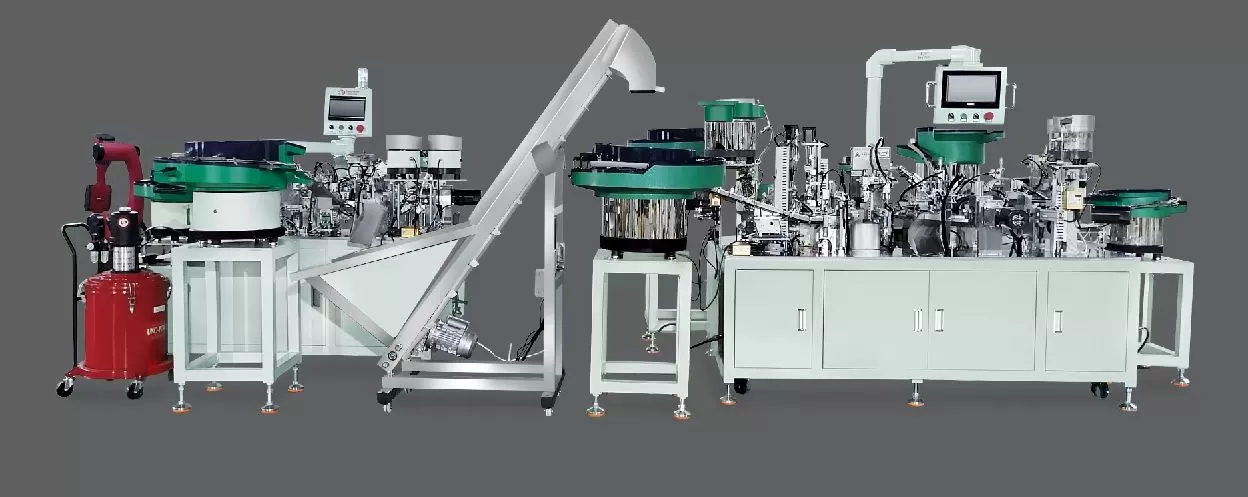
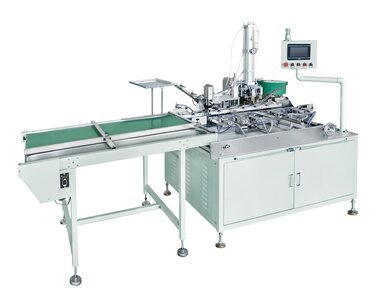
Traditional quality assurance (QA) in manufacturing has long been a bottleneck, with manual inspections prone to human error, inconsistent results, and delayed feedback. These challenges often lead to hidden defects, increased rework, and inefficient production cycles. For manufacturers relying on hinge assembly machines, telescopic drawer slide assembly machines, or roll forming machines, ensuring component quality is critical to product reliability and customer trust. Sanyhore, a trusted provider of automated manufacturing solutions, has developed cutting-edge technologies to automate QA, transforming how manufacturers maintain standards.

Challenges in Manual QA: Why Traditional Methods Fall Short

Manual QA processes typically involve operators visually inspecting components or using basic tools, which are time-consuming and limited in scope. Even with rigorous training, human inconsistency—whether due to fatigue, distraction, or subjective judgment—can lead to missed defects. For example, a hinge assembly machine producing thousands of parts daily requires 100% inspection, but manual checks often result in 5-10% defects slipping through, increasing costs and damaging reputation. Additionally, manual data recording is error-prone, making it hard to track trends or identify root causes of quality issues.

Sanyhore’s Automated QA Framework: End-to-End Quality Control

Sanyhore’s QA automation solutions are designed to integrate seamlessly with its core products—hinge assembly machines, telescopic drawer slide assembly machines, and roll forming machines. The framework combines three key pillars: real-time inspection, data-driven analysis, and adaptive feedback. At every production stage, from raw material feeding to final product testing, sensors and cameras capture detailed data, ensuring no component is overlooked. This integration eliminates gaps between production and quality checks, enabling immediate adjustments if deviations occur.

Key Technologies Behind Sanyhore’s QA Automation

Central to Sanyhore’s success is its use of advanced technologies tailored to hinge, slide, and roll forming processes. Automated Optical Inspection (AOI) systems, for instance, use high-resolution cameras and machine learning algorithms to detect micro-defects in hinge joints or slide rails, identifying issues like misalignment, burrs, or material flaws with 99.8% accuracy. Force sensors integrated into hinge assembly machines measure opening/closing resistance, ensuring each hinge meets specified durability standards. Meanwhile, Statistical Process Control (SPC) software analyzes real-time data, flagging anomalies in production parameters—such as temperature or pressure—to prevent quality drops before they escalate.

Benefits for Manufacturing Partners: Reliability, Scalability, and Cost Savings

By automating QA, Sanyhore’s clients experience tangible benefits. Reduced manual labor cuts operational costs by up to 40%, while 100% inspection eliminates hidden defects, lowering rework rates by 60%. The adaptive nature of Sanyhore’s systems also supports scalability: whether producing 1,000 or 100,000 hinge assembly units daily, the automation framework adjusts to maintain consistent quality. For example, a manufacturer using Sanyhore’s telescopic slide assembly machines with integrated QA reported a 35% increase in production output and a 25% improvement in customer satisfaction, as defect-free products reached the market faster.

Common QA Questions Answered by Sanyhore’s Expertise

Q: How does Sanyhore’s QA automation work with existing production lines?

A: Our systems are modular and compatible with most hinge assembly, telescopic slide, and roll forming machines. We provide on-site integration support to ensure minimal downtime, with customizable parameters to match your specific production needs.

Q: Can the QA tools detect defects that manual inspections might miss?

A: Absolutely. Sanyhore’s AOI and force-sensing technologies capture data at micro-levels—like hairline cracks in metal components or sub-millimeter misalignments in slide rails—that are invisible to the human eye, ensuring 100% defect detection.

Q: How does Sanyhore ensure the automation system is user-friendly for operators?

A: We prioritize intuitive interfaces. All QA systems include simple touchscreen controls, real-time alerts, and pre-set quality benchmarks, allowing operators with minimal technical training to monitor and adjust processes effectively.

Ready to Transform Your QA with Sanyhore?

In today’s competitive market, automated quality assurance isn’t just a convenience—it’s a necessity. With Sanyhore’s hinge assembly machines, telescopic drawer slide assembly machines, and roll forming machines integrated with advanced QA, you can elevate product reliability, reduce costs, and scale production with confidence. To learn how Sanyhore’s technology can transform your manufacturing process, contact our sales manager directly: +86 13425506550 or email info@sanyhore.com. Our team is ready to discuss your specific needs and deliver a tailored QA solution.

We use cookie to improve your online experience. By continuing to browse this website, you agree to our use of cookie.

Cookies

Please read our Terms and Conditions and this Policy before accessing or using our Services. If you cannot agree with this Policy or the Terms and Conditions, please do not access or use our Services. If you are located in a jurisdiction outside the European Economic Area, by using our Services, you accept the Terms and Conditions and accept our privacy practices described in this Policy.
We may modify this Policy at any time, without prior notice, and changes may apply to any Personal Information we already hold about you, as well as any new Personal Information collected after the Policy is modified. If we make changes, we will notify you by revising the date at the top of this Policy. We will provide you with advanced notice if we make any material changes to how we collect, use or disclose your Personal Information that impact your rights under this Policy. If you are located in a jurisdiction other than the European Economic Area, the United Kingdom or Switzerland (collectively “European Countries”), your continued access or use of our Services after receiving the notice of changes, constitutes your acknowledgement that you accept the updated Policy. In addition, we may provide you with real time disclosures or additional information about the Personal Information handling practices of specific parts of our Services. Such notices may supplement this Policy or provide you with additional choices about how we process your Personal Information.


Cookies

Cookies are small text files stored on your device when you access most Websites on the internet or open certain emails. Among other things, Cookies allow a Website to recognize your device and remember if you've been to the Website before. Examples of information collected by Cookies include your browser type and the address of the Website from which you arrived at our Website as well as IP address and clickstream behavior (that is the pages you view and the links you click).We use the term cookie to refer to Cookies and technologies that perform a similar function to Cookies (e.g., tags, pixels, web beacons, etc.). Cookies can be read by the originating Website on each subsequent visit and by any other Website that recognizes the cookie. The Website uses Cookies in order to make the Website easier to use, to support a better user experience, including the provision of information and functionality to you, as well as to provide us with information about how the Website is used so that we can make sure it is as up to date, relevant, and error free as we can. Cookies on the Website We use Cookies to personalize your experience when you visit the Site, uniquely identify your computer for security purposes, and enable us and our third-party service providers to serve ads on our behalf across the internet.

We classify Cookies in the following categories:
 ●  Strictly Necessary Cookies
 ●  Performance Cookies
 ●  Functional Cookies
 ●  Targeting Cookies


Cookie List
A cookie is a small piece of data (text file) that a website – when visited by a user – asks your browser to store on your device in order to remember information about you, such as your language preference or login information. Those cookies are set by us and called first-party cookies. We also use third-party cookies – which are cookies from a domain different than the domain of the website you are visiting – for our advertising and marketing efforts. More specifically, we use cookies and other tracking technologies for the following purposes:

Strictly Necessary Cookies
These cookies are necessary for the website to function and cannot be switched off in our systems. They are usually only set in response to actions made by you which amount to a request for services, such as setting your privacy preferences, logging in or filling in forms. You can set your browser to block or alert you about these cookies, but some parts of the site will not then work. These cookies do not store any personally identifiable information.

Functional Cookies
These cookies enable the website to provide enhanced functionality and personalisation. They may be set by us or by third party providers whose services we have added to our pages. If you do not allow these cookies then some or all of these services may not function properly.

Performance Cookies
These cookies allow us to count visits and traffic sources so we can measure and improve the performance of our site. They help us to know which pages are the most and least popular and see how visitors move around the site. All information these cookies collect is aggregated and therefore anonymous. If you do not allow these cookies we will not know when you have visited our site, and will not be able to monitor its performance.

Targeting Cookies
These cookies may be set through our site by our advertising partners. They may be used by those companies to build a profile of your interests and show you relevant adverts on other sites. They do not store directly personal information, but are based on uniquely identifying your browser and internet device. If you do not allow these cookies, you will experience less targeted advertising.

How To Turn Off Cookies
You can choose to restrict or block Cookies through your browser settings at any time. Please note that certain Cookies may be set as soon as you visit the Website, but you can remove them using your browser settings. However, please be aware that restricting or blocking Cookies set on the Website may impact the functionality or performance of the Website or prevent you from using certain services provided through the Website. It will also affect our ability to update the Website to cater for user preferences and improve performance. Cookies within Mobile Applications

We only use Strictly Necessary Cookies on our mobile applications. These Cookies are critical to the functionality of our applications, so if you block or delete these Cookies you may not be able to use the application. These Cookies are not shared with any other application on your mobile device. We never use the Cookies from the mobile application to store personal information about you.

If you have questions or concerns regarding any information in this Privacy Policy, please contact us by email at . You can also contact us via our customer service at our Site.