
In the dynamic landscape of modern manufacturing, selecting the right assembly machine is critical to optimizing production efficiency, product quality, and overall operational success. Among the key decisions manufacturers face, choosing between single-station and multi-station assembly machines stands out as a pivotal one. These two types of machines offer distinct advantages, and the optimal choice depends on a careful evaluation of your production needs, product requirements, and long-term goals. This guide, crafted by Sanyhore—a leading manufacturer of hinge assembly machines, telescopic drawer slide assembly machines, and roll forming machines—will walk you through the essential factors to consider when making this important investment.
Assess Production Volume and Capacity Requirements
The first step in choosing between single and multi-station assembly machines is to clearly define your production volume and capacity needs. Single-station assembly machines are ideal for low to medium production volumes. They operate by performing one specific task at a time, with components manually or semi-automatically transferred between workstations. This simplicity makes them cost-effective for small-scale production runs, where the focus is on flexibility and adaptability rather than rapid throughput.
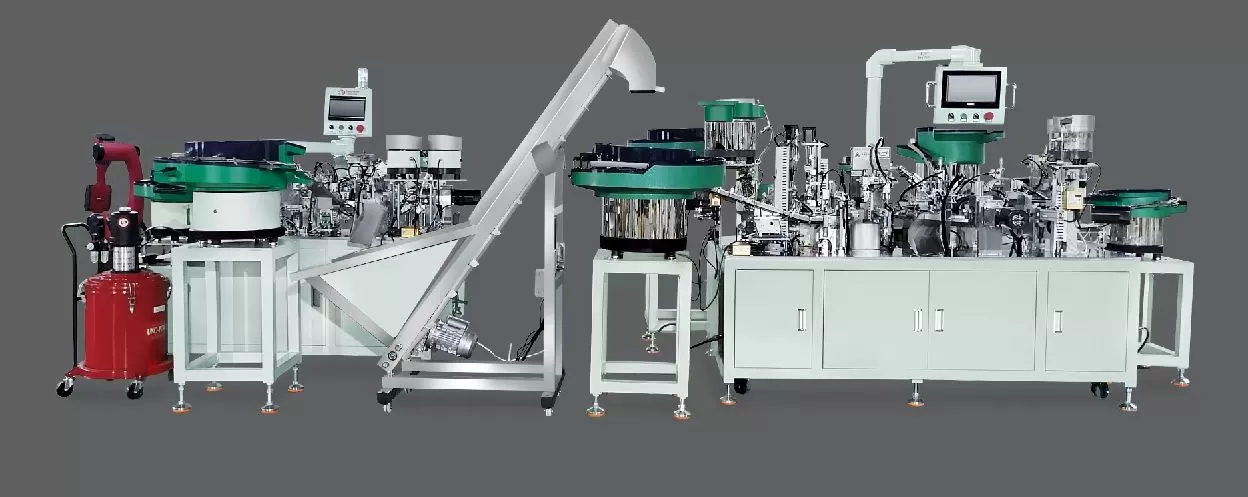
On the other hand, multi-station assembly machines excel in high-volume, continuous production environments. These machines integrate multiple operations (e.g., feeding, assembling, pressing, and testing) into a single, synchronized process. Parts move sequentially through fixed stations, enabling faster cycle times and higher output. For example, if your daily production target exceeds 1,000 units, a multi-station machine with 3–5 integrated stations can consistently meet or exceed this demand, reducing bottlenecks and ensuring steady workflow.
Evaluate Product Complexity and Process Flow
Product complexity and the nature of your production process also play a significant role in machine selection. Single-station machines are best suited for products with simple, repetitive operations or limited工序 (process steps). For instance, if you manufacture basic hinge components with only 1–2 assembly steps, a single-station machine allows for precise control over each task, making adjustments easy and minimizing errors.
Multi-station machines, however, are designed for products with more intricate assembly requirements. If your production involves 3+ sequential steps—such as a telescopic drawer slide, which requires bending, joining, and lubrication—integrating these steps into a multi-station system eliminates the need for manual handling and repositioning, reducing the risk of damage and improving consistency. Additionally, multi-station machines often include built-in quality checks at each station, ensuring defects are identified and addressed early in the process.
Analyze Cost Considerations (Initial and Operational)
Cost is a practical factor that cannot be overlooked. Single-station assembly machines typically have a lower initial investment cost. Their simpler design and fewer moving parts mean less upfront expenditure, making them an attractive option for startups or businesses with limited capital. However, this advantage may diminish in the long run, especially as production volume increases. Single-station machines often require more labor for component transfer and may have lower energy efficiency compared to multi-station models, leading to higher operational costs over time.
Multi-station assembly machines have a higher initial cost due to their advanced technology and integrated components. Yet, they often offset this with lower operational costs. By reducing manual intervention and minimizing cycle times, they boost overall efficiency, which is particularly valuable for high-volume production. For example, a multi-station hinge assembly machine with automated loading/unloading can save labor costs while increasing output, resulting in a faster return on investment (ROI) for businesses scaling up.
Prioritize Flexibility and Changeover Time
In today’s fast-paced market, the ability to adapt to changing production demands is a key competitive advantage. Single-station assembly machines offer greater flexibility for low-volume or frequently changing production runs. Since each station handles one task, changing products or adjusting parameters is relatively straightforward—you can retool the machine in minutes or hours, allowing for quick pivots to meet new orders or product variations.
Multi-station machines, while highly efficient for consistent production, are less flexible for frequent changeovers. The integrated nature of their design means reconfiguring the machine to accommodate a new product often requires more time, specialized tools, or technical expertise. If your production line frequently switches between products (e.g., different hinge sizes or slide lengths), a single-station machine may better align with your need for agility, unless you have a dedicated team to handle the retooling process.
Align with Long-Term Production Scalability
Finally, consider your long-term production goals. If you anticipate steady growth or plan to expand your product line, a multi-station assembly machine may be the more future-proof choice. Its higher capacity and potential for automation (e.g., adding more stations or integrating with robotic systems) allow you to scale production without major overhauls. For instance, Sanyhore’s telescopic drawer slide assembly machines are designed with modular stations, enabling easy upgrades as your production needs evolve.
Conversely, if your production volume is stable and unlikely to grow significantly, a single-station machine can provide reliable performance without unnecessary complexity. It is also a practical choice for businesses with limited floor space, as single-station machines are often more compact than multi-station models.
Sanyhore: Your Trusted Partner for Assembly Machine Solutions
When it comes to selecting the right assembly machine, there is no one-size-fits-all answer. The decision depends on your unique production requirements, from volume and complexity to cost and flexibility. As a professional manufacturer of hinge assembly machines, telescopic drawer slide assembly machines, and roll forming machines, Sanyhore is committed to helping you find the optimal solution. Our team of experts works closely with clients to assess their needs and recommend machines that balance efficiency, quality, and affordability.
For personalized guidance on choosing between single and multi-station assembly machines, or to learn more about our full range of products, contact Sanyhore today. Our sales team is available at +86 13425506550 or via email at info@sanyhore.com to answer your questions and support your production success.


