

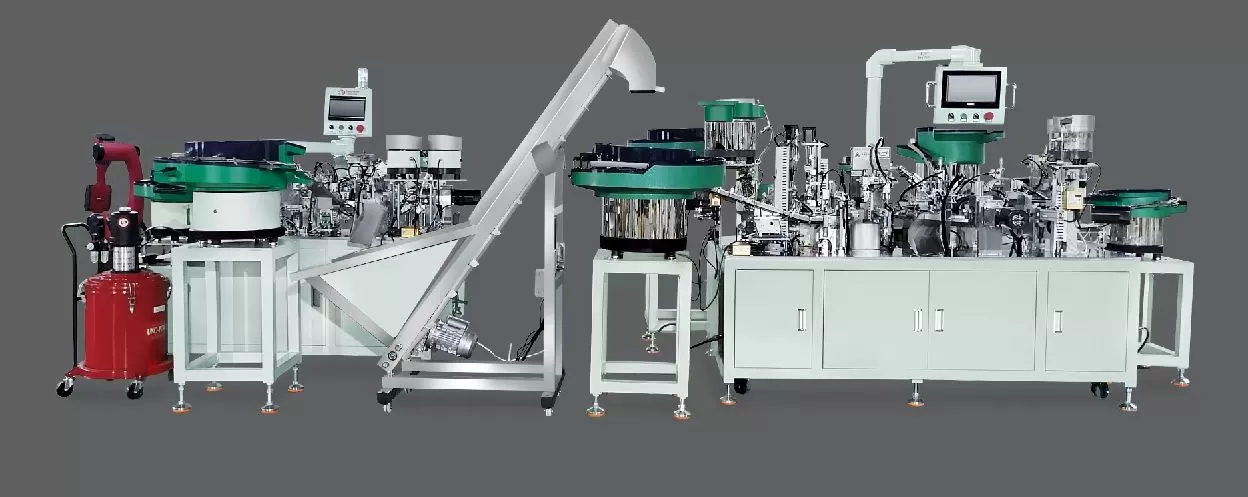
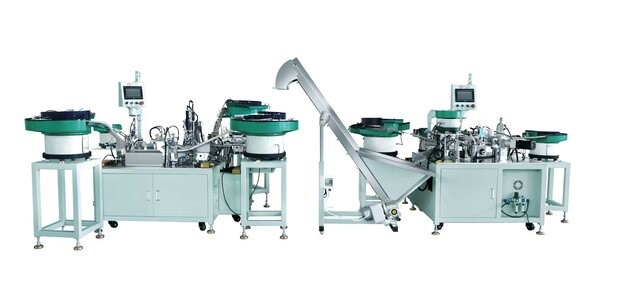
The traditional hinge automatic assembly machine, while functional, often faces limitations in modern manufacturing environments. Conventional systems typically rely on manual adjustments, slow cycle times, and limited data tracking, leading to inconsistencies in product quality and higher operational costs. For producers in Jieyang, a key hub for hinge manufacturing, these inefficiencies can hinder competitiveness in a market demanding faster turnaround and tighter precision.
Key Drivers Behind Intelligent Transformation
The shift toward intelligent manufacturing stems from multiple pressures. Global demand for high-quality hinges—used in furniture, automotive, and construction—requires stricter tolerances and faster production. Additionally, labor shortages and rising operational costs push manufacturers to automate more. Integrating smart technologies isn’t just about keeping up; it’s about future-proofing production lines to adapt to evolving market needs.
Step 1: Enhancing Mechanization and Component Precision
The first phase of transformation focuses on upgrading core mechanical components. Sanyhore, as a leader in hinge assembly machine design, incorporates high-precision servo motors and ball screw systems to reduce play and ensure consistent part placement. Customized tooling, engineered for Jieyang’s specific hinge types, minimizes misalignment during assembly, cutting initial defect rates by up to 30%.
Step 2: Integrating Data Collection and Real-Time Monitoring
Next, the machine is equipped with industrial sensors and IoT modules. These collect real-time data on parameters like temperature, pressure, and assembly force, feeding into a central control system. Operators gain visibility into production metrics via a user-friendly dashboard, enabling quick identification of bottlenecks. For example, a sudden spike in assembly time triggers an alert, prompting immediate diagnosis instead of waiting for a quality issue to arise.
Step 3: Implementing AI-Driven Parameter Optimization
Beyond monitoring, intelligent algorithms analyze collected data to refine production. Machine learning models adjust variables—such as clamping force and conveyor speed—based on historical performance, reducing setup time by 40% and optimizing cycle times. Predictive maintenance is another key benefit: AI predicts when components like guides or grippers might wear out, scheduling maintenance before breakdowns occur, thus minimizing downtime.
Step 4: Streamlining User Interaction and Remote Support
To ensure ease of use, the transformed machine features an intuitive HMI (Human-Machine Interface) with touch controls and step-by-step guidance. New operators can learn the system in hours, not weeks. Additionally, remote monitoring capabilities allow Sanyhore’s technical team to assist with troubleshooting, reducing on-site service costs and response times.
Benefits of Intelligent Transformation for Hinge Producers
The result is a production line that’s 50% faster, with 25% lower labor dependency and 15% reduced material waste. Quality consistency improves, as AI ensures every hinge meets exacting standards, boosting customer satisfaction. Most importantly, the intelligent system adapts in real time, allowing manufacturers to scale production or switch to new hinge designs without major overhauls.
Partner with Sanyhore for Intelligent Hinge Assembly Solutions
At Sanyhore, we specialize in transforming traditional hinge assembly machines into smart, efficient systems. As a professional manufacturer of hinge assembly machines, telescopic drawer slide assembly machines, and roll forming machines, we combine engineering expertise with on-the-ground industry insights. Ready to upgrade your production? Contact us today at +86 13425506550 or via email at info@sanyhore.com to discuss your specific needs and discover how intelligent transformation can elevate your hinge manufacturing capabilities.


