
In the furniture manufacturing sector, drawer slide systems are vital for product durability and user satisfaction. As a key production hub for hardware components, Jieyang has become a leading source of drawer slide assembly machines, offering both automatic and semi-automatic options to meet varied industrial needs. This analysis delves into the key differences between these two types, helping manufacturers select the most suitable equipment for their operations.
How Automatic and Semi-Automatic Slide Assembly Machines Operate
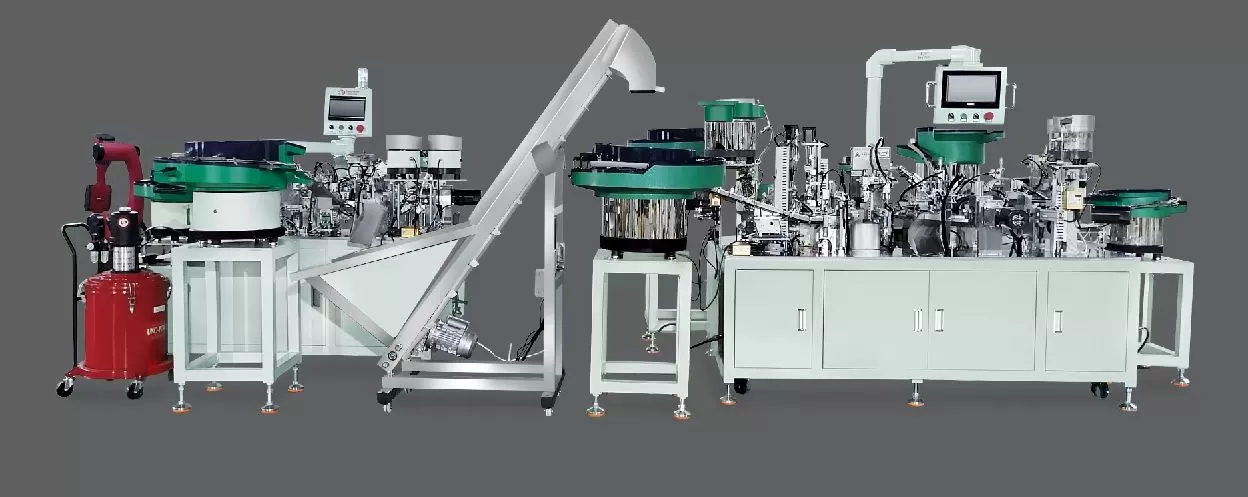
Automatic drawer slide assembly machines leverage advanced automation technologies, including programmable logic controllers (PLCs), servo motors, and robotic arms. These systems can independently handle the entire assembly process: from material feeding (raw rails, balls, and fasteners) to precise component alignment, riveting, and final quality checks. A vision system often ensures accurate part placement, while a conveyor belt streamlines the flow of finished products.
Semi-automatic machines, by contrast, require partial human intervention. Operators manually load raw materials onto a worktable, position slide components (e.g., aligning rails with ball bearings), and initiate the assembly cycle. While the machine automates repetitive tasks like clamping and riveting, manual input remains necessary for loading and occasional adjustments.
Productivity and Efficiency Comparison
Efficiency is a primary distinction between the two types. Automatic machines dominate high-volume production, with typical speeds of 300–500 telescopic drawer slides per hour (depending on slide complexity). This speed is achieved through continuous, unattended operation, minimizing downtime and maximizing output.
Semi-automatic systems, designed for moderate production, operate at 100–200 slides per hour. While slower, they are ideal for manufacturers with lower daily output or frequent order changes, as they allow for quicker setup and adaptation to varying slide designs.
Cost Analysis: Initial Investment vs Long-Term Savings
Cost considerations are critical for decision-making. Automatic systems have higher upfront costs, ranging from $50,000 to $150,000, depending on features like integration with existing production lines or compatibility with custom slide sizes. However, this investment often pays off in the long run: reduced labor costs (eliminating the need for 2–3 operators per shift), lower error rates (fewer defective slides), and faster throughput, making them cost-effective for large-scale producers.
Semi-automatic machines, with initial costs of $10,000–$40,000, are more budget-friendly. They suit small-to-medium enterprises, custom furniture workshops, or startups with limited capital, offering a lower barrier to entry without sacrificing core functionality.
Application Scenarios: When to Choose Each Type
The choice between automatic and semi-automatic machines hinges on production needs. Automatic systems excel in large-scale settings, such as major furniture brands, bulk slide suppliers, or companies with monthly targets exceeding 100,000 slides. For example, a global furniture manufacturer might rely on an automatic machine to ensure consistent quality and meet tight delivery deadlines.
Semi-automatic machines are better for flexible, low-to-moderate production. A local workshop producing custom telescopic slides, or a small business catering to niche markets, would benefit from the adaptability of semi-automatic systems, which allow for quick changes in slide designs or batch sizes.
Key Features to Evaluate for Optimal Performance
Regardless of type, critical features include precision (to ensure slide components align correctly, preventing jams or poor sliding performance), compatibility (handling diverse slide sizes and materials like steel or aluminum), and ease of maintenance (quick access to parts for repairs, reducing downtime).
Sanyhore, a professional manufacturer of hinge assembly machines and drawer slide assembly equipment, designs machines with these factors in mind. Our equipment combines durability, flexibility, and user-friendly operation, making it suitable for both automatic and semi-automatic applications.
Ultimately, the right drawer slide assembly machine depends on your production scale, budget, and long-term goals. For high-volume, consistent output, an automatic system delivers efficiency. For smaller runs or flexible operations, a semi-automatic model offers cost-effectiveness. To learn how Sanyhore’s solutions can optimize your production, contact our team today at +86 13425506550 or email info@sanyhore.com. Our experts are ready to help you find the perfect fit.


