
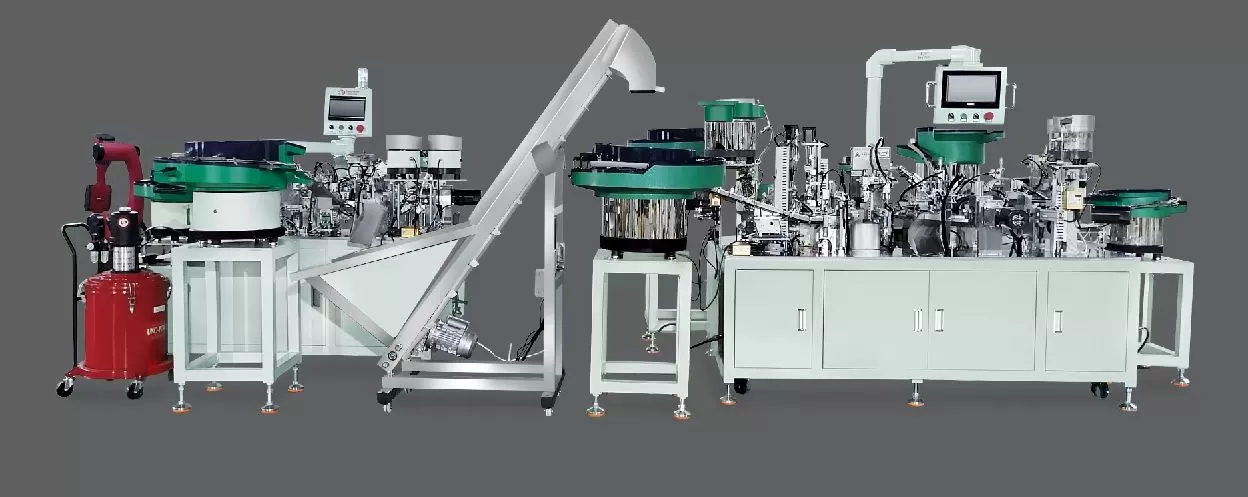
Jieyang Drawer Slide Roll Forming Machine: Roll Forming vs. Stamping

2025-12-16


In the dynamic landscape of furniture hardware manufacturing, drawer slides serve as critical components, demanding precision, durability, and cost-effectiveness. Among the essential equipment driving this production, roll forming machines, particularly those hailing from Jieyang known for their reliability, play a pivotal role. However, manufacturers often face a key decision: which forming process, roll forming or stamping, best aligns with their production needs? This article delves into the core differences between these two methods, highlighting why roll forming, paired with advanced Jieyang drawer slide roll forming machines, emerges as a superior choice for modern drawer slide production.

Understanding Roll Forming and Stamping Principles

To grasp the comparison, it is first essential to understand the fundamental principles of each process. Roll forming operates by passing a continuous metal strip through a series of sequentially arranged dies, gradually bending the material into the desired cross-section. This multi-step, incremental approach allows for precise control over the final shape, with each die set contributing to the overall profile. In contrast, stamping relies on high-pressure force exerted by a punch and die to shear or deform the metal in a single or limited number of operations, typically for flat or simple shapes. For drawer slides, which often feature complex, multi-dimensional profiles, the two processes diverge significantly in their capabilities and outcomes.

Material Efficiency: Roll Forming vs. Stamping

Material waste is a critical concern in manufacturing, and here roll forming demonstrates a clear advantage. By using continuous coil material and minimizing die changes, roll forming machines typically achieve material utilization rates of 85-95%. This is because the process involves gradual bending rather than shearing, reducing scrap generated from punch holes or cutoffs. Stamping, on the other hand, often requires blanking sheets to the required size before forming, leading to higher material waste—often 20-30%—especially for intricate designs. For large-scale drawer slide production, this efficiency gap translates to substantial long-term savings in raw material costs, a key consideration for manufacturers aiming to optimize profitability.

Production Speed and Throughput Comparison

When it comes to scaling production, roll forming machines excel in throughput. Equipped with automated feeding systems and synchronized die stations, modern roll forming lines can run at speeds exceeding 30 meters per minute, with minimal downtime between production runs. This continuous operation is ideal for high-volume orders, such as those required by furniture OEMs or large-scale hardware suppliers. Stamping, while efficient for small to medium batches, typically involves slower cycle times due to the need for die alignment, blank handling, and resetting between parts. For example, a single stamping press might produce 500-1,000 parts per hour, compared to a roll forming line’s capacity of 10,000+ parts per hour, making roll forming indispensable for meeting tight production deadlines.

Design Flexibility and Customization Capabilities

Drawer slide designs continue to evolve, with modern applications requiring features like adjustable lengths, integrated lock mechanisms, or enhanced load capacities. Roll forming machines shine in this space, as their modular die sets allow for rapid design modifications. By swapping or reconfiguring dies, manufacturers can quickly adapt to new specifications, even for complex profiles with varying radii or thicknesses. Stamping, while effective for simple, repetitive designs, faces limitations with custom shapes. Creating a new stamping die can take weeks or months, with associated high costs, making it impractical for frequent design changes. For manufacturers prioritizing agility and responsiveness, roll forming offers the flexibility to stay ahead in a competitive market.

Cost Considerations: Long-term vs. Short-term

Initial investment costs are a common point of comparison, with stamping presses often appearing cheaper upfront. However, when factoring in long-term production expenses, roll forming proves more economical. Roll forming machines have lower maintenance requirements due to fewer moving parts and reduced die wear, as the gradual bending process exerts less stress on tooling. Additionally, their material and energy efficiency, coupled with higher throughput, lower labor needs, and minimal scrap, lead to lower per-unit production costs over time. For high-volume drawer slide production, the total cost of ownership (TCO) of a roll forming machine is frequently 30-40% lower than stamping, making it a smart, future-proof investment.

Jieyang Drawer Slide Roll Forming Machine: A Reliable Solution

Jieyang, a hub for drawer slide manufacturing in China, is home to advanced roll forming machine producers. These machines are engineered to meet the specific demands of drawer slide production, featuring precision tooling, computer numerical control (CNC) operation, and integrated quality control systems. For instance, modern Jieyang roll forming machines can achieve dimensional tolerances of ±0.1mm, ensuring consistent slide performance and reducing assembly errors. Additionally, many models include automatic lubrication, quick die change systems, and real-time monitoring, minimizing unplanned downtime and simplifying production management.

Sanyhore: Your Trusted Partner in Drawer Slide Manufacturing

As a professional manufacturer of drawer slide assembly and forming machinery, Sanyhore brings decades of expertise to the table. Our product range includes hinge assembly machines, telescopic drawer slide assembly machines, and state-of-the-art roll forming machines tailored for drawer slide production. With a focus on quality, innovation, and customer satisfaction, we design equipment that combines precision, efficiency, and durability to help manufacturers achieve their production goals. Whether you require a new roll forming line or upgrades to your existing setup, our team is ready to provide tailored solutions. Contact us today at +86 13425506550 or via email at info@sanyhore.com to learn more about how we can support your manufacturing operations.

We use cookie to improve your online experience. By continuing to browse this website, you agree to our use of cookie.

Cookies

Please read our Terms and Conditions and this Policy before accessing or using our Services. If you cannot agree with this Policy or the Terms and Conditions, please do not access or use our Services. If you are located in a jurisdiction outside the European Economic Area, by using our Services, you accept the Terms and Conditions and accept our privacy practices described in this Policy.
We may modify this Policy at any time, without prior notice, and changes may apply to any Personal Information we already hold about you, as well as any new Personal Information collected after the Policy is modified. If we make changes, we will notify you by revising the date at the top of this Policy. We will provide you with advanced notice if we make any material changes to how we collect, use or disclose your Personal Information that impact your rights under this Policy. If you are located in a jurisdiction other than the European Economic Area, the United Kingdom or Switzerland (collectively “European Countries”), your continued access or use of our Services after receiving the notice of changes, constitutes your acknowledgement that you accept the updated Policy. In addition, we may provide you with real time disclosures or additional information about the Personal Information handling practices of specific parts of our Services. Such notices may supplement this Policy or provide you with additional choices about how we process your Personal Information.


Cookies

Cookies are small text files stored on your device when you access most Websites on the internet or open certain emails. Among other things, Cookies allow a Website to recognize your device and remember if you've been to the Website before. Examples of information collected by Cookies include your browser type and the address of the Website from which you arrived at our Website as well as IP address and clickstream behavior (that is the pages you view and the links you click).We use the term cookie to refer to Cookies and technologies that perform a similar function to Cookies (e.g., tags, pixels, web beacons, etc.). Cookies can be read by the originating Website on each subsequent visit and by any other Website that recognizes the cookie. The Website uses Cookies in order to make the Website easier to use, to support a better user experience, including the provision of information and functionality to you, as well as to provide us with information about how the Website is used so that we can make sure it is as up to date, relevant, and error free as we can. Cookies on the Website We use Cookies to personalize your experience when you visit the Site, uniquely identify your computer for security purposes, and enable us and our third-party service providers to serve ads on our behalf across the internet.

We classify Cookies in the following categories:
 ●  Strictly Necessary Cookies
 ●  Performance Cookies
 ●  Functional Cookies
 ●  Targeting Cookies


Cookie List
A cookie is a small piece of data (text file) that a website – when visited by a user – asks your browser to store on your device in order to remember information about you, such as your language preference or login information. Those cookies are set by us and called first-party cookies. We also use third-party cookies – which are cookies from a domain different than the domain of the website you are visiting – for our advertising and marketing efforts. More specifically, we use cookies and other tracking technologies for the following purposes:

Strictly Necessary Cookies
These cookies are necessary for the website to function and cannot be switched off in our systems. They are usually only set in response to actions made by you which amount to a request for services, such as setting your privacy preferences, logging in or filling in forms. You can set your browser to block or alert you about these cookies, but some parts of the site will not then work. These cookies do not store any personally identifiable information.

Functional Cookies
These cookies enable the website to provide enhanced functionality and personalisation. They may be set by us or by third party providers whose services we have added to our pages. If you do not allow these cookies then some or all of these services may not function properly.

Performance Cookies
These cookies allow us to count visits and traffic sources so we can measure and improve the performance of our site. They help us to know which pages are the most and least popular and see how visitors move around the site. All information these cookies collect is aggregated and therefore anonymous. If you do not allow these cookies we will not know when you have visited our site, and will not be able to monitor its performance.

Targeting Cookies
These cookies may be set through our site by our advertising partners. They may be used by those companies to build a profile of your interests and show you relevant adverts on other sites. They do not store directly personal information, but are based on uniquely identifying your browser and internet device. If you do not allow these cookies, you will experience less targeted advertising.

How To Turn Off Cookies
You can choose to restrict or block Cookies through your browser settings at any time. Please note that certain Cookies may be set as soon as you visit the Website, but you can remove them using your browser settings. However, please be aware that restricting or blocking Cookies set on the Website may impact the functionality or performance of the Website or prevent you from using certain services provided through the Website. It will also affect our ability to update the Website to cater for user preferences and improve performance. Cookies within Mobile Applications

We only use Strictly Necessary Cookies on our mobile applications. These Cookies are critical to the functionality of our applications, so if you block or delete these Cookies you may not be able to use the application. These Cookies are not shared with any other application on your mobile device. We never use the Cookies from the mobile application to store personal information about you.

If you have questions or concerns regarding any information in this Privacy Policy, please contact us by email at . You can also contact us via our customer service at our Site.