

The loading and unloading process is a critical component of any automatic hinge assembly machine, directly influencing production efficiency, product consistency, and operational stability. As a professional manufacturer specializing in hinge assembly machines, telescopic drawer slide assembly machines, and roll forming machines, Sanyhore has refined the loading and unloading mechanisms of its Jieyang-based hinge automatic assembly systems to meet the demands of modern hinge production. This article explores the detailed workflow, key components, and operational advantages of this essential process, highlighting how Sanyhore’s design ensures seamless integration and reliable performance.
Key Components of the Loading and Unloading System
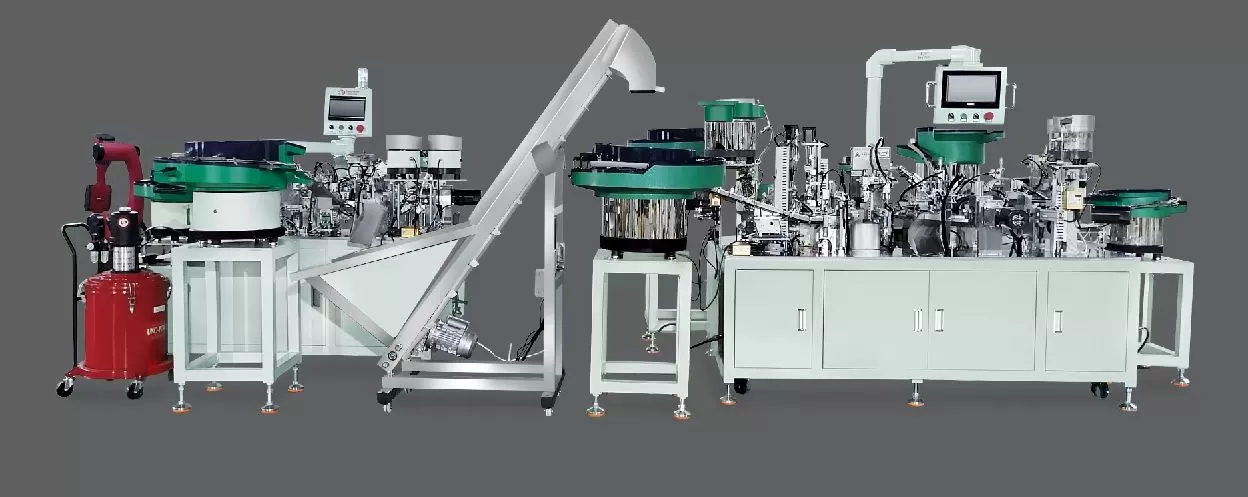
To ensure smooth material handling, Sanyhore’s hinge automatic assembly machine is equipped with a modular loading and unloading system. Central to this system is a high-precision vibratory feeder, which efficiently orients and separates hinge blanks, eliminating jams and ensuring consistent feeding. Adjacent to the feeder is a linear conveyor, designed to transport hinge components at a controlled speed, reducing idle time between stages. A multi-joint robot or gantry-style handler, integrated with vacuum grippers and position sensors, serves as the primary carrier for transferring hinge parts. This handler is programmed to accurately pick up blanks from the conveyor, position them in the assembly zone, and later place completed units onto the unloading conveyor. Additionally, a vision inspection station, located near the unloading end, ensures only qualified products proceed, while a reject mechanism diverts defective units to a separate collection bin.
Step-by-Step Loading Process
The loading process begins with the vibratory feeder, which uses mechanical vibrations to lift and orient hinge blanks—typically made of metal or plastic—into a single-file sequence. As the feeder bowl rotates, parts are guided along a track by helical ramps, ensuring each blank faces the correct orientation for assembly. The linear conveyor then takes over, moving blanks to a designated loading position, where a proximity sensor confirms their presence. The handler, activated by a signal from the sensor, extends its grippers to pick up one hinge blank at a time. Using a combination of positional feedback from encoders and visual confirmation from cameras, the handler aligns the blank with the assembly fixture. Once positioned, the grippers release the blank, and a locking mechanism secures it in place, allowing the assembly process to begin. This step, optimized with a cycle time of 2–3 seconds, minimizes the time between loading and the start of assembly, a key factor in overall production speed.
Integration with Assembly Operations
Sanyhore’s design ensures the loading process synchronizes perfectly with the machine’s assembly cycle. A Programmable Logic Controller (PLC) coordinates the movements of the handler, feeder, and conveyor, adjusting speeds in real time to prevent bottlenecks. For example, if the assembly station temporarily pauses for a quality check, the handler will hold the hinge blank in a pre-positioned buffer area, avoiding unnecessary movement. The PLC also monitors sensor data, such as the number of blanks fed and the handler’s position, to detect anomalies early—such as a misaligned blank or a jam in the conveyor—triggering alerts to operators if intervention is needed. This integration not only streamlines the workflow but also reduces the risk of errors, ensuring each hinge undergoes consistent assembly.
Automated Unloading Mechanisms
Once assembly is complete, the unloading process mirrors the loading steps but in reverse, with equal attention to precision. The completed hinge, now fitted with pins, springs, or other components, is released from the assembly fixture by an ejector mechanism. The handler then re-grasps the unit, moving it to a vision inspection station. Here, cameras capture images of critical dimensions, such as pin alignment and component fit, while a force sensor checks for proper closure resistance. If the hinge passes inspection, the handler transfers it to the unloading conveyor, which sorts units by grade (e.g., standard or premium) and directs them to a packaging or storage area. Defective hinges, identified by the vision system, are diverted to a reject chute, where they are collected for rework or disposal. This dual-path unloading ensures only high-quality products proceed to the next stage, maintaining the machine’s reputation for reliability.
Quality Control in the Loading-Unloading Cycle
Quality control is embedded throughout the loading and unloading process, with Sanyhore’s system incorporating multiple checks to prevent defects. Before loading, the vibratory feeder includes a metal detector to remove foreign objects, safeguarding downstream assembly. During loading, the handler’s position sensor verifies that each hinge blank is correctly oriented, avoiding misassemblies that could lead to functional failures. Post-assembly, the vision inspection station ensures components are properly seated, and the force sensor confirms that hinges meet the required closure force standards—critical for their performance in applications like furniture, doors, and automotive systems. By integrating these checks into the workflow, Sanyhore’s machine reduces the need for manual quality control, saving time and reducing labor costs.
Why Choose Sanyhore for Hinge Assembly Machines
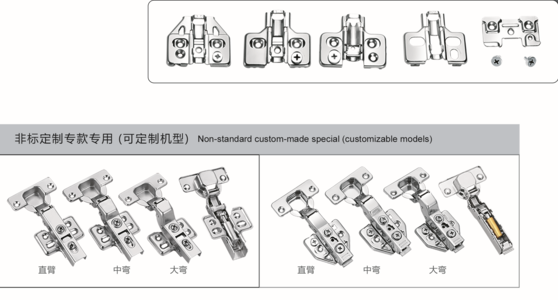
Sanyhore’s commitment to innovation and precision is evident in the loading and unloading process of its hinge automatic assembly machines. Unlike generic equipment, our systems are tailored to accommodate various hinge sizes and materials, from lightweight plastic hinges to heavy-duty metal ones, with minimal reconfiguration. The use of high-grade components—such as stainless steel grippers and maintenance-free linear guides—ensures long-term durability, reducing downtime and maintenance needs. Additionally, our technical team provides comprehensive support, including on-site installation, operator training, and remote diagnostics, ensuring your machine operates at peak efficiency. For manufacturers seeking to enhance production capacity and product quality, Sanyhore’s hinge assembly machines, with their optimized loading and unloading processes, offer a competitive edge.
Ready to optimize your hinge production? Contact Sanyhore’s sales manager today at +86 13425506550 or send an email to info@sanyhore.com for a personalized consultation. Our team is dedicated to delivering solutions that meet your specific needs, whether you’re scaling up production or upgrading existing equipment.


