

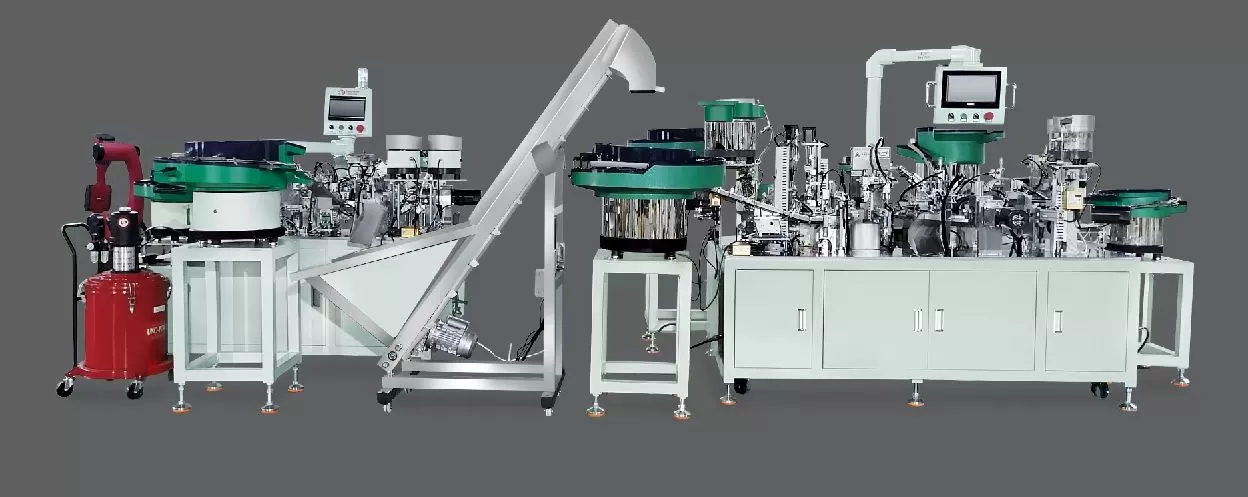
In the furniture manufacturing sector, the production of drawer slides—critical components for cabinetry, furniture, and storage systems—often grapples with persistent hurdles. Traditional methods, reliant on manual labor and outdated machinery, frequently result in inconsistent quality, slow throughput, and high operational costs. For manufacturers, balancing output with precision while meeting tight deadlines has become a significant challenge. However, Sanyhore, a trusted name in advanced manufacturing equipment, has introduced a revolutionary machine that addresses these pain points head-on. This innovative solution not only streamlines production workflows but also elevates product performance, setting new benchmarks for the industry.
1. Automated Precision: The Backbone of Enhanced Productivity
At the core of Sanyhore’s machine lies advanced automation, which eliminates the inefficiencies of manual labor and outdated systems. Equipped with integrated robotic arms and computerized control panels, the equipment handles every stage of drawer slide production—from material loading to component assembly and final testing—with minimal human intervention. This reduces the risk of human error inherent in manual processes, such as misalignment or incorrect part placement, and enables continuous operation. For example, the machine can process up to 500 slides per hour, a substantial improvement over the average 200-300 slides produced manually, directly boosting factory output without compromising speed.
2. Real-Time Quality Control: Ensuring Consistency at Every Step Product quality is non-negotiable in the furniture industry, where even minor defects in drawer slides can lead to customer dissatisfaction or product failures. Sanyhore’s machine integrates in-line quality monitoring tools, including laser dimension sensors and pressure testers, to inspect each slide in real time. If a slide fails to meet predefined standards—such as incorrect length, insufficient load capacity, or rough movement—the system immediately halts production, preventing the flow of substandard products. This not only reduces material waste but also ensures that every slide leaving the production line adheres to strict industry benchmarks, enhancing customer trust and loyalty.
3. Resource Optimization: Cutting Costs Through Efficiency Beyond productivity, the machine excels in resource management, helping manufacturers reduce operational costs significantly. Its roll forming technology, a key feature, shapes metal sheets into drawer slide components with minimal material waste, cutting scrap rates by up to 15% compared to traditional stamping methods. Additionally, energy-efficient motors and intelligent power management systems lower electricity consumption, while reduced labor requirements cut staffing expenses. Over time, these savings translate into a shorter return on investment (ROI), making the machine an attractive option for both small and large-scale producers aiming to improve profitability.
4. User-Friendly Design: Accessible to All Production Teams Sanyhore prioritized usability, ensuring the machine is easy to operate and maintain, regardless of the factory’s technical expertise. The intuitive touchscreen interface guides operators through setup, monitoring, and maintenance tasks, with built-in diagnostics that quickly identify issues like jammed parts or sensor malfunctions. Routine maintenance, such as replacing wear parts, is simplified with modular components, minimizing downtime. This accessibility means even small factories with limited technical staff can adopt the machine without extensive training, expanding its appeal across diverse market segments.
5. Versatility: Adapting to Diverse Slide Specifications The machine’s flexibility is another standout feature, allowing manufacturers to produce various drawer slide types, including telescopic, side-mount, and under-mount designs. With adjustable parameters for length, width, and material thickness, it can switch between product lines in minutes, eliminating the need for multiple machines. This versatility is especially valuable for custom furniture makers or companies with fluctuating production demands, enabling them to stay agile in a dynamic market.
In conclusion, Sanyhore’s machine represents a transformative force in drawer slide production. By combining automation, precision, and cost efficiency, it addresses the core challenges faced by manufacturers, from inefficiency to poor quality. Whether scaling up production, reducing operational costs, or enhancing product performance, the solution caters to the evolving needs of the industry. For those looking to elevate their manufacturing capabilities, reaching out to Sanyhore is the first step. Contact +86 13425506550 or email info@sanyhore.com to explore how this innovative machinery can transform your production line.
Frequently Asked Questions (FAQ)
Q1: What makes Sanyhore’s machine stand out in drawer slide production?
A1: Designed with integrated automation, real-time quality monitoring, and resource optimization, it boosts efficiency, reduces costs, and adapts to diverse slide types, making it a comprehensive solution for manufacturers.
Q2: How does the machine ensure consistent product quality?
A2: Equipped with laser sensors and pressure testers, it inspects each slide during production, immediately halting if standards are not met, thus minimizing defects and waste.
Q3: Can the machine accommodate different slide specifications?
A3: Yes, with adjustable parameters for length, width, and material thickness, it can produce telescopic, side-mount, and under-mount slides, switching between product lines quickly.
Q4: Is the machine suitable for small factories with limited technical staff? A4: Absolutely. Its intuitive interface and simplified maintenance reduce the need for extensive training, making it accessible to small and large-scale producers alike.
Q5: How long does it take to see a return on investment?
A5: The machine’s cost savings in labor, materials, and reduced waste typically result in a shorter ROI, with many customers reporting positive returns within 6-12 months of implementation.


