

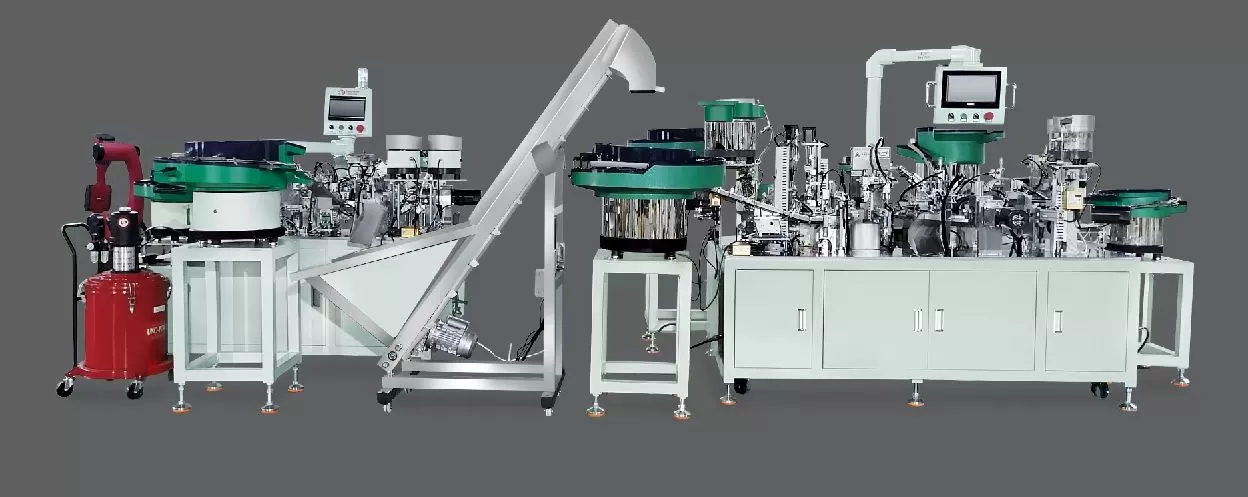
In today’s competitive manufacturing landscape, the core challenge lies in delivering high-quality products while maintaining or even reducing operational costs. Companies aiming to maximize value must shift from a "cost-focused" mindset to a "value-driven" approach, where every operational decision aligns with both quality excellence and financial efficiency. This article explores actionable strategies to achieve this balance, with a focus on leveraging advanced production technologies and optimized workflows—insights tailored for manufacturers of hinge assembly machines, telescopic drawer slide assembly machines, and roll forming machines.
1. Optimizing Production Efficiency: The Foundation of Cost Control
Efficiency is the cornerstone of reducing operational costs. Manual production processes often lead to inconsistencies, longer cycle times, and higher labor expenses. By integrating automated equipment—such as our hinge assembly machine and telescopic drawer slide assembly machine—manufacturers can minimize human error, reduce assembly time, and ensure consistent output. For example, automated clamping systems and sensor-driven adjustments in our machines eliminate the need for repetitive manual checks, cutting production cycles by 25–35% in many cases. This not only lowers labor costs but also frees up resources to focus on more strategic tasks, creating a ripple effect of improved overall efficiency.
2. Minimizing Waste: Reducing Material and Resource Expenses
Material waste is a silent but significant cost driver in production. High-quality raw materials, when misused or overprocessed, directly impact the bottom line. Advanced roll forming machines, for instance, are engineered to shape metal strips with precision, minimizing scrap rates by up to 15% compared to traditional cutting methods. By investing in such equipment, manufacturers can reduce material waste, lower procurement costs, and even qualify for sustainability incentives—all while maintaining the structural integrity and quality of components. This dual benefit of waste reduction and cost savings makes modern roll forming and assembly machines a critical asset for value optimization.
3. Adopting Lean Manufacturing Principles: Streamlining Workflows
Lean manufacturing, centered on eliminating non-value-added activities, has proven transformative for operational cost reduction. This approach involves analyzing workflows to identify bottlenecks, redundant steps, or overproduction—common culprits of inflated costs. For example, integrating our roll forming machine with automated material handling systems can reduce setup times by 40%, allowing for faster changeovers between product runs. Similarly, implementing visual management tools (e.g., Kanban boards) ensures just-in-time inventory, reducing storage costs and the risk of obsolete parts. By aligning processes with lean principles, manufacturers can achieve smoother operations with fewer resources, directly lowering operational expenses.
4. Strengthening Quality Control: Preventing Defects to Avoid Rework Costs
While reducing costs is a priority, cutting corners on quality often leads to higher long-term expenses—from customer returns to reputational damage. Instead of focusing solely on "cheaper production," prioritize "defect prevention." Our hinge assembly machine, equipped with real-time quality monitoring, automatically detects deviations in hinge dimensions or assembly tightness, flagging issues before they result in defective units. This proactive quality control eliminates the need for expensive rework, scrap, or post-production inspections. By combining advanced technology with rigorous testing protocols, manufacturers ensure products meet high standards while avoiding the hidden costs of errors.
5. Investing in Reliable Production Equipment: Long-Term Cost Savings Over Time
The choice of production equipment directly impacts total operational costs. Low-quality machines may seem cheaper upfront but often require frequent repairs, higher energy consumption, and slower production—all eroding profitability. Conversely, investing in durable, technologically advanced machines like our telescopic drawer slide assembly machine or roll forming machine delivers long-term savings. For instance, our machines are built with high-grade steel components and precision engineering, reducing maintenance needs by 50% over three years. Lower energy usage (thanks to optimized motor designs) and longer lifespans (10+ years) mean a faster return on investment (ROI) compared to cheaper alternatives.
6. Collaborating with Specialized Manufacturers: Tailored Solutions for Your Needs
Partnering with a trusted manufacturer of production equipment can unlock tailored cost-saving solutions. As a dedicated provider of hinge assembly machines, telescopic drawer slide assembly machines, and roll forming machines, we understand the unique challenges of your industry. Our team works closely with clients to design machines that align with their specific production volume, product requirements, and budget constraints. For example, we can customize roll forming machines to accommodate varying sheet metal thicknesses, reducing the need for multiple machines and lowering capital expenditure. This collaborative approach ensures you get equipment that not only meets quality benchmarks but also fits your operational context, driving sustainable cost reductions.
In the end, maximizing production value is not about cutting corners but about making strategic investments that yield long-term returns. By optimizing efficiency with advanced machines, minimizing waste, adopting lean principles, enforcing proactive quality control, and choosing reliable equipment, manufacturers can achieve high-quality production at lower operational costs. As a leading manufacturer of hinge assembly machines, telescopic drawer slide assembly machines, and roll forming machines, we are committed to supporting your journey toward value maximization. Contact us today at +86 13425506550 or info@sanyhore.com to explore how our solutions can transform your production process.


