

文章内容
In modern industry, hinges are far more than simple connectors—they directly impact product durability, user experience, and even brand trust. A "perfect hinge" must meet strict standards: consistent dimensions, smooth movement, and long-term stability. Yet, traditional hinge production often struggles with these goals due to manual inefficiencies, leading to variability and high labor costs. This is where advanced automation steps in, revolutionizing hinge manufacturing to deliver the precision and reliability needed for today’s demanding markets.
The Critical Role of Hinges in Diverse Applications
Hinges are foundational components across industries. In furniture, they ensure seamless opening/closing; in automotive, they withstand constant stress; in medical devices, they maintain sterility and precision. Without strict quality control, even minor inconsistencies can lead to product failure, customer complaints, or safety risks. For manufacturers, the challenge lies in scaling production while upholding these standards—automation emerges as the key to balancing efficiency and quality.
Traditional Hinge Production: Limitations and Inefficiencies
Manual hinge manufacturing relies heavily on human labor, from material cutting to final assembly. This approach is prone to errors: human vision fatigue causes misalignment checks to fail; inconsistent force application during crimping leads to weak joints; and slow production rates struggle to meet rising market demands. Over time, these inefficiencies not only increase costs but also limit the ability to produce complex hinge designs, hindering innovation and competitiveness.
Automation: The Catalyst for Hinge Manufacturing Excellence
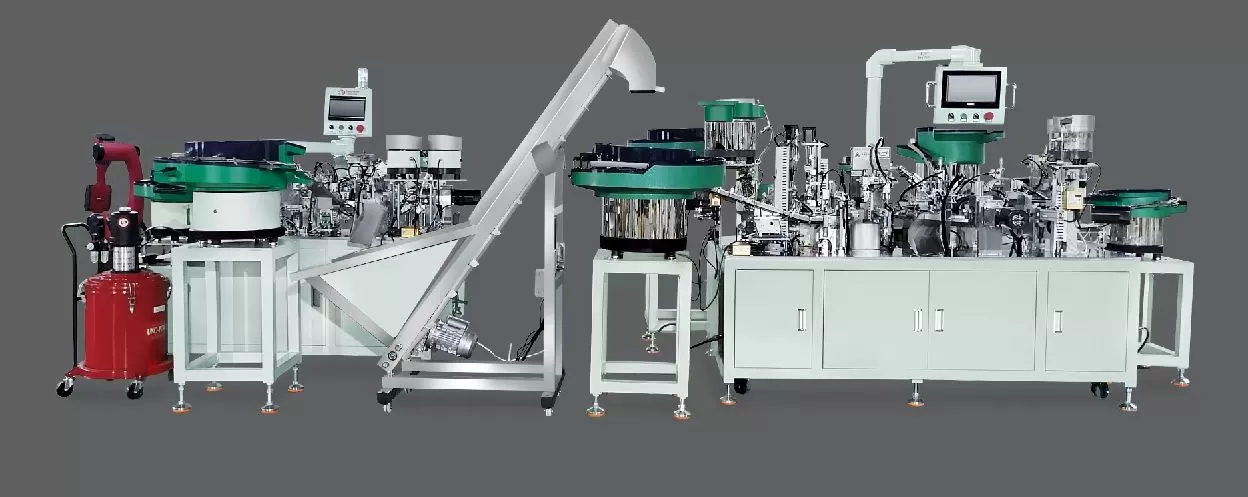
Automation addresses these pain points by replacing manual tasks with precise, repeatable systems. Modern hinge assembly machines integrate cutting-edge technologies to ensure "perfect hinges" every time. Key benefits include:
- Precision: Computer-controlled systems maintain tight tolerances (often ±0.01mm), eliminating human error in dimensions, gaps, and alignment.
- Efficiency: Automated lines operate at speeds 3–5x faster than manual production, reducing cycle times and boosting output without compromising quality.
- Consistency: Uniform processes across batches ensure every hinge meets strict standards, reducing rework and scrap rates.
- Data-Driven Optimization: Integrated sensors collect real-time data on production metrics, enabling adjustments to minimize defects and extend machine uptime.
Core Technologies Behind Automated Hinge Systems
A reliable automated hinge production line combines several critical components to achieve "perfect hinges":
- Servo-Driven Assembly Mechanisms: High-precision motors with encoders control movement, ensuring consistent force and speed during crimping, pin insertion, and coating.
- Vision Inspection Systems: 3D cameras and AI algorithms check hinge dimensions, surface finish, and functional movement (e.g., opening/closing resistance) in milliseconds.
- Modular Design: Configurable tooling adapts to different hinge types (e.g., butt hinges, continuous hinges, piano hinges), reducing setup time for diverse orders.
- PLC and IoT Integration: Programmable logic controllers (PLCs) coordinate all components, while IoT connectivity enables remote monitoring, predictive maintenance, and seamless integration with factory-wide systems.
Sanyhore: Your Partner in Hinge Automation
As a leading manufacturer of industrial assembly machines, Sanyhore specializes in designing and delivering customized automation solutions for hinge production. Our expertise spans three core product lines:
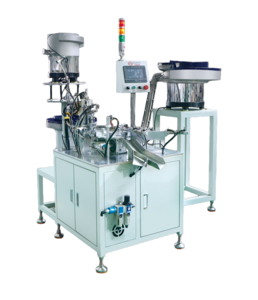
- Hinge Assembly Machines: Fully automated systems for precision hinge manufacturing, from raw material feeding to final inspection.
- Telescopic Drawer slide assembly machines: Engineered for furniture and storage solutions, these machines ensure smooth slide movement and durability.
- roll forming machines: Specialized equipment for shaping metal strips into hinge blanks, with capabilities for complex profiles and high-volume production.
What sets Sanyhore apart? We don’t just sell machines—we deliver tailored automation solutions that align with your production goals, whether you need a small-scale setup or a fully integrated factory line. Our team of engineers works closely with clients to optimize processes, ensuring every hinge meets your exacting standards.
Shaping the Future of Hinge Manufacturing
The hinge industry is evolving rapidly, driven by demand for lighter, stronger, and more sustainable products. Automation will play an even bigger role in this shift, with trends like AI-driven predictive maintenance, collaborative robots (cobots) for flexible production, and eco-friendly materials integration. By partnering with Sanyhore, you gain access to cutting-edge technology that not only meets today’s needs but also positions your business for long-term success in a competitive market.
Ready to Elevate Your Hinge Production?
If you’re looking to enhance precision, reduce costs, or scale production, Sanyhore’s automation solutions are the answer. Our hinge assembly machines, paired with our commitment to innovation and customer support, ensure you get "perfect hinges" every time. Contact us today to discuss your project:
- Sales Manager: +86 13425506550
- Email: info@sanyhore.com
FAQ: Common Questions About Hinge Automation
Q: How does automated hinge production reduce defects?
A: Automated systems use sensors and vision checks to detect inconsistencies in real time, while precise mechanical components eliminate human error, drastically lowering defect rates by 70% or more.
Q: Can Sanyhore’s machines adapt to custom hinge designs?
A: Absolutely. Our modular automation systems are designed to accommodate diverse hinge types, with tooling and parameters easily adjusted to match your specific product requirements.
Q: What after-sales support do you offer for hinge assembly machines?
A: Beyond installation and training, Sanyhore provides 24/7 technical support, spare parts supply, and regular maintenance services to ensure long-term machine performance.


