

.png)
In today's manufacturing landscape, the demand for precision and efficiency in producing components like hinges has never been higher. This is where automatic assembly machines play a pivotal role, streamlining production while maintaining the tight tolerances required for reliable performance. The Jieyang Hinge Automatic Assembly Machine is a prime example of such technology, designed to handle the intricate steps of hinge assembly with minimal human intervention. Understanding its precision assembly process is key to appreciating the value it brings to industries ranging from furniture to automotive.
Key Stages in the Automatic Assembly Process
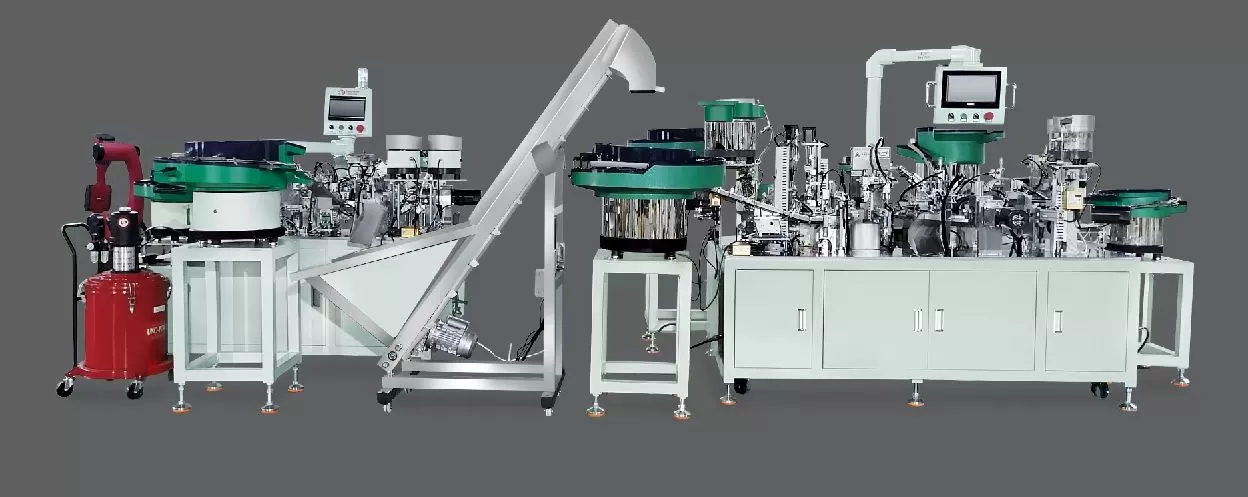
The precision assembly process of the Jieyang Hinge Automatic Assembly Machine can be broken down into several critical stages, each designed to ensure accuracy and consistency. The journey begins with component feeding, where raw materials or pre-fabricated parts are sorted and directed into the assembly line. Using advanced vibratory feeders and linear tracks, the machine ensures each part is positioned correctly, avoiding jams and reducing setup time. This initial step is foundational, as any misalignment here can propagate through subsequent stages, compromising the final product's quality.
Next comes the positioning and alignment phase. Hinges consist of multiple small, delicate parts—such as leaves, pins, and springs—each requiring precise placement relative to others. The machine employs high-precision vision systems and servo-driven manipulators to achieve this. Camera systems scan components in real time, verifying dimensions and orientation before they are moved to assembly stations. By integrating feedback loops, the system adjusts for minor variations, ensuring even the most complex hinge configurations are aligned within sub-millimeter tolerances.
The core assembly stage involves joining the components securely. Depending on the hinge type, this may include operations like riveting, welding, or adhesive application. For instance, in the case of butt hinges, the machine uses specialized tools to insert and crimp pins, ensuring a tight, non-slip fit. Adhesive-based assembly, common in decorative or high-stress hinges, leverages dispensers calibrated to apply exact amounts of adhesive, followed by curing stations to ensure proper bonding. Each connection is tested immediately to confirm strength and durability, with the machine discarding any flawed units before they proceed further.
Quality Control: Ensuring Reliability in Every Hinge
After assembly, the machine incorporates comprehensive quality control checks to validate each hinge's performance. Non-destructive testing methods, such as ultrasonic inspection or force testing, evaluate structural integrity without damaging the product. For example, a tension test may apply controlled force to the hinge leaves to ensure they withstand specified loads, while a rotation test checks for smooth movement and consistent resistance. These tests are automated and logged, creating a digital record for traceability.
Post-Assembly Optimization and Calibration
Even after assembly, the Jieyang Hinge Automatic Assembly Machine continues to ensure quality through post-assembly optimization. The system features built-in calibration tools that adjust for wear and environmental factors, such as temperature or humidity changes. Regular maintenance routines, integrated into the machine's design, minimize downtime and ensure long-term precision. This commitment to ongoing optimization is what makes the machine a reliable choice for high-volume production, where even small shifts in performance can impact overall output.
Why Sanyhore Stands Out as a Trusted Manufacturer
When it comes to investing in automatic assembly machines, partnering with a manufacturer with a proven track record is essential. Sanyhore, a leading provider of hinge assembly machines, telescopic drawer slide assembly machines, and roll forming machines, brings decades of expertise to the table. Our machines are engineered with a focus on user-friendly operation, minimal maintenance requirements, and adaptability to various hinge and slide configurations. By combining cutting-edge technology with a deep understanding of manufacturing needs, Sanyhore ensures that its equipment delivers consistent results, helping clients reduce costs and improve productivity.
Q: How does the precision assembly process of your hinge automatic assembly machine ensure high-quality hinges?
A: Our process integrates multiple layers of quality control, from component inspection to post-assembly testing. Advanced vision systems and servo-driven mechanisms maintain tight tolerances, while automated testing validates structural integrity, ensuring hinges meet industry standards for durability and performance.
Q: Can your automatic assembly machine handle custom hinge designs?
A: Yes. Sanyhore's machines are designed with modular components, allowing for easy adjustment to accommodate different hinge sizes, materials, and configurations. Our team works closely with clients to tailor the assembly process to their specific needs, ensuring flexibility without compromising precision.
Q: What makes your hinge assembly machines more efficient than manual or semi-automatic alternatives?
A: Our machines reduce production time by up to 60% compared to manual methods through fully automated component handling, real-time quality checks, and minimal human intervention. This efficiency translates to lower labor costs and higher output, making our solutions ideal for large-scale manufacturing.
For inquiries about the Jieyang Hinge Automatic Assembly Machine or to learn more about Sanyhore's range of assembly and forming equipment, reach out today. Contact our team at +86 13425506550 or email info@sanyhore.com to discuss how we can support your production goals.


