

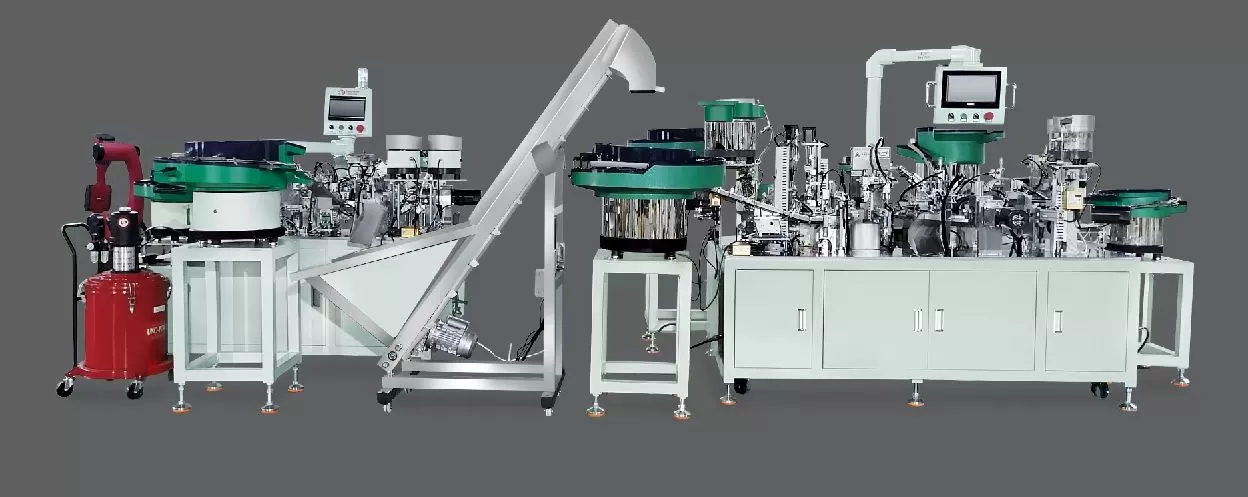
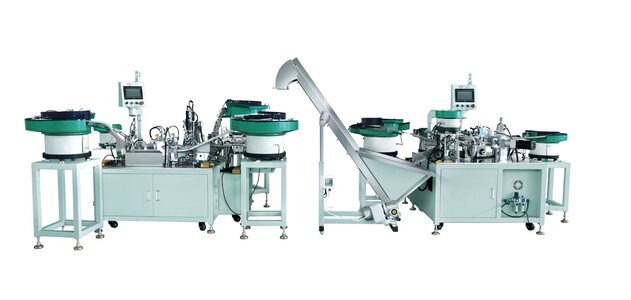
In the dynamic landscape of modern manufacturing, the ability to capture, analyze, and act on production data has become a cornerstone of operational excellence. For manufacturers in Jieyang specializing in hinge production, integrating automatic assembly machines has already streamlined operations, but to unlock their full potential, robust production data recording systems are essential. This article delves into the critical role of production data recording for Jieyang hinge automatic assembly machines, exploring its components, benefits, and how it drives smarter, more efficient manufacturing.
Key Components of Production Data Recording Systems for Hinge Assembly
A comprehensive production data recording system for automatic hinge assembly machines typically includes three core components: real-time data collection, storage, and analysis. On the collection front, sensors and IoT-enabled devices monitor key parameters such as assembly speed, pressure, temperature, and tool wear during the hinge production process. These sensors, often integrated directly into the machine’s control system, transmit data to a central database at high frequencies, ensuring no critical information is missed.
The storage layer, usually a cloud-based or on-premise server, compiles and archives this data, allowing manufacturers to access historical records for trend analysis. Compatibility with the Jieyang hinge automatic assembly machine’s existing control protocols—such as PLC (Programmable Logic Controller) interfaces or industrial Ethernet—is crucial here to avoid data transmission delays or incompatibility issues. Finally, the analysis component, often powered by advanced software, transforms raw data into actionable insights, such as identifying bottlenecks or optimizing assembly sequences.
Benefits of Real-Time Production Data Recording in Hinge Assembly
Real-time data recording offers tangible advantages that directly impact production outcomes. For one, it enables proactive quality control. By continuously monitoring parameters like torque during hinge pin insertion or the precision of component alignment, the system can flag anomalies immediately—for example, a sudden spike in temperature might indicate a misaligned tool, preventing defective hinges from being produced. This reduces rework and scrap rates, lowering overall production costs.
Efficiency gains are another key benefit. Through tracking metrics like cycle time, machine uptime, and operator performance, manufacturers can pinpoint inefficiencies in the assembly line. For instance, if data shows a specific hinge model consistently takes 10% longer to assemble, engineers can adjust tooling or reconfigure the workflow to reduce this gap. Over time, these adjustments lead to higher overall equipment effectiveness (OEE), maximizing output without increasing resource usage.
Seamless Integration with Jieyang Hinge Automatic Assembly Machine
Integrating production data recording with Jieyang hinge automatic assembly machines requires careful engineering to ensure seamless communication. Modern automatic assembly machines often come with built-in data output ports, such as USB, RS-485, or MQTT protocols, which can be directly connected to data loggers or industrial PCs. For older machines, retrofitting with IoT modules or edge computing devices can bridge the gap, enabling legacy equipment to participate in smart data recording.
At Sanyhore, a leading manufacturer of hinge assembly machines, we design our automatic assembly systems with data integration in mind. Our machines are pre-equipped with standardized interfaces, allowing production data to flow directly into our proprietary smart manufacturing platform. This integration ensures that every aspect of the assembly process—from component feeding to final testing—is captured, creating a complete digital footprint for each hinge produced.
Data-Driven Process Optimization for Hinge Production
Beyond monitoring, production data recording enables manufacturers to optimize processes through in-depth analysis. By aggregating data over time, engineers can identify patterns, such as how tool wear affects assembly precision or how environmental factors (e.g., humidity) impact component bonding. For example, data might reveal that tool life decreases by 5% after 1,000 cycles, prompting proactive maintenance instead of reactive breakdowns.
Sanyhore’s hinge assembly machines are paired with AI-powered analytics tools that automate this process. These tools can generate reports on production trends, highlight opportunities for improvement, and even suggest parameter adjustments in real time. This level of data-driven decision-making transforms manufacturing from a “seat-of-the-pants” operation into a precise, repeatable science—critical for scaling production while maintaining quality.
Ensuring Compliance and Traceability in Hinge Manufacturing
In regulated industries, compliance with standards like ISO 9001 or CE is non-negotiable. Production data recording plays a vital role here by ensuring full traceability of each hinge. Every entry in the data log includes details such as production date, operator ID, machine settings, and component batch numbers, creating an unbroken audit trail. If a quality issue arises, manufacturers can quickly trace the problem to a specific production run, component batch, or operator, minimizing recall risks and ensuring accountability.
Future Trends in Smart Production Data Management
As manufacturing evolves toward Industry 4.0, production data recording is poised to become even more sophisticated. The next generation of systems will leverage machine learning to predict maintenance needs based on data patterns, reducing downtime by identifying potential issues before they occur. Cloud integration will also enable remote monitoring, allowing managers to oversee multiple production lines from anywhere, while blockchain technology could enhance data security and immutability, ensuring records are tamper-proof.
For manufacturers in Jieyang looking to enhance their hinge production capabilities, investing in a robust production data recording system for their automatic assembly machines is a strategic move. At Sanyhore, we specialize in delivering hinge assembly machines, telescopic drawer slide assembly machines, and roll forming machines that are inherently designed for seamless data integration. By combining cutting-edge automation with intelligent data management, we help our clients achieve higher efficiency, better quality, and greater scalability.
Ready to transform your production data management? Contact our sales manager at +86 13425506550 or email info@sanyhore.com to discuss how our solutions can drive growth for your business.


