

TDK (Title, Keywords, Description)
Title: The Production Monitoring Process of Jieyang Hinge Automatic Assembly Machine: Ensuring Seamless Operations
Keywords: Jieyang hinge automatic assembly machine, production monitoring process, hinge assembly machine, automatic assembly, manufacturing control
Description: Enhance production efficiency and quality with the professional production monitoring process of Jieyang hinge automatic assembly machine by Sanyhore, a leading hinge assembly machine manufacturer.
Article Content
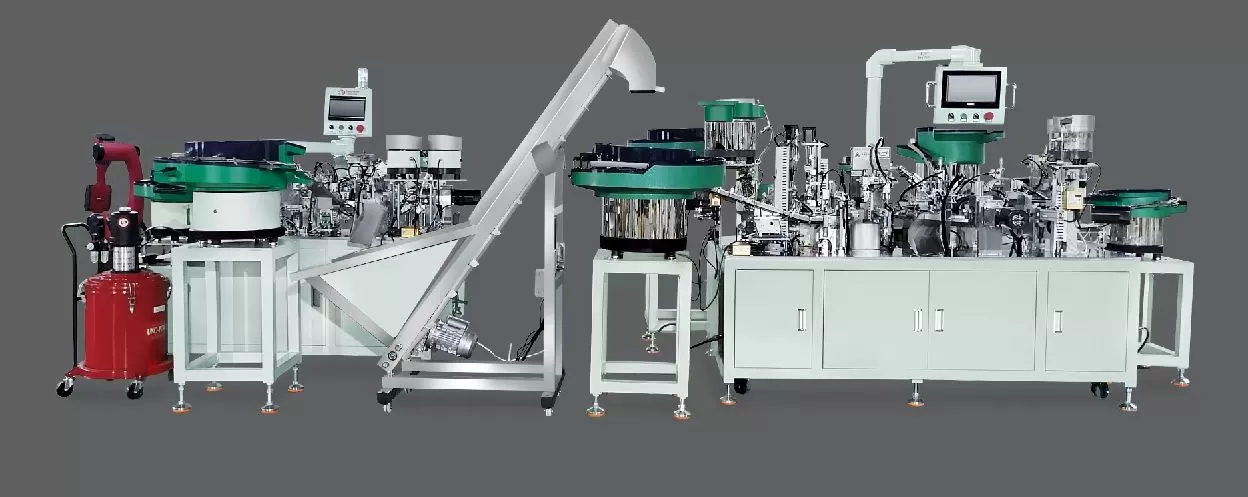
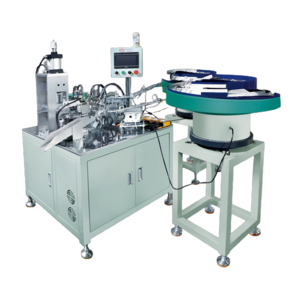
In the competitive landscape of hinge manufacturing, the production monitoring process of automatic assembly machines has become a critical factor in ensuring consistent quality, optimized efficiency, and reduced operational costs. For manufacturers in Jieyang and beyond, the Jieyang hinge automatic assembly machine, engineered by Sanyhore, a trusted name in the industry, integrates a sophisticated monitoring system to oversee every stage of the assembly workflow. This process not only tracks real-time data but also enables proactive adjustments, making it indispensable for modern hinge production lines.
#Key Objectives of Production Monitoring for Hinge Assembly
At its core, the production monitoring process for the Jieyang hinge automatic assembly machine is designed to achieve three primary objectives: improving production efficiency, maintaining product quality, and minimizing operational risks. Efficiency gains come from eliminating bottlenecks and reducing downtime, while quality control ensures that each hinge meets strict dimensional and functional standards. By continuously monitoring the assembly process, manufacturers can also identify and address potential risks—such as component misalignment or tool wear—before they escalate into defects, thus safeguarding the integrity of the final product.
#Core Monitoring Points in the Hinge Assembly Line
To deliver these objectives, the monitoring system focuses on several critical points in the hinge assembly process. First, component positioning accuracy is tracked using high-precision sensors that verify if hinges, pins, and other parts are correctly aligned before joining. Any deviation from the target position triggers an immediate alert, preventing misassemblies. Second, assembly force and torque are measured during crimping or riveting steps to ensure consistent joint strength, avoiding both under-tightened (weak) and over-tightened (damaged) connections. Additionally, machine performance metrics—including cycle time, tool temperature, and motor load—are monitored to detect early signs of equipment degradation, allowing for scheduled maintenance instead of unplanned breakdowns.
#Technical Framework of the Monitoring System
The Jieyang hinge automatic assembly machine’s monitoring process relies on a multi-layered technical framework. It starts with sensors and data acquisition devices—such as optical encoders, load cells, and vision systems—that capture raw data on position, force, and visual quality. This data is then transmitted to a central control unit (CCU), which processes it using advanced algorithms to validate against predefined standards. The CCU also features a real-time dashboard that displays key metrics, enabling operators to visualize production status at a glance. For predictive insights, the system leverages data analytics tools to identify trends, such as gradual increases in assembly time or recurring misalignment issues, which can be used to refine process parameters.
#Real-Time Data Analysis and Feedback Loops
A defining feature of the monitoring process is its ability to close the loop between data collection and production adjustment. When anomalies are detected—for example, a hinge pin failing to insert correctly—the system immediately sends a signal to the machine’s control system, pausing the assembly line if necessary. Operators then receive alerts via a mobile app or HMI (Human-Machine Interface), guiding them to inspect the issue or adjust settings (e.g., modifying the insertion speed or repositioning a tool). This real-time feedback ensures that deviations are corrected promptly, reducing the number of defective units and minimizing rework. Over time, the system also logs historical data, creating a knowledge base that helps optimize future production runs.
#Benefits for Hinge Assembly Manufacturers
For Sanyhore’s clients, the production monitoring process of the Jieyang hinge automatic assembly machine translates to tangible business benefits. Manufacturers can expect up to 20% faster production cycles due to reduced downtime and optimized workflows, while product defect rates drop by 15-20% through proactive quality control. The system also supports scalability, allowing manufacturers to adjust production volumes without sacrificing precision, and provides compliance support by maintaining detailed audit trails of all assembly data. As a result, Sanyhore’s hinge assembly machines with integrated monitoring systems empower clients to stay competitive in a market where efficiency and quality are non-negotiable.
#Conclusion: Partner with Sanyhore for Enhanced Hinge Production
In summary, the production monitoring process of the Jieyang hinge automatic assembly machine is a cornerstone of modern manufacturing, combining advanced technology with actionable insights to drive operational excellence. As a professional manufacturer specializing in hinge assembly machines, telescopic drawer slide assembly machines, and roll forming machines, Sanyhore is committed to equipping its clients with tools that elevate their production capabilities. By integrating robust monitoring systems into its automatic assembly machines, Sanyhore ensures that every hinge meets the highest standards of quality while maximizing efficiency. For manufacturers looking to streamline their hinge production, contact Sanyhore today at +86 13425506550 or via email at info@sanyhore.com to discover how our solutions can transform your manufacturing process.


