

.jpg)
In the dynamic world of manufacturing, the integration of automation has become a cornerstone of operational success, particularly in sectors where precision and efficiency directly impact product quality and market competitiveness. For drawer slide production—a critical component in furniture, automotive, and storage solutions—automation has revolutionized traditional workflows, introducing a new era of productivity and consistency. This shift from manual to automated systems not only streamlines production but also addresses longstanding challenges, making it an indispensable advantage for modern manufacturers.
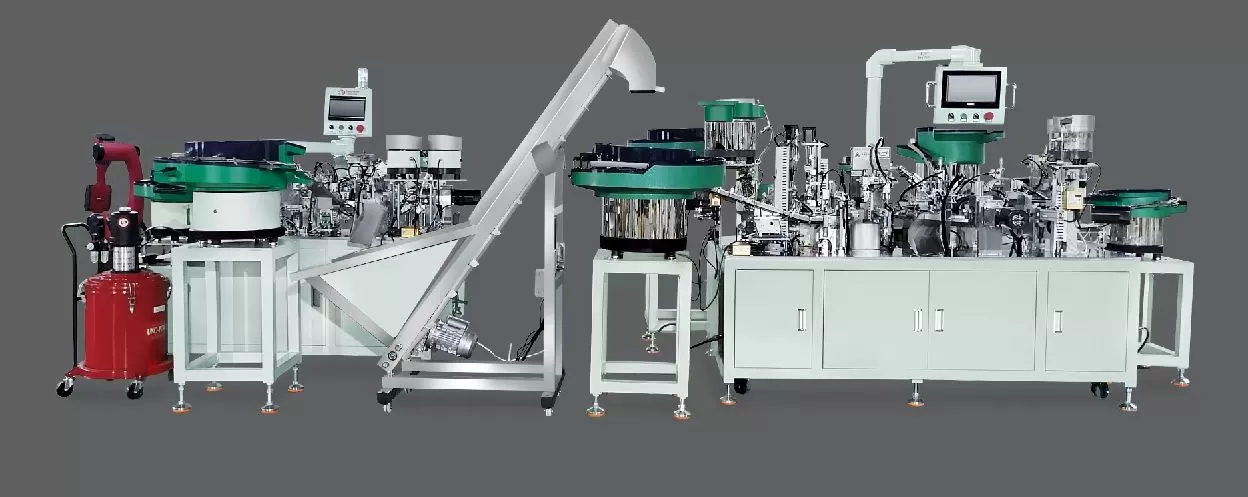
Enhanced Production Efficiency: The Core Driver of Automation — Traditional drawer slide production has long relied on manual assembly, a process hindered by repetitive motion, fatigue, and inconsistent speed. Even with skilled operators, daily output is limited, and production cycles can stretch to 10–15 seconds per slide, making it challenging to meet rising market demands. Automated systems, however, transform this dynamic. Machines like Sanyhore’s telescopic drawer slide assembly machines operate at speeds of 3–5 slides per second, reducing cycle time by 70–80% and boosting daily throughput significantly. Continuous operation—unlike manual shifts—eliminates downtime, ensuring 24/7 production capacity and faster order fulfillment, a critical edge in competitive markets.
Precision and Consistency: Redefining Quality Standards — Quality is non-negotiable in drawer slide production, where even minor inconsistencies in dimensions or material alignment can lead to functional failures. Traditional manual assembly often results in errors, with human operators struggling to maintain tight tolerances (common errors range from ±0.2mm to ±0.5mm). Automated systems, equipped with advanced servo motors, laser sensors, and computerized controls, achieve precision levels of ±0.05mm or better. This consistency ensures every slide meets strict quality benchmarks, reducing customer complaints and enhancing brand reputation. For example, Sanyhore’s hinge assembly machines integrate seamlessly with automated production lines, guaranteeing uniform hinge placement and tension, critical for smooth slide operation.
Cost Optimization: Long-Term Gains from Automated Systems — While initial investment in automation can seem steep, the long-term cost savings are substantial. Manual production requires a larger workforce, with operators needing constant supervision and training. Automated systems, by contrast, reduce labor costs by 40–60%, as fewer staff are needed to monitor and maintain the process. Additionally, automated systems minimize material waste: with precise cutting and assembly, scrap rates drop from 15–20% in manual settings to 5–8% in automated ones. Over time, these savings far outweigh the upfront equipment costs, delivering a strong return on investment (ROI) within 1–2 years for most manufacturers.
Scalability and Flexibility: Adapting to Market Demands — Modern markets demand diverse product offerings, from short, lightweight slides for compact furniture to long, heavy-duty slides for commercial storage. Traditional production lines struggle with this diversity, requiring hours or days of retooling to switch models. Automated systems, however, offer unmatched flexibility. Sanyhore’s roll forming machines and slide assembly systems can be reconfigured via software in minutes, adjusting parameters like length, width, and material thickness to match new orders. This agility allows manufacturers to quickly respond to market trends, take on more orders, and maintain a competitive edge in a fast-paced industry.
Data-Driven Innovation: The Future of Slide Manufacturing — Beyond efficiency and quality, automated systems generate actionable insights. Sensors and IoT integration collect real-time data on production metrics, including speed, temperature, pressure, and component alignment. By analyzing this data, manufacturers can identify bottlenecks, predict maintenance needs, and refine processes—for example, detecting a minor misalignment in a roll forming machine before it causes a batch defect. Sanyhore’s machines are designed with this in mind, featuring smart control panels that display key metrics and alert operators to potential issues, fostering a culture of continuous improvement.
As the demand for high-quality, affordable drawer slides grows, automation has emerged as the key to meeting these needs. Sanyhore, a trusted provider of specialized machinery for drawer slide production, delivers tailored automated solutions, including hinge assembly machines, telescopic drawer slide assembly machines, and roll forming machines, designed to enhance efficiency, precision, and profitability. To discover how these systems can transform your production line, contact our sales manager at +86 13425506550 or email info@sanyhore.com. Let’s build a more efficient, competitive production process together.


