

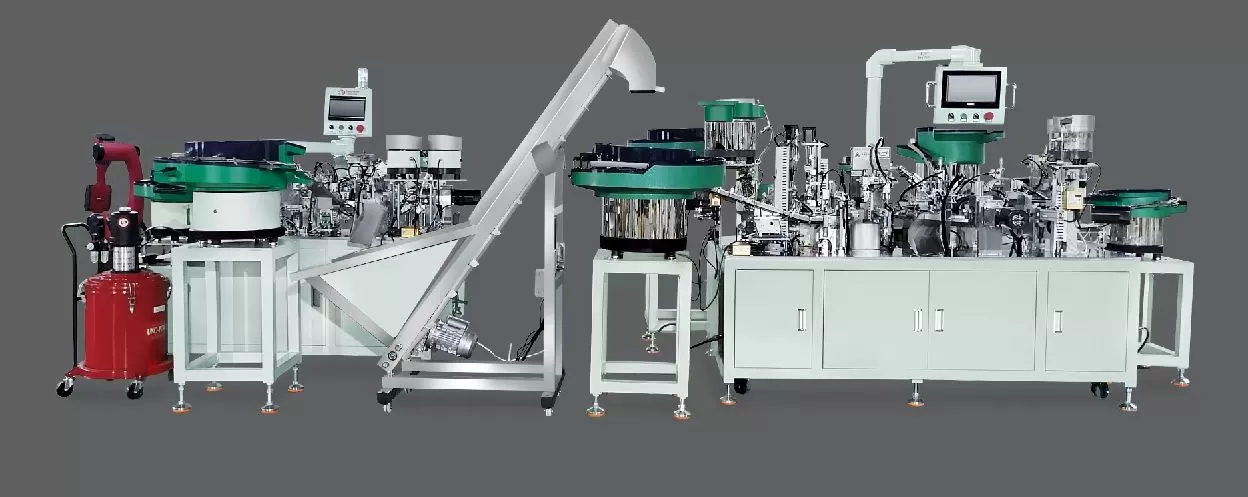
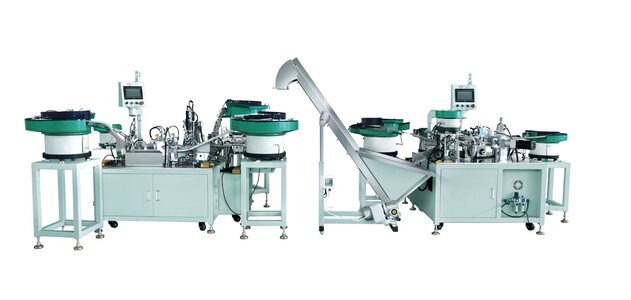
For quality-focused manufacturers, the demand for consistent precision, operational efficiency, and long-term reliability has never been higher. In an industry where even minor defects can impact reputation and profitability, the shift to automated assembly solutions—such as hinge assembly machines, telescopic drawer slide assembly machines, and roll forming machines—has become a strategic imperative. These systems don’t just replace manual labor; they redefine how manufacturers achieve and maintain quality, turning variability into consistency and inefficiencies into streamlined workflows.
Understanding the Automation Imperative
In traditional manufacturing, manual assembly often suffers from human error, fatigue, and inconsistent output—all factors that compromise quality and slow production. For example, assembling hinges or telescopic drawer slides by hand requires precise alignment, tight tolerances, and repetitive motion, which human workers can’t sustain over extended periods. Automated machines, by contrast, use advanced sensors, servo-driven mechanics, and computerized controls to execute tasks with sub-millimeter accuracy, 24/7, without degradation. This reliability is critical for manufacturers aiming to meet strict industry standards, from automotive to furniture production.
Key Benefits of Automated Assembly Systems
The value of automated solutions extends beyond precision. For Sanyhore, a trusted producer of hinge assembly machines and telescopic drawer slide assembly machines, these systems deliver tangible benefits:
- Consistent Quality: By eliminating human variability, automated machines ensure every component meets the same exacting standards. For instance, Sanyhore’s hinge assembly machines use pre-programmed parameters to control torque, alignment, and material placement, reducing defects by up to 90% compared to manual methods.
- Operational Efficiency: Automated systems run at speeds far beyond manual production, increasing output without proportional increases in labor costs. A telescopic drawer slide assembly machine, for example, can produce 500+ units per hour, while manual lines might only reach 100–150, cutting production cycles by 60% or more.
- Cost Optimization: Reduced waste, fewer reworks, and lower labor expenses translate to significant long-term savings. Over three years, a manufacturer using Sanyhore’s roll forming machines for metal components can recoup the initial investment through operational efficiencies alone.
Selecting the Right Automated System
Not all automated assembly machines are created equal. To find the “automatic choice” for a specific manufacturing process, focus on three core criteria:
- Compatibility: The system must align with your product specifications. Sanyhore’s telescopic drawer slide assembly machines, for example, are engineered to handle various slide lengths and materials, from steel to aluminum, ensuring seamless integration with existing production lines.
- Scalability: As market demand shifts, the system should adapt. Modular designs allow for easy upgrades—adding stations or adjusting speed to match changing output needs—without disrupting operations.
- Technical Support: A reliable supplier, like Sanyhore, offers ongoing maintenance, software updates, and on-site training. This ensures the system remains optimized, minimizing downtime and maximizing performance over time.
Driving Long-Term Excellence
Beyond immediate efficiency gains, automated assembly solutions lay the groundwork for sustained operational excellence. By collecting real-time data on production metrics—such as cycle time, defect rates, and tool wear—manufacturers gain actionable insights to refine processes. Sanyhore’s machines include built-in diagnostics, allowing teams to identify bottlenecks early and make adjustments before issues escalate. This data-driven approach not only maintains quality but also fosters a culture of continuous improvement, keeping manufacturers ahead in a competitive market.
Addressing Common Questions for Quality-Focused Manufacturers
Q: How do Sanyhore’s automated machines ensure compliance with strict quality standards?
A: Sanyhore’s hinge assembly machines and telescopic drawer slide assembly machines integrate advanced SPC (Statistical Process Control) tools, which monitor dimensions, force, and alignment in real time. This ensures every unit meets or exceeds industry benchmarks, from ISO 9001 to automotive OEM specifications.
Q: Can small-to-medium manufacturers benefit from automated systems?
A: Absolutely. Sanyhore designs compact, cost-effective solutions tailored to mid-sized production needs. For example, our roll forming machines for small-batch metal components deliver the same precision as larger systems, making automation accessible to manufacturers of all sizes.
Interested in transforming your production with automatic assembly machines that prioritize quality? Contact Sanyhore today at +86 13425506550 or via email at info@sanyhore.com. Our team of experts is ready to discuss how our hinge assembly machines, telescopic drawer slide assembly machines, and roll forming machines can elevate your manufacturing standards.


