
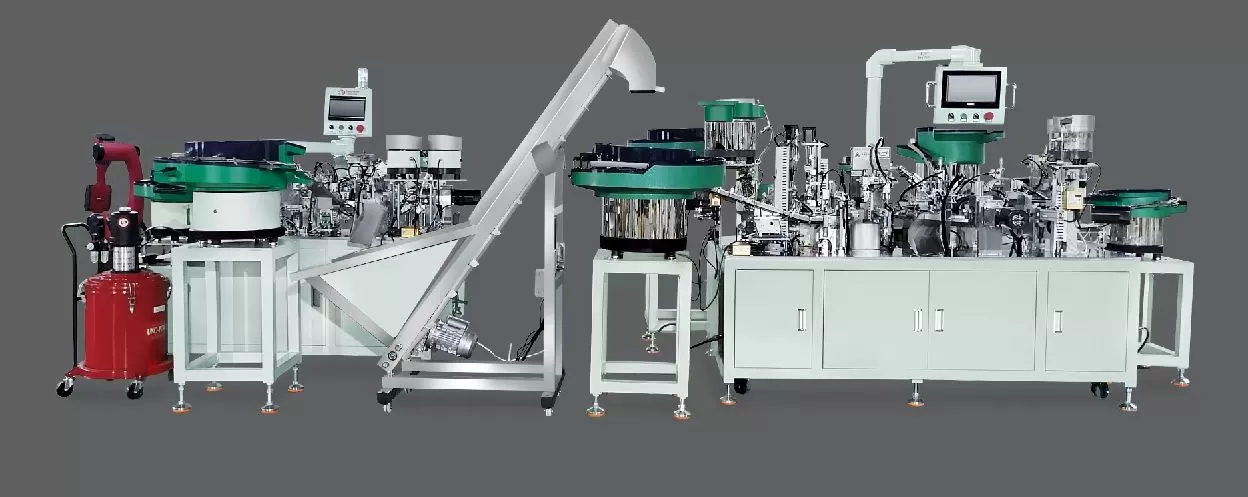
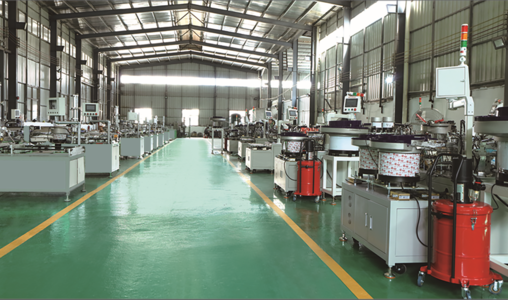
The Automatic Future of Furniture Manufacturing

2025-12-10


Today, the furniture manufacturing sector stands at the cusp of a revolution, with automation emerging as the cornerstone of modern production. As consumer demand for high-quality, customizable furniture grows, and global markets become more competitive, manufacturers face unprecedented pressure to enhance efficiency, reduce costs, and maintain consistent quality. Manual assembly lines, once the backbone of the industry, are increasingly being replaced by automated systems that integrate advanced technologies, redefining how furniture is made. This shift is not just a trend but a necessary evolution, driven by the dual goals of meeting rising demands and staying ahead in a rapidly changing landscape.

Key Technologies Powering Automated Furniture Production

Automated furniture manufacturing relies on a blend of cutting-edge technologies to streamline operations. Robotic systems, for instance, are now integral to tasks ranging from material handling to precise assembly, operating with 99.9% accuracy and tirelessly around the clock. Computer Numerical Control (CNC) machines, guided by digital blueprints, cut and shape materials with minimal human intervention, reducing waste and ensuring each component meets exact specifications. Additionally, the integration of Internet of Things (IoT) sensors and Artificial Intelligence (AI) enables real-time monitoring of production processes, predictive maintenance, and data-driven adjustments, further optimizing output. These technologies collectively address longstanding challenges in furniture making, such as variability in manual work and slow production cycles.

Efficiency and Quality: The Dual Benefits of Automation

One of the most significant impacts of automation is its ability to boost production efficiency. Automated systems can process raw materials, assemble components, and package finished products at speeds far exceeding manual methods, allowing manufacturers to scale up output without proportionally increasing labor costs. For example, a single robotic arm can perform the work of 3-4 human workers in hinge assembly, while CNC machines reduce material waste by up to 30% through precise cutting. Equally critical is the improvement in product quality. Automated processes eliminate human error, such as misaligned parts or inconsistent fastener placement, ensuring each piece of furniture meets strict quality standards. This consistency not only enhances customer satisfaction but also reduces returns and rework, saving both time and resources in the long run.

Sanyhore: Your Partner in Automated Furniture Manufacturing

To thrive in the automated future, furniture manufacturers need reliable, innovative equipment that can adapt to evolving production needs. Sanyhore, a leading producer of specialized manufacturing machinery, has positioned itself at the forefront of this transformation. Our range of automated solutions includes hinge assembly machines, engineered to seamlessly integrate hinge installation into production lines with minimal manual input, reducing cycle times and ensuring uniform hinge placement. For drawer slide production, our telescopic drawer slide assembly machines combine precision engineering with high-speed operation, meeting the demands of modern furniture designs. Additionally, our roll forming machines offer efficient, continuous production of metal components, a key requirement for durable and functional furniture parts. Each of these machines is built to enhance productivity, reduce operational costs, and align with the latest industry standards, making Sanyhore the trusted choice for manufacturers embracing automation.

Challenges and Opportunities in the Automated Future

While the benefits of automation are clear, manufacturers must also address challenges such as initial investment costs and the need for employee reskilling. However, these hurdles are offset by long-term returns, including increased profitability and competitiveness. As the industry continues to adopt smart factories and Industry 4.0 principles, the demand for integrated, user-friendly automated systems will only grow. Sanyhore is committed to supporting this journey by offering customizable solutions, technical expertise, and responsive customer service, ensuring that our clients can implement automation with confidence.

Looking ahead, the future of furniture manufacturing is not just about machines—it’s about creating smarter, more connected production ecosystems. By embracing automation, manufacturers can unlock new levels of efficiency, quality, and scalability, positioning themselves for success in a global market. To learn how Sanyhore’s hinge assembly machines, telescopic drawer slide assembly machines, or roll forming machines can transform your production line, contact us today at +86 13425506550 or email info@sanyhore.com. Our team is ready to help you build a more automated, efficient, and future-ready furniture manufacturing operation.

We use cookie to improve your online experience. By continuing to browse this website, you agree to our use of cookie.

Cookies

Please read our Terms and Conditions and this Policy before accessing or using our Services. If you cannot agree with this Policy or the Terms and Conditions, please do not access or use our Services. If you are located in a jurisdiction outside the European Economic Area, by using our Services, you accept the Terms and Conditions and accept our privacy practices described in this Policy.
We may modify this Policy at any time, without prior notice, and changes may apply to any Personal Information we already hold about you, as well as any new Personal Information collected after the Policy is modified. If we make changes, we will notify you by revising the date at the top of this Policy. We will provide you with advanced notice if we make any material changes to how we collect, use or disclose your Personal Information that impact your rights under this Policy. If you are located in a jurisdiction other than the European Economic Area, the United Kingdom or Switzerland (collectively “European Countries”), your continued access or use of our Services after receiving the notice of changes, constitutes your acknowledgement that you accept the updated Policy. In addition, we may provide you with real time disclosures or additional information about the Personal Information handling practices of specific parts of our Services. Such notices may supplement this Policy or provide you with additional choices about how we process your Personal Information.


Cookies

Cookies are small text files stored on your device when you access most Websites on the internet or open certain emails. Among other things, Cookies allow a Website to recognize your device and remember if you've been to the Website before. Examples of information collected by Cookies include your browser type and the address of the Website from which you arrived at our Website as well as IP address and clickstream behavior (that is the pages you view and the links you click).We use the term cookie to refer to Cookies and technologies that perform a similar function to Cookies (e.g., tags, pixels, web beacons, etc.). Cookies can be read by the originating Website on each subsequent visit and by any other Website that recognizes the cookie. The Website uses Cookies in order to make the Website easier to use, to support a better user experience, including the provision of information and functionality to you, as well as to provide us with information about how the Website is used so that we can make sure it is as up to date, relevant, and error free as we can. Cookies on the Website We use Cookies to personalize your experience when you visit the Site, uniquely identify your computer for security purposes, and enable us and our third-party service providers to serve ads on our behalf across the internet.

We classify Cookies in the following categories:
 ●  Strictly Necessary Cookies
 ●  Performance Cookies
 ●  Functional Cookies
 ●  Targeting Cookies


Cookie List
A cookie is a small piece of data (text file) that a website – when visited by a user – asks your browser to store on your device in order to remember information about you, such as your language preference or login information. Those cookies are set by us and called first-party cookies. We also use third-party cookies – which are cookies from a domain different than the domain of the website you are visiting – for our advertising and marketing efforts. More specifically, we use cookies and other tracking technologies for the following purposes:

Strictly Necessary Cookies
These cookies are necessary for the website to function and cannot be switched off in our systems. They are usually only set in response to actions made by you which amount to a request for services, such as setting your privacy preferences, logging in or filling in forms. You can set your browser to block or alert you about these cookies, but some parts of the site will not then work. These cookies do not store any personally identifiable information.

Functional Cookies
These cookies enable the website to provide enhanced functionality and personalisation. They may be set by us or by third party providers whose services we have added to our pages. If you do not allow these cookies then some or all of these services may not function properly.

Performance Cookies
These cookies allow us to count visits and traffic sources so we can measure and improve the performance of our site. They help us to know which pages are the most and least popular and see how visitors move around the site. All information these cookies collect is aggregated and therefore anonymous. If you do not allow these cookies we will not know when you have visited our site, and will not be able to monitor its performance.

Targeting Cookies
These cookies may be set through our site by our advertising partners. They may be used by those companies to build a profile of your interests and show you relevant adverts on other sites. They do not store directly personal information, but are based on uniquely identifying your browser and internet device. If you do not allow these cookies, you will experience less targeted advertising.

How To Turn Off Cookies
You can choose to restrict or block Cookies through your browser settings at any time. Please note that certain Cookies may be set as soon as you visit the Website, but you can remove them using your browser settings. However, please be aware that restricting or blocking Cookies set on the Website may impact the functionality or performance of the Website or prevent you from using certain services provided through the Website. It will also affect our ability to update the Website to cater for user preferences and improve performance. Cookies within Mobile Applications

We only use Strictly Necessary Cookies on our mobile applications. These Cookies are critical to the functionality of our applications, so if you block or delete these Cookies you may not be able to use the application. These Cookies are not shared with any other application on your mobile device. We never use the Cookies from the mobile application to store personal information about you.

If you have questions or concerns regarding any information in this Privacy Policy, please contact us by email at . You can also contact us via our customer service at our Site.