

.jpg)
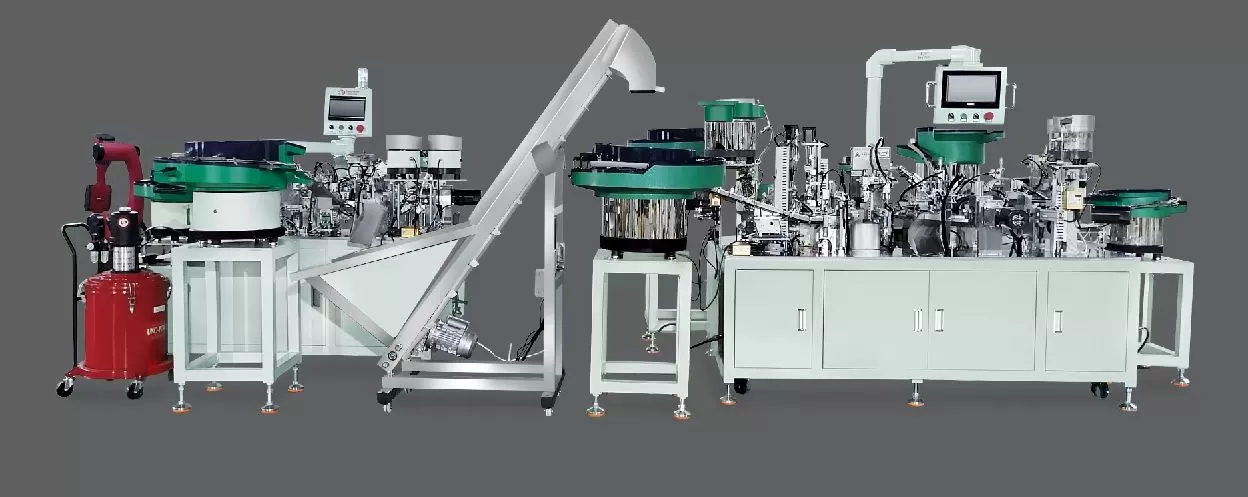
In the dynamic landscape of modern manufacturing, the automatic standard has emerged as a cornerstone for defining quality, efficiency, and consistency in slide production. As industries demand higher performance, tighter tolerances, and lower operational costs, the shift toward automated systems in slide manufacturing—encompassing hinge assembly, telescopic drawer slide assembly, and roll forming—has become not just a preference but a necessity. This article explores how the automatic standard is redefining the slide manufacturing sector, from technical requirements to practical implementation, and highlights how Sanyhore, a trusted manufacturer of hinge assembly machines, telescopic drawer slide assembly machines, and roll forming machines, is at the forefront of meeting these industry standards.
The Evolution of Slide Manufacturing: From Manual to Automated Excellence
Traditional slide production relied heavily on manual labor, with operators assembling components, adjusting settings, and inspecting parts. This approach was prone to human error, inconsistent quality, and limited scalability, especially for large-volume production. The automatic standard, however, integrates advanced technologies—such as computer numerical control (CNC), sensor-based quality checks, and automated material handling—to streamline every stage of the process. Today, automated systems ensure that each slide meets predefined specifications, from the precision of hinge installation to the structural integrity of roll-formed metal components, reducing defects by up to 80% and increasing production speeds by 50% or more.
Core Requirements of the Automatic Standard in Slide Production
To achieve the automatic standard, slide manufacturers must prioritize three key pillars: precision, adaptability, and reliability. Precision is critical, as even minor misalignments in telescopic drawer slide components can lead to premature wear or failure. Automated machines, equipped with real-time monitoring systems, ensure that each part is positioned within micrometer tolerances. Adaptability is equally important; modern automated systems must seamlessly integrate with diverse slide designs, whether for furniture, automotive, or industrial applications. Finally, reliability ensures minimal downtime, a factor that directly impacts operational costs. Sanyhore’s hinge assembly machines, for instance, are engineered with robust frames and high-quality motors to maintain consistent performance, even during extended production runs.
Technical Advantages of Implementing Automatic Standards
Implementing the automatic standard brings tangible benefits beyond efficiency. For one, it reduces dependency on skilled manual labor, allowing manufacturers to reallocate resources to more strategic tasks, such as process optimization and innovation. Material utilization is also improved, as automated roll forming machines precisely shape metal sheets, minimizing waste compared to traditional cutting methods. Additionally, automated quality control systems, including optical inspection and load testing, provide immediate feedback, enabling quick adjustments and preventing the flow of substandard products to market. Sanyhore’s telescopic drawer slide assembly machines, for example, feature integrated vision systems that detect defects in real time, ensuring only合格 (qualified) slides proceed to packaging.
Industry Impact: Setting New Benchmarks for Slide Performance
The automatic standard has raised the bar for slide performance across industries. In furniture manufacturing, where telescopic drawer slides are integral to user experience, automated assembly ensures consistent smoothness and load capacity, enhancing product durability and customer satisfaction. In automotive applications, where slides must withstand heavy use, automated roll forming machines create stronger, more uniform components, improving vehicle safety and reliability. As a result, industries increasingly specify slides manufactured under the automatic standard, driving demand for suppliers with the technical expertise to meet these rigorous benchmarks. Sanyhore’s commitment to aligning its machines with the automatic standard has made it a trusted partner for manufacturers seeking to deliver superior products.
Future Trends: The Automatic Standard and Smart Manufacturing
Looking ahead, the automatic standard in slide manufacturing is evolving to integrate with the broader shift toward smart manufacturing. Emerging technologies, such as the Internet of Things (IoT) and machine learning, are enabling predictive maintenance, where machines can self-diagnose issues before they cause downtime. Data analytics also play a role, as automated systems collect and analyze production data to identify bottlenecks and optimize processes. Sanyhore is actively investing in these innovations, equipping its machines with IoT connectivity to provide clients with real-time production insights. This forward-thinking approach ensures that the automatic standard remains at the cutting edge of slide manufacturing, supporting continuous improvement and long-term competitiveness.
Partnering with Sanyhore: Your Gateway to the Automatic Standard
To thrive in today’s competitive market, slide manufacturers need a reliable partner that understands the automatic standard and delivers machines that meet its demands. Sanyhore, a leading producer of hinge assembly machines, telescopic drawer slide assembly machines, and roll forming machines, combines technical excellence with customer-centric design. Our machines are built to comply with the automatic standard, offering precision, efficiency, and adaptability to suit diverse production needs. Whether you are scaling up production or upgrading existing lines, we provide tailored solutions that drive quality and profitability.
Ready to elevate your slide manufacturing to the automatic standard? Contact Sanyhore today for a consultation. Our team of experts is available at +86 13425506550 or via email at info@sanyhore.com to discuss your requirements and explore how our machines can transform your production process.
FAQ About Automatic Slide Manufacturing Standards
Q: What defines the automatic standard in slide manufacturing?
A: The automatic standard encompasses precise CNC control, automated material handling, real-time quality checks, and scalability, ensuring consistent, defect-free production. Sanyhore’s machines align with these criteria.
Q: How do automated hinge assembly machines improve quality?
A: Automated hinge assembly machines use sensor-based alignment and consistent pressure application, reducing human error and ensuring each hinge is installed with the required precision.
Q: Can Sanyhore’s roll forming machines adapt to custom slide designs?
A: Yes. Our roll forming machines are modular, allowing for quick tooling changes to accommodate different slide dimensions and materials, meeting specific production needs.
Q: What role does automation play in reducing slide production costs?
A: Automation minimizes manual labor, reduces material waste, and lowers defect rates, leading to significant cost savings over time, especially for high-volume production.
Q: How do I determine if my production line needs automatic standard upgrades?
A: If you experience frequent quality issues, low production speeds, or difficulty scaling output, upgrading to automatic systems—like Sanyhore’s machines—can resolve these challenges. Contact us for a free assessment.


