The Benefits of Automated Soft-Closing Drawer Slide Production

2025-12-10


The global furniture industry increasingly prioritizes functional, user-friendly hardware, with soft-closing drawer slides emerging as a key demand. These components not only enhance daily usability but also drive manufacturing innovation. Among the most impactful advancements in their production is automation, which transforms how these slides are made. By integrating sophisticated machinery, manufacturers can now produce high-quality soft-closing drawer slides more efficiently, consistently, and sustainably than ever before.

1. Enhanced Production Efficiency and Throughput

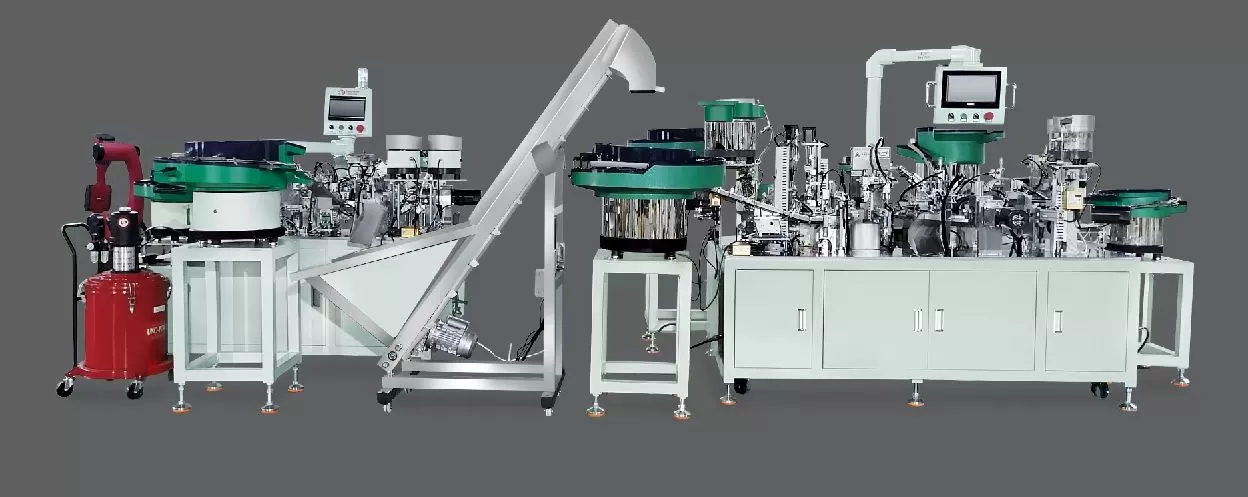
Automated soft-closing drawer slide production systems are engineered to operate at significantly higher speeds than manual processes. Robotic arms and computerized control systems handle tasks like component feeding, assembly, and quality testing with precision, reducing cycle times from hours to minutes per unit. For instance, advanced assembly machines can process 50–100 slides per minute, depending on complexity, allowing manufacturers to meet large-scale orders without compromising timelines. Additionally, automated systems minimize downtime through predictive maintenance features, such as sensor-based alerts for component wear, ensuring continuous operation. This efficiency directly translates to faster order fulfillment, a critical advantage in competitive markets.

2. Superior Product Quality and Consistency

Human error is a common challenge in manual manufacturing, leading to inconsistencies in soft-closing performance. Automated systems eliminate this risk by adhering to preprogrammed parameters, such as precise spring tension, damping mechanism calibration, and alignment tolerances. For example, computer numerical control (CNC) machines ensure each slide’s soft-closing function—whether using hydraulic, pneumatic, or magnetic dampening—performs uniformly across the production line. This consistency not only reduces defect rates but also strengthens brand reputation, as customers can trust that every slide will deliver the same smooth, quiet closure. Over time, this reliability lowers post-purchase returns and supports long-term customer loyalty.

3. Reduced Labor Costs and Operational Risks

The shift to automation in drawer slide production reduces reliance on manual labor, particularly in repetitive tasks like component insertion and testing. This not only cuts down on payroll expenses but also minimizes the risk of workplace injuries, such as repetitive strain or tool-related accidents. By automating these processes, manufacturers can reallocate human resources to more value-added roles, like machine monitoring and quality control oversight. For small to medium-sized enterprises, this cost optimization is often the difference between profitability and operational strain, especially amid labor shortages in many industries.

4. Optimized User Experience and Durability

Automated production ensures that soft-closing drawer slides meet strict performance standards, enhancing their functionality and lifespan. Advanced systems can test each slide for thousands of cycles to verify that the soft-close mechanism remains effective over time, even with frequent use. This durability is critical for consumer satisfaction, as users expect drawer slides to maintain their smooth operation for years. By integrating automated testing into production, manufacturers can also refine designs—for example, adjusting damping materials or spring tension—to improve user experience. This focus on quality directly aligns with market demands for premium, long-lasting furniture hardware.

5. Sustainable and Scalable Manufacturing

Modern automated drawer slide production systems prioritize sustainability, with features like energy-efficient drives, recycled material compatibility, and reduced waste generation. For instance, some machines use variable frequency drives to lower energy consumption during idle periods, while computerized material tracking minimizes scrap by optimizing component usage. These practices not only reduce environmental impact but also align with global sustainability goals, which are increasingly influencing purchasing decisions for businesses and consumers alike. As demand for eco-friendly manufacturing grows, automated systems position producers to scale operations without sacrificing their green credentials.

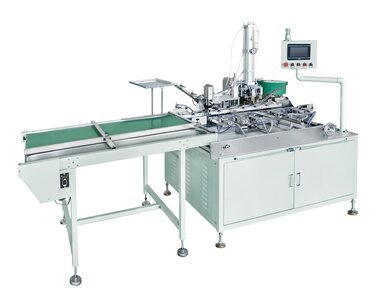
For manufacturers looking to leverage these benefits, partnering with a reliable equipment provider is key. Sanyhore, a professional manufacturer of hinge assembly machines, telescopic drawer slide assembly machines, and roll forming machines, offers tailored solutions to streamline soft-closing drawer slide production. With decades of expertise in automated manufacturing, Sanyhore’s systems are designed to boost efficiency, enhance quality, and reduce operational costs—enabling partners to meet market demands while staying competitive.

To learn more about how Sanyhore’s machines can transform your production line, contact us today: +86 13425506550 or via email at info@sanyhore.com.

We use cookie to improve your online experience. By continuing to browse this website, you agree to our use of cookie.

Cookies

Please read our Terms and Conditions and this Policy before accessing or using our Services. If you cannot agree with this Policy or the Terms and Conditions, please do not access or use our Services. If you are located in a jurisdiction outside the European Economic Area, by using our Services, you accept the Terms and Conditions and accept our privacy practices described in this Policy.
We may modify this Policy at any time, without prior notice, and changes may apply to any Personal Information we already hold about you, as well as any new Personal Information collected after the Policy is modified. If we make changes, we will notify you by revising the date at the top of this Policy. We will provide you with advanced notice if we make any material changes to how we collect, use or disclose your Personal Information that impact your rights under this Policy. If you are located in a jurisdiction other than the European Economic Area, the United Kingdom or Switzerland (collectively “European Countries”), your continued access or use of our Services after receiving the notice of changes, constitutes your acknowledgement that you accept the updated Policy. In addition, we may provide you with real time disclosures or additional information about the Personal Information handling practices of specific parts of our Services. Such notices may supplement this Policy or provide you with additional choices about how we process your Personal Information.


Cookies

Cookies are small text files stored on your device when you access most Websites on the internet or open certain emails. Among other things, Cookies allow a Website to recognize your device and remember if you've been to the Website before. Examples of information collected by Cookies include your browser type and the address of the Website from which you arrived at our Website as well as IP address and clickstream behavior (that is the pages you view and the links you click).We use the term cookie to refer to Cookies and technologies that perform a similar function to Cookies (e.g., tags, pixels, web beacons, etc.). Cookies can be read by the originating Website on each subsequent visit and by any other Website that recognizes the cookie. The Website uses Cookies in order to make the Website easier to use, to support a better user experience, including the provision of information and functionality to you, as well as to provide us with information about how the Website is used so that we can make sure it is as up to date, relevant, and error free as we can. Cookies on the Website We use Cookies to personalize your experience when you visit the Site, uniquely identify your computer for security purposes, and enable us and our third-party service providers to serve ads on our behalf across the internet.

We classify Cookies in the following categories:
 ●  Strictly Necessary Cookies
 ●  Performance Cookies
 ●  Functional Cookies
 ●  Targeting Cookies


Cookie List
A cookie is a small piece of data (text file) that a website – when visited by a user – asks your browser to store on your device in order to remember information about you, such as your language preference or login information. Those cookies are set by us and called first-party cookies. We also use third-party cookies – which are cookies from a domain different than the domain of the website you are visiting – for our advertising and marketing efforts. More specifically, we use cookies and other tracking technologies for the following purposes:

Strictly Necessary Cookies
These cookies are necessary for the website to function and cannot be switched off in our systems. They are usually only set in response to actions made by you which amount to a request for services, such as setting your privacy preferences, logging in or filling in forms. You can set your browser to block or alert you about these cookies, but some parts of the site will not then work. These cookies do not store any personally identifiable information.

Functional Cookies
These cookies enable the website to provide enhanced functionality and personalisation. They may be set by us or by third party providers whose services we have added to our pages. If you do not allow these cookies then some or all of these services may not function properly.

Performance Cookies
These cookies allow us to count visits and traffic sources so we can measure and improve the performance of our site. They help us to know which pages are the most and least popular and see how visitors move around the site. All information these cookies collect is aggregated and therefore anonymous. If you do not allow these cookies we will not know when you have visited our site, and will not be able to monitor its performance.

Targeting Cookies
These cookies may be set through our site by our advertising partners. They may be used by those companies to build a profile of your interests and show you relevant adverts on other sites. They do not store directly personal information, but are based on uniquely identifying your browser and internet device. If you do not allow these cookies, you will experience less targeted advertising.

How To Turn Off Cookies
You can choose to restrict or block Cookies through your browser settings at any time. Please note that certain Cookies may be set as soon as you visit the Website, but you can remove them using your browser settings. However, please be aware that restricting or blocking Cookies set on the Website may impact the functionality or performance of the Website or prevent you from using certain services provided through the Website. It will also affect our ability to update the Website to cater for user preferences and improve performance. Cookies within Mobile Applications

We only use Strictly Necessary Cookies on our mobile applications. These Cookies are critical to the functionality of our applications, so if you block or delete these Cookies you may not be able to use the application. These Cookies are not shared with any other application on your mobile device. We never use the Cookies from the mobile application to store personal information about you.

If you have questions or concerns regarding any information in this Privacy Policy, please contact us by email at . You can also contact us via our customer service at our Site.