
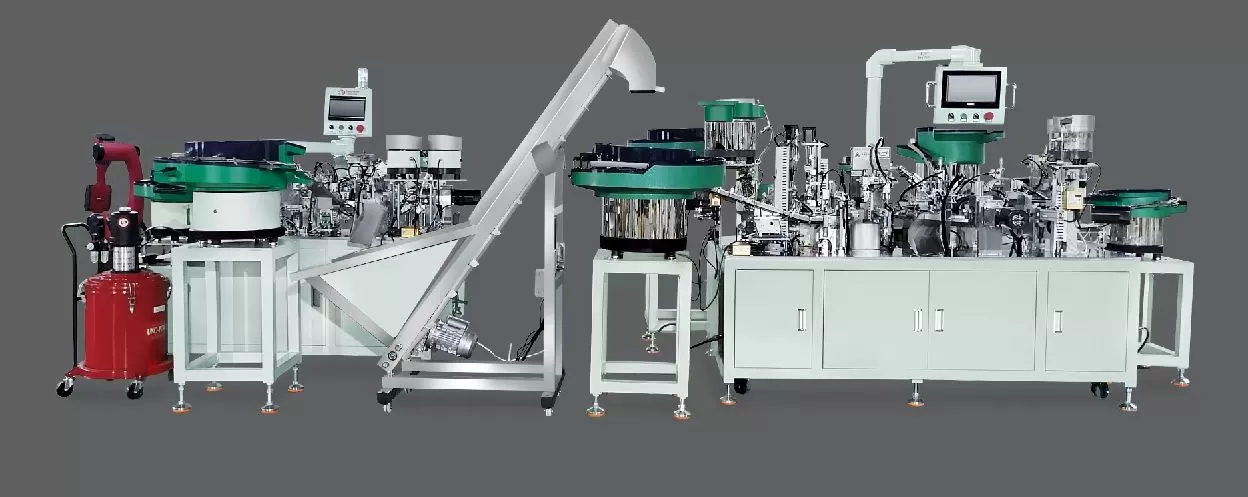
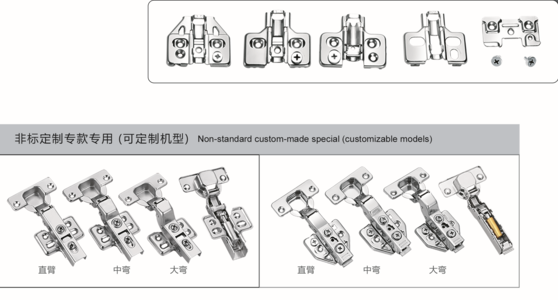
In the competitive landscape of hinge manufacturing, Jieyang has emerged as a global hub for producing high-quality, cost-effective hardware components. As demand for precision-engineered hinges grows across industries like furniture, automotive, and construction, manufacturers in this region face the dual challenge of scaling production while maintaining profitability. Traditional assembly methods, often reliant on manual labor and outdated equipment, struggle to meet modern efficiency and cost standards. This is where 3D hinge assembly machines have become transformative, offering a compelling cost-effective advantage that redefines manufacturing operations. These advanced systems leverage cutting-edge automation and precision engineering to streamline production, reduce waste, and lower overall operational expenses, making them a critical investment for businesses aiming to stay ahead in today’s market.
Enhanced Production Efficiency: The Foundation of Cost Savings
At the core of the cost-effectiveness of 3D hinge assembly machines lies their ability to significantly boost production efficiency. Unlike manual assembly, which is constrained by human speed and stamina, these machines operate at consistent, high speeds without compromising precision. Equipped with computerized controls and robotic arms, they can complete complex hinge assembly tasks—such as aligning components, inserting pins, and testing functionality—in a fraction of the time required by traditional methods. This translates to a substantial increase in daily output, allowing manufacturers to meet larger order volumes without proportional increases in labor or energy costs. For example, a 3D hinge machine can process up to 5,000 units per day, compared to 1,500–2,000 units with manual labor, directly reducing the cost per unit produced. Faster production cycles also minimize downtime between orders, ensuring that the manufacturing line remains fully utilized, further optimizing resource allocation.
Reduced Labor Requirements: Minimizing Human Input in Assembly
Human labor has long been a significant cost driver in manufacturing, especially for repetitive tasks like hinge assembly. 3D hinge assembly machines address this by automating most assembly steps, thereby reducing the need for large workforces. While some initial setup and monitoring are still required, the number of operators needed is drastically lower—often just one or two staff members per machine, compared to three or more for manual lines. This reduction in labor costs manifests in several ways: lower wage expenses, reduced training time for new employees, and decreased risk of work-related injuries, which can lead to additional costs like compensation or absenteeism. Additionally, automation eliminates the variability in manual work, as machines perform tasks with consistent precision, reducing the need for constant supervision and quality control checks. Over time, these savings accumulate, making 3D hinge machines a financially attractive alternative to traditional manual production.
Improved Product Consistency: Avoiding Rework and Waste
Consistency is key to cost control in manufacturing, and 3D hinge assembly machines excel here. By using pre-programmed parameters and real-time feedback systems, these machines ensure that every hinge meets strict quality standards, leaving little room for human error. This results in fewer defective products, which not only reduces the need for rework but also lowers material waste. In manual assembly, inconsistencies in component placement or pressure application can lead to hinges that fail durability tests or require adjustments, leading to scrap materials and additional labor hours. 3D machines, however, maintain tight tolerances, ensuring that each hinge is identical in dimensions and performance. This not only cuts down on waste but also streamlines quality control processes, as the need for frequent inspections is reduced. For manufacturers, the ability to produce consistent, high-quality hinges directly translates to lower operational costs and a stronger market reputation for reliability.
Long-Term Cost Optimization: Durability and Low Maintenance
Investing in 3D hinge assembly machines also delivers long-term cost savings through their durability and low maintenance requirements. Built with robust materials and advanced engineering, these machines are designed to withstand the rigors of continuous production, with minimal wear and tear. High-quality components, such as precision bearings and corrosion-resistant parts, ensure that the machines have a longer lifespan compared to older, less sophisticated equipment. This extended durability means fewer replacement costs over time, as the need for frequent repairs or part replacements is significantly reduced. Additionally, modern 3D hinge machines often feature user-friendly interfaces and self-diagnostic tools, making maintenance tasks easier and quicker to perform. Routine checks, such as lubrication or sensor calibration, can be done in-house with minimal technical expertise, avoiding expensive service calls from third-party vendors. Together, these factors contribute to a lower total cost of ownership (TCO), making 3D hinge machines a cost-effective choice even over extended periods.
Quick Return on Investment: The Financial Impact of Adoption
Perhaps the most compelling cost-effective advantage of 3D hinge assembly machines is their rapid return on investment (ROI). While the upfront cost of purchasing an automated machine may seem higher than that of manual tools, the savings generated over time quickly offset this initial expenditure. By increasing production speed, reducing labor costs, minimizing waste, and extending equipment life, these machines generate consistent cost savings that add up rapidly. For example, a manufacturer that previously spent $50,000 annually on manual labor for hinge assembly could reduce this cost by $15,000–$20,000 per machine within the first year, depending on production volume. When combined with increased output and reduced waste, the ROI for a 3D hinge machine can often be achieved within 6–12 months, depending on the scale of production. This quick payback period makes the machines an attractive investment for businesses looking to improve their bottom line without long-term financial risk.
For businesses operating in Jieyang’s hinge manufacturing sector, adopting 3D hinge assembly machines represents a strategic move toward sustainable cost optimization. Sanyhore, a leading manufacturer of hinge assembly machines, telescopic drawer slide assembly machines, and roll forming machines, specializes in delivering reliable, high-performance equipment tailored to meet the unique needs of modern production lines. With a focus on precision, efficiency, and durability, our machines are designed to help manufacturers reduce operational costs while enhancing product quality. To learn more about how 3D hinge assembly machines can transform your production processes, contact our sales manager at +86 13425506550 or email info@sanyhore.com for a personalized consultation.


