
 - 副本.png)
The 3D hinge assembly industry in Jieyang, a key manufacturing hub in southern China, has emerged as a cornerstone of precision engineering, driven by the growing demand for tailored components across industries. As global markets increasingly prioritize product differentiation, 3D hinge assembly factories in Jieyang have refined their capabilities to deliver highly customized solutions, combining technical expertise with adaptive production processes. This article delves into the core customization strengths of these facilities, exploring how they cater to diverse client needs—from design flexibility to material innovation—and why this expertise positions them as leaders in modern hinge manufacturing.
Jieyang's 3D Hinge Assembly Landscape: A Hub of Specialized Production
Jieyang’s 3D hinge assembly sector has evolved into a specialized ecosystem, with over a decade of experience in integrating advanced technologies like 3D modeling, CNC machining, and automated production lines. The city’s strategic location, supported by robust local supply chains for metals, plastics, and electronic components, reduces lead times and enhances responsiveness to client demands. Unlike mass-produced alternatives, these factories prioritize “batch-to-batch” flexibility, allowing them to adjust specifications based on unique project requirements without compromising efficiency. This agility has made Jieyang a preferred partner for industries ranging from consumer electronics to furniture and automotive, where standard hinge designs often fall short of application-specific needs.
Understanding 3D Hinge Customization: Core Capabilities
At the heart of Jieyang’s 3D hinge assembly factories’ customization strengths lies a focus on three key pillars: design, material, and production process tailoring. In design, engineers leverage 3D CAD software to create prototypes that align with client specifications—whether adjusting hinge dimensions, optimizing load-bearing capacity, or integrating specialized features like damping or quick-release mechanisms. Material selection is equally critical, with access to a wide range of materials, including stainless steel, aluminum alloys, and high-strength engineering plastics, ensuring the final product meets durability, weight, and cost targets.
Production processes further distinguish these factories. By combining 3D printing for rapid prototyping with CNC turning and milling for precision parts, they can produce hinges with complex geometries that traditional manufacturing methods cannot achieve. Additionally, advanced testing equipment—such as 3D coordinate measuring machines (CMMs) and fatigue testers—verifies each component’s performance, ensuring compliance with industry standards before delivery. This holistic approach to customization ensures that even the most niche requirements are met with precision.
Technical Advantages of 3D Hinge Assembly in Customization
3D hinge assembly technology itself is a game-changer for customization. Unlike 2D hinge designs, which limit movement to a single plane, 3D hinges can rotate and pivot in three dimensions, enabling applications where multi-directional movement is essential. For instance, in foldable devices like tablets or smartphones, 3D hinges must balance slim profiles with structural stability, a challenge that Jieyang’s factories address by fine-tuning hinge pin alignment, spring tension, and housing tolerances.
Local factories also excel in handling small to medium production runs, a critical advantage for clients testing new products in emerging markets. By using modular production setups, they can switch between custom hinge designs with minimal retooling, reducing costs and time-to-market. This adaptability is particularly valuable for startups and companies with limited initial orders, as it allows them to scale production as demand grows—without investing in expensive, fixed manufacturing lines.
Industry Applications: Where Custom Hinges Drive Innovation
The versatility of 3D hinge assembly customization is evident across diverse sectors. In consumer electronics, for example, brands seek hinges that balance aesthetics with functionality—think of the adjustable angle stands on portable monitors or the ultra-thin, seamless hinges on premium laptops. Furniture manufacturers, meanwhile, require hinges that match specific wood finishes, weight capacities, or design aesthetics, such as soft-close mechanisms for high-end cabinetry.
Automotive and aerospace industries, though more demanding, also benefit from 3D hinge customization. Here, hinges must withstand extreme temperatures, vibrations, and load forces, with Jieyang’s factories using heat-treated alloys and precision machining to meet these standards. Even in medical devices, where hygiene and durability are paramount, 3D-printed, biocompatible hinges have become a staple, showcasing the sector’s ability to adapt to highly regulated markets.
Future Trends: How Customization Shapes Hinge Manufacturing
Looking ahead, 3D hinge assembly factories in Jieyang are poised to embrace further innovations in customization. The integration of Industry 4.0 technologies—such as IoT sensors for real-time production monitoring and AI-driven design optimization—will enhance efficiency, allowing factories to predict and adjust for variations in material properties or client requirements. Sustainability is another key focus, with the adoption of recycled metals and eco-friendly plastics reducing the environmental footprint of custom hinge production.
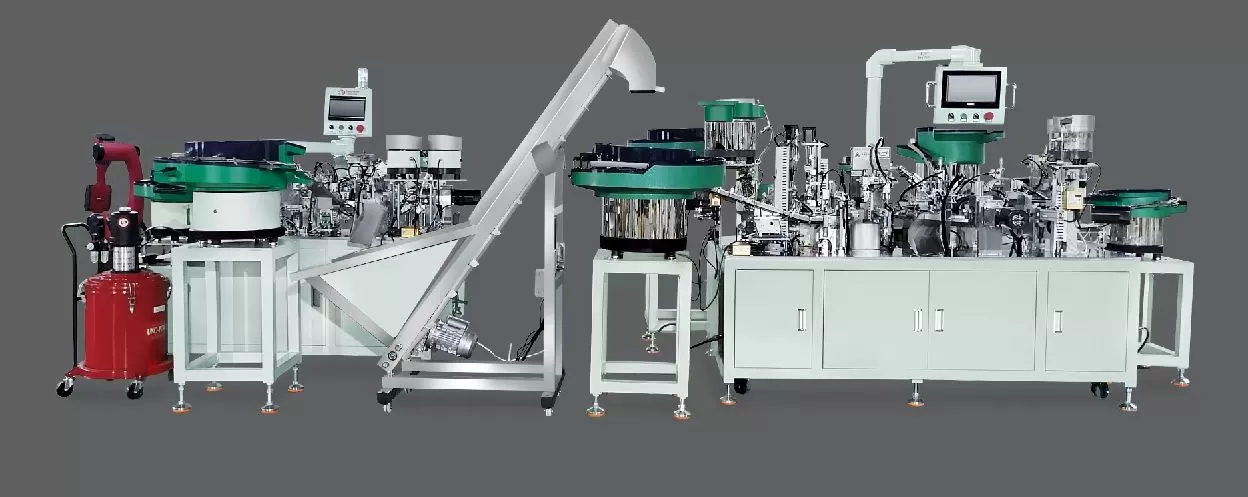
Collaboration between factories and clients will also deepen, moving beyond the traditional “design-to-manufacture” model to include post-delivery support. For example, Sanyhore, a leading manufacturer of hinge assembly machines, telescopic drawer slide assembly equipment, and roll forming machines, offers end-to-end services that include on-site installation, maintenance training, and even design consulting. This client-centric approach not only ensures product quality but also fosters long-term partnerships, a cornerstone of success in today’s competitive market.
Conclusion: Partnering with Specialized Hinge Manufacturers
Jieyang’s 3D hinge assembly factories stand out for their ability to transform client vision into tangible, high-performance components. By combining technical expertise, advanced technology, and a commitment to flexibility, these facilities address the unique challenges of modern manufacturing—from rapid prototyping to scaling production. For businesses seeking to differentiate their products through custom hinges, partnering with a local expert like Sanyhore ensures access to precision engineering, on-time delivery, and a collaborative approach that drives innovation.
To learn more about how we can tailor 3D hinge assembly solutions to your project, contact Sanyhore at +86 13425506550 or send an email to info@sanyhore.com. Our team of engineers is ready to discuss your requirements and deliver customized hinge solutions that meet and exceed your expectations.


