

.png)
Hydraulic technology has emerged as a game-changer in hinge manufacturing, redefining efficiency, precision, and scalability in production processes. From small-scale workshops to large industrial facilities, the integration of hydraulic systems has transformed how hinges are designed, assembled, and produced, setting new standards for quality and productivity. Unlike traditional mechanical or manual methods, modern hydraulic machinery leverages fluid power to deliver consistent force application, rapid response, and tight dimensional control—key factors driving the industry’s shift toward advanced manufacturing.
The Shift to Hydraulic Systems in Hinge Production
Hinge manufacturing historically relied on mechanical presses or manual labor, which often struggled with variable force distribution, slow cycle times, and limited adaptability to complex designs. Hydraulic systems address these challenges by using controlled fluid pressure to generate force, enabling precise movement and force adjustment. This transition began in the early 2010s, accelerated by advancements in hydraulic components (e.g., high-pressure pumps, servo-valves) and the need for higher output in the furniture, automotive, and construction sectors. Today, most leading hinge producers integrate hydraulic systems into their production lines, prioritizing reliability and performance.
Key Advantages of Hydraulic Hinge Manufacturing
Hydraulic machinery offers three core benefits that traditional methods cannot match. First, precision: Hydraulic systems provide force control within ±0.01mm tolerance, ensuring consistent dimensions across thousands of units. This eliminates the “hit-or-miss” inconsistency of mechanical presses, reducing the need for post-production adjustments. Second, efficiency: Hydraulic cycles are 20–30% faster than mechanical alternatives, with some systems operating at 100+ strokes per minute, significantly boosting daily output. Third, versatility: Modern hydraulic machines can accommodate diverse hinge types—from small cabinet hinges to large automotive door hinges—by adjusting pressure, stroke length, and tooling, reducing the need for multiple machines.
Precision and Consistency: Hydraulic Technology at Work
At the heart of hydraulic hinge manufacturing is the ability to maintain tight control over critical parameters. Advanced systems use closed-loop feedback, where pressure sensors and position transducers continuously monitor and adjust force during assembly. For example, when attaching hinge leaves to a base plate, the hydraulic press applies just enough force to create a secure, uniform joint without damaging the material. This level of precision is critical in high-stakes applications, such as aerospace or medical hinges, where reliability directly impacts product safety. Even complex designs with intricate curves or multiple components are produced with minimal variation, ensuring each hinge meets strict industry standards.
Scaling Production with Hydraulic Machinery
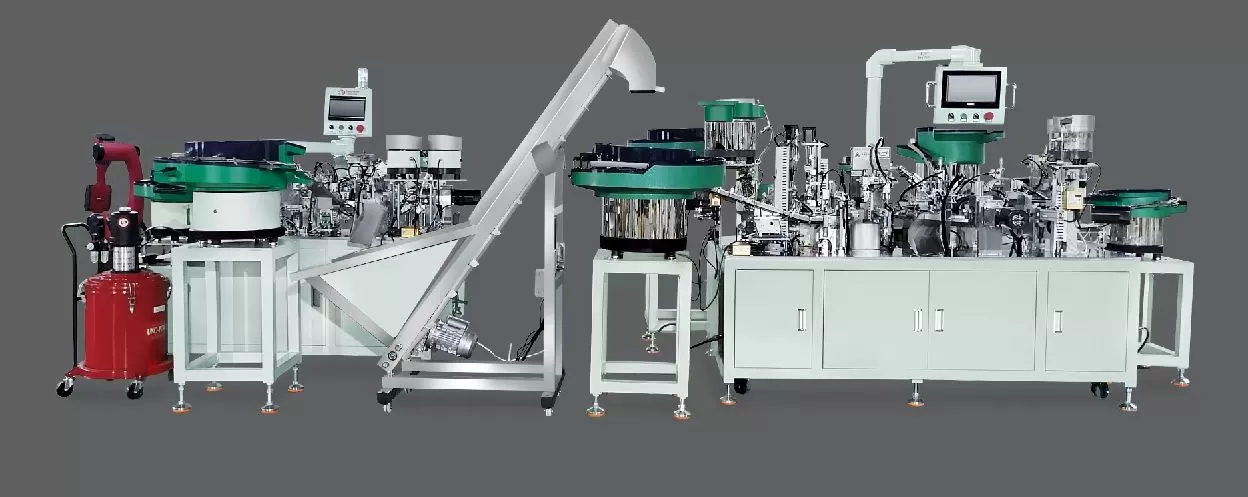
Hydraulic systems are integral to scaling hinge production without sacrificing quality. Unlike manual operations, which require significant labor, hydraulic machines can be integrated into automated lines with robotic arms, vision systems, and conveyor belts. This setup enables 24/7 operation, with minimal human intervention. For instance, a manufacturer producing 100,000 hinges daily can deploy a multi-station hydraulic assembly machine that handles feeding, positioning, and crimping in one seamless process. Sanyhore, a trusted provider of hydraulic machinery, offers tailored solutions—including hinge assembly machines, telescopic drawer slide assembly machines, and roll forming machines—engineered to scale with production demands, from small batches to high-volume runs.
Future Trends: Hydraulic Innovation in Hinge Manufacturing
The future of hydraulic hinge manufacturing lies in智能化 (intelligence) and sustainability. Smart hydraulic systems, equipped with IoT sensors, will collect real-time data on machine performance, enabling predictive maintenance and reducing downtime. Additionally, energy-efficient hydraulic designs—using low-flow pumps and regenerative circuits—will align with global sustainability goals, lowering operational costs. As materials like lightweight alloys and composites gain traction, hydraulic machines will need to adapt to new force requirements, further pushing the boundaries of precision and adaptability.
Partnering with Sanyhore for Hydraulic Hinge Solutions
For manufacturers ready to embrace the hydraulic revolution, Sanyhore delivers cutting-edge machinery designed for durability and performance. Our hinge assembly machines integrate advanced hydraulic systems to ensure precision and efficiency, while telescopic drawer slide assembly machines and roll forming machines offer specialized solutions for complementary components. With a focus on customization, Sanyhore works closely with clients to match equipment to their unique production needs, from material type to output volume.
To learn more about how hydraulic technology can transform your hinge manufacturing line, contact our team today. Call +86 13425506550 or email info@sanyhore.com for a free consultation and discover how precision, efficiency, and scalability can be achieved with industry-leading hydraulic machinery.
Common SEO Questions & Answers
1. Q: What makes hydraulic hinge manufacturing machines superior to traditional methods?
A: Hydraulic systems offer higher precision (±0.01mm tolerance), faster cycle times (30% faster than mechanical), and better force control, reducing waste by 25–30%. They also adapt to diverse hinge designs, making them ideal for both small and large production runs.
2. Q: Does Sanyhore provide custom hydraulic machines for specialized hinge production?
A: Yes. Sanyhore specializes in tailored solutions, including custom hinge assembly machines, telescopic drawer slide assembly machines, and roll forming machines, designed to match specific requirements like material type, output, or component complexity.
3. Q: How do hydraulic roll forming machines improve hinge part quality?
A: Hydraulic roll forming ensures uniform material deformation, creating high-strength, dimensionally stable parts. It supports continuous production, works with materials like steel and aluminum, and minimizes manual errors, boosting overall part consistency.
4. Q: Can Sanyhore’s hydraulic machinery integrate with existing production lines?
A: Absolutely. Sanyhore’s machines are engineered for seamless integration, with options for automation, connectivity, and compatibility with existing systems, making the transition to hydraulic manufacturing smooth and cost-effective.
5. Q: What support does Sanyhore offer for hydraulic machine maintenance?
A: Sanyhore provides comprehensive post-purchase support, including maintenance guidance, spare parts supply, and technical assistance, ensuring optimal performance and minimal downtime for your hydraulic machinery.


