

The Engineering Marvel: The Science of Automatic Soft-Closing Slide Production
In modern manufacturing, the demand for seamless, quiet, and durable sliding mechanisms has driven innovations in automatic soft-closing slide production. From kitchen cabinets to office furniture, these devices rely on a blend of material science, precision engineering, and advanced automation to deliver the "soft close" experience—eliminating slamming sounds and reducing wear on components. Understanding the science behind this process not only reveals the complexity of the final product but also highlights the expertise required to mass-produce such components reliably.
Material Science: The Foundation of Soft Closure Performance
The journey of an automatic soft-closing slide begins with material selection, a critical step that directly impacts performance and longevity. Damping elements, often made from specialized polymers like polyurethane or silicone, form the core of the soft-close mechanism. These materials must exhibit high elasticity and energy absorption properties to slow down the slide during closure without compromising durability. Complementary structural components, such as cold-rolled steel alloys, are chosen for their tensile strength and dimensional stability, ensuring the slide maintains its shape even after thousands of cycles. For instance, the hinge components in these slides require a balance between flexibility (to allow rotation) and rigidity (to withstand repeated stress), a challenge solved through tailored material compositions and heat treatment processes.
Precision Mechanical Design: Engineering the Soft-Close Mechanism
Beyond materials, the mechanical design of the slide is a masterpiece of miniaturized engineering. At the heart of the soft-close function lies a micro-mechanical buffer system, typically consisting of a spring-loaded piston and a damping chamber. When the slide is closed, the piston compresses the air or fluid inside the chamber, creating resistance that gradually decelerates the motion. The geometry of this chamber—including the size of the orifice and the viscosity of the damping fluid—is meticulously calculated to ensure a smooth, controlled closure, with closure speeds adjusted to eliminate both slamming and excessive delay. Additionally, telescopic drawer slides, a common application, require nested rails with precisely machined ball bearings to reduce friction, while maintaining alignment under load. These components, often produced via roll forming machines, undergo tight tolerances to ensure seamless interaction between moving parts.
Sensory Integration: The Brain of the Production Line
Modern automatic soft-closing slide production relies on advanced sensors to maintain consistency. Proximity sensors, such as inductive or capacitive types, monitor the position of the slide during assembly, ensuring that each component is correctly aligned before final integration. For example, during hinge assembly, a laser sensor measures the gap between the hinge and the slide rail, adjusting the robotic arm’s movement to within 0.02mm precision. This level of accuracy is critical because misalignment can lead to uneven closure forces or premature wear. Similarly, vision systems inspect the surface finish of roll-formed slide rails, detecting imperfections like burrs or warpage that could affect soft-close performance. These sensors, combined with real-time data processing, enable the production line to adapt to minor variations in raw materials, ensuring every slide meets quality standards.
Automation Systems: Streamlining Production with Intelligence
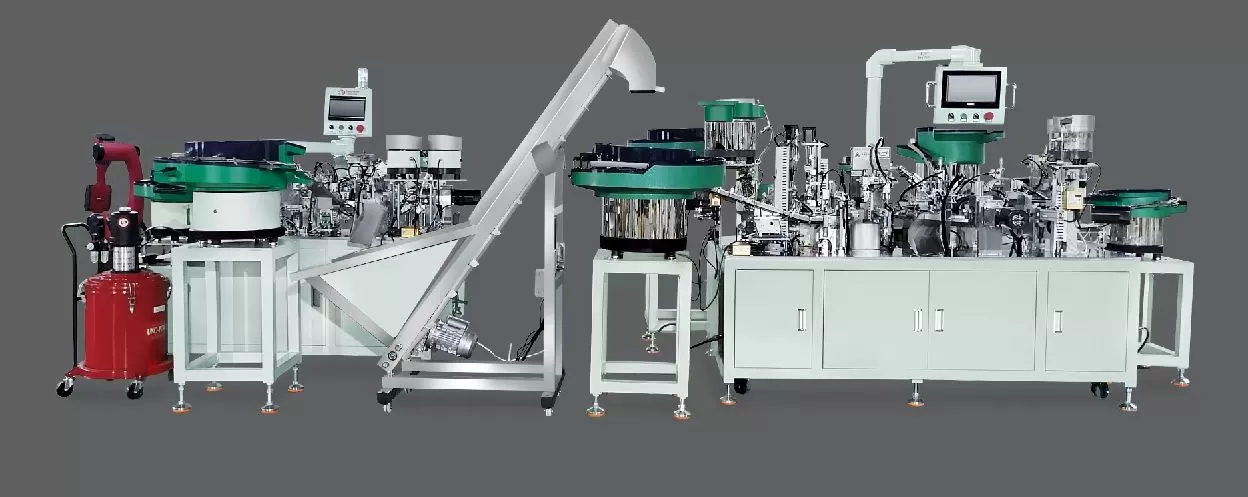
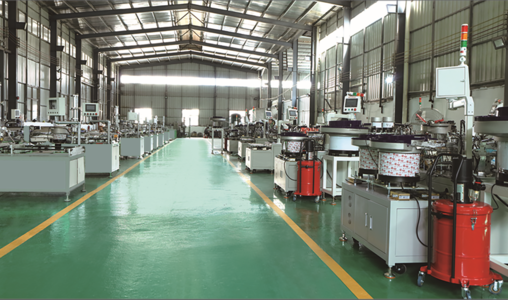
The transition from manual to automated production has revolutionized soft-close slide manufacturing, increasing efficiency while reducing human error. Robotic arms, guided by pre-programmed algorithms, handle tasks such as loading raw materials, assembling hinges, and integrating damping components. For instance, a single robot can perform 20+ operations per minute, from deburring metal parts to inserting the damping mechanism into the slide rail. The integration of conveyor systems and modular workstations further optimizes workflow, with each station dedicated to a specific task—material cutting, forming, assembly, or testing. Sanyhore’s telescopic drawer slide assembly machines, for example, combine these automation elements with custom software to synchronize all production steps, ensuring that each slide adheres to strict quality benchmarks. This level of automation not only boosts output but also maintains consistency across large production runs, a key advantage for industries requiring uniform performance.
Quality Control: Ensuring Reliability in Every Slide
Reliability is non-negotiable for soft-closing slides, which are often subjected to daily use. Quality control protocols in production include rigorous testing: each slide undergoes 10,000+ closure cycles to simulate long-term use, with sensors measuring closure force and deceleration to ensure they stay within specified ranges. Temperature and humidity chambers test slides under extreme conditions, verifying that the soft-close function remains effective in both hot and cold environments. Additionally, non-destructive testing methods, such as ultrasonic inspection, check for internal defects in the damping chambers or hinge joints, preventing failures in the field. By combining automated testing with manual verification, manufacturers ensure that only slides meeting strict criteria proceed to market, a practice that Sanyhore prioritizes in its production of hinge assembly machines and roll forming machines.
The Future of Automatic Slide Production
As consumer demand for smarter, more sustainable products grows, the science of automatic soft-closing slide production continues to evolve. Innovations in smart materials, such as shape-memory alloys for adaptive damping, and AI-driven predictive maintenance in production lines are pushing the boundaries of performance and efficiency. For businesses seeking to integrate these advanced slides into their products, partnering with a manufacturer with expertise in both production technology and component design is key. Sanyhore, a leader in hinge assembly machine, telescopic drawer slide assembly machine, and roll forming machine production, combines decades of engineering experience with cutting-edge automation to deliver slides that set industry standards.
Whether you’re manufacturing furniture, automotive parts, or industrial equipment, the quality of your sliding mechanisms directly impacts user satisfaction. To learn how Sanyhore’s technology can elevate your production capabilities, contact our team today at +86 13425506550 or via email at info@sanyhore.com. Our experts are ready to discuss your specific needs and provide tailored solutions for automatic soft-closing slide production.
Common SEO Questions for Automatic Soft-Closing Slide Production
Q: What technology is used in automatic soft-closing slide production?
A: Precision engineering, material science, and sensor integration, including damping mechanisms and proximity sensors, are key technologies.
Q: How do hinge assembly machines contribute to soft-closing slide quality?
A: Hinge assembly machines ensure precise hinge alignment, critical for consistent soft-close performance and durability.
Q: What is the role of roll forming machines in slide production?
A: Roll forming machines shape metal sheets into high-strength, dimensionally stable slide rails, ideal for telescopic drawer slides.
Q: How do automated systems improve soft-closing slide production efficiency?
A: Robotic integration, conveyor systems, and real-time data processing reduce errors and increase output, meeting large-scale demand.
Q: What factors influence the soft-close performance of slides?
A: Material elasticity, damping fluid viscosity, and mechanical design precision directly impact closure smoothness and longevity.


