

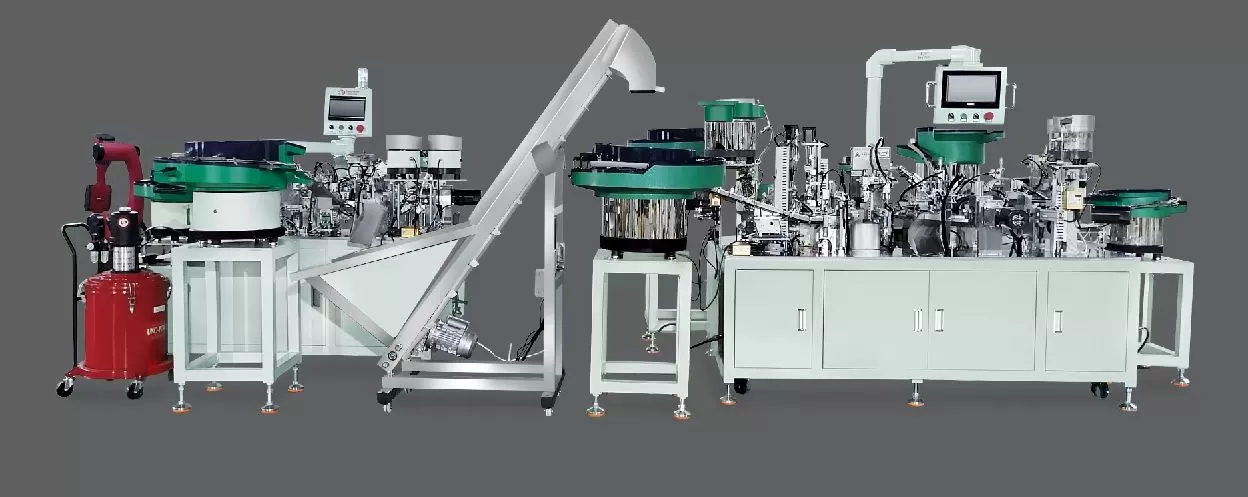
Drawer slides are more than just functional components—they are the backbone of seamless furniture movement, requiring meticulous engineering to balance strength, smoothness, and longevity. The manufacturing process behind a perfect drawer slide involves a blend of material science, precision engineering, and advanced technology, where even the smallest deviation can impact performance. This article delves into the scientific principles that underpin high-quality drawer slide production, from material selection to final quality control, and highlights how Sanyhore, a trusted manufacturer of hinge assembly machines, telescopic drawer slide assembly machines, and roll forming machines, applies these principles to deliver exceptional results.
Material Selection: The Foundation of Durability
The journey of a drawer slide begins with material choice, as the right material determines its load capacity, corrosion resistance, and fatigue life. Steel alloys, particularly high-carbon steels, are preferred for their strength-to-weight ratio, with some grades containing manganese or chromium to enhance wear resistance. Aluminum alloys, meanwhile, are favored for lightweight applications, offering good conductivity and formability. For precision, manufacturers rely on material testing: tensile strength measurements ensure the slide can withstand repeated use, while hardness tests (e.g., Rockwell or Vickers) verify resistance to deformation under load. Sanyhore’s roll forming machines, designed to shape metal sheets into slide rails, require consistent material thickness and composition, ensuring each component meets strict industry standards.
Precision Manufacturing: The Art of Shaping and Assembly
Once materials are selected, the manufacturing process shifts to precision shaping and assembly. Roll forming, a critical technique for producing slide rails, uses a series of dies to gradually bend and shape metal strips into the desired profile. This method ensures uniform thickness and structural integrity, with Sanyhore’s advanced roll forming machines incorporating computer-aided design (CAD) systems to optimize die geometry, reducing material waste and enhancing slide smoothness. For complex telescopic slides, CNC (Computer Numerical Control) machining is employed to create dovetail or ball-bearing tracks, where each cut is controlled to within 0.01mm precision. Hinge assembly, another key step, involves aligning components with sub-millimeter accuracy to prevent jamming—Sanyhore’s hinge assembly machines integrate vision systems to check alignment, ensuring each hinge rotates smoothly under thousands of test cycles.
Quality Control: Ensuring Reliability at Every Stage
Quality control is non-negotiable in drawer slide manufacturing, with rigorous testing verifying performance before the final product leaves the factory. Dynamic fatigue testing simulates years of use by repeatedly opening and closing the slide under maximum load, measuring displacement and force to ensure it meets minimum lifespan requirements (often 10,000+ cycles). Load capacity tests check if the slide can bear its rated weight without permanent deformation, while corrosion resistance tests expose samples to salt雾 or humidity chambers to mimic real-world environments. Sanyhore’s in-house labs employ automated inspection tools, including coordinate measuring machines (CMMs) and optical comparators, to validate dimensions, ensuring every slide meets exacting tolerances. This commitment to quality has made our machines a preferred choice for furniture manufacturers and OEMs worldwide.
Design Optimization: Balancing Form and Function
The science of drawer slides also encompasses design optimization, where engineers balance aesthetics, functionality, and cost. For example, the “soft-close” feature, now standard in premium slides, relies on阻尼 systems (oil or air) to decelerate movement, reducing noise and impact. Sanyhore’s telescopic slide assembly machines support such innovations by integrating modular components, allowing customization of stroke length, load capacity, and damping mechanisms. Human factors engineering plays a role too: the slide’s grip and resistance are calibrated to feel natural, with tests measuring user effort during opening, ensuring it requires minimal force while remaining stable. These design tweaks, rooted in ergonomic principles, transform a functional part into a seamless user experience.
Innovation and Future Trends in Slide Manufacturing
As industries evolve, drawer slide manufacturing is embracing sustainability and smart technology. Eco-friendly materials, such as recycled steel or plant-based lubricants, are being adopted to reduce environmental impact, while IoT integration is emerging—some slides now include sensors to monitor usage and alert users to wear. Sanyhore, as a forward-thinking manufacturer, is at the forefront of these trends, continuously upgrading its hinge assembly machines and roll forming systems to support these innovations. Our telescopic slide production lines, for instance, are designed with modular tooling, enabling quick adaptation to new material types or design specs, ensuring our clients stay ahead in a competitive market.
Behind every perfect drawer slide lies a complex interplay of science, precision, and technology. From material science to automated quality control, Sanyhore’s expertise in hinge assembly machines, telescopic drawer slide assembly machines, and roll forming machines ensures that each component meets the highest standards. Whether you’re manufacturing furniture, appliances, or industrial equipment, our machines deliver the reliability and performance you need. Contact Sanyhore today to explore how our advanced manufacturing solutions can elevate your production: +86 13425506550, info@sanyhore.com.


