

In today’s competitive manufacturing landscape, hinge production demands more than just skilled labor and traditional equipment. It requires a strategic shift toward automation to meet the rising expectations of speed, precision, and scalability. As hinge components become smaller, more intricate, and subject to tighter quality standards, manual production methods often fall short of delivering consistent results. This is where automation emerges as an indispensable tool, redefining how modern hinge manufacturers operate, compete, and grow. From reducing operational costs to enhancing product reliability, automation addresses the core challenges of contemporary hinge manufacturing, making it not just a choice but a necessity for staying ahead in the industry.
Enhancing Production Throughput with Automated Systems
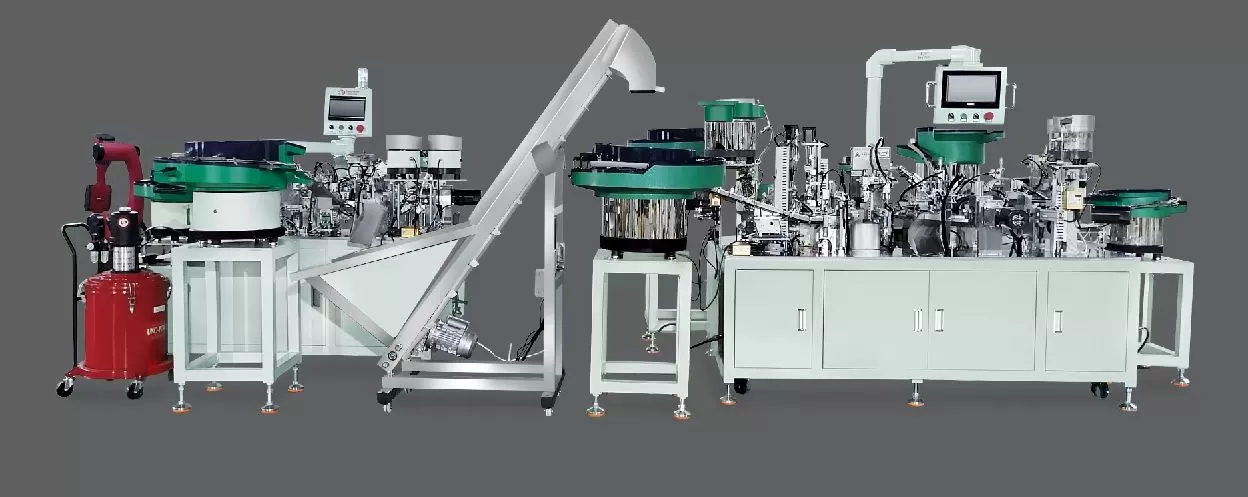
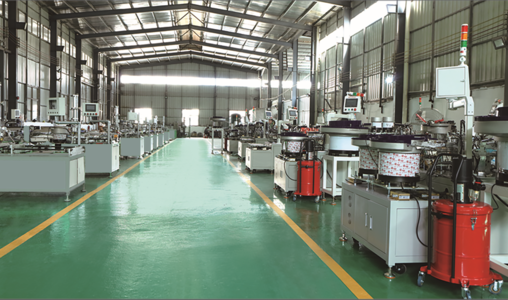
Automation in hinge manufacturing begins with optimizing production flow. Traditional manual assembly relies on repetitive, human-driven tasks—from feeding raw materials to aligning components and applying fasteners—which are inherently slow and prone to bottlenecks. Automated systems, such as specialized hinge assembly machines, eliminate these inefficiencies by operating at consistent, high speeds. These machines are engineered to handle the precise movements required for hinge components, whether it’s aligning tiny pins with millimetric accuracy or crimping delicate loops. By integrating conveyor systems, robotic arms, and computerized control units, automated lines can process hundreds of hinges per hour, significantly reducing cycle times and boosting overall throughput. This not only meets tight order deadlines but also allows manufacturers to scale production without proportional increases in labor or floor space.
Ensuring Uncompromising Quality and Consistency
Hinges are critical components in furniture, automotive, and construction, where performance and durability directly impact end-user satisfaction. Manual assembly introduces variability: human fatigue, distraction, or inconsistent technique can lead to misaligned parts, uneven pressure application, or incomplete fasteners—all of which compromise hinge functionality. Automation mitigates these risks by leveraging pre-programmed precision. Modern hinge assembly machines use sensors and feedback loops to monitor every step of the process, from material placement to final inspection. For example, vision systems can detect even the smallest deviations in component dimensions, while force sensors ensure consistent torque during fastening. This level of control ensures that every hinge produced meets strict tolerances, reducing defects and rework. As a result, manufacturers can build a reputation for reliable, high-quality products, strengthening customer trust and loyalty.
Reducing Labor Costs and Operational Risks
The manufacturing industry faces ongoing pressure to cut costs while maintaining productivity. Manual hinge production requires a large workforce, with employees spending hours on repetitive tasks that offer little value addition. This not only inflates labor expenses but also increases the risk of workplace injuries, such as repetitive strain injuries or accidents involving heavy machinery. Automation replaces these manual roles with machines that operate 24/7 with minimal human oversight. By investing in automated solutions like hinge assembly machines, telescopic drawer slide assembly machines, and roll forming machines, manufacturers can reduce reliance on large manual teams. While initial equipment costs represent a significant investment, the long-term savings—from lower labor bills to reduced waste—quickly offset this outlay. Additionally, automation minimizes human exposure to hazardous tasks, creating safer work environments and reducing workers’ compensation claims.
Adapting to Diverse Market Demands with Flexibility
Today’s hinge market demands versatility: customers increasingly seek custom designs, from small residential hinges to heavy-duty industrial ones, and require rapid order fulfillment. Traditional production lines, with their fixed setups and manual adjustments, struggle to adapt to these diverse needs. Automation, however, offers unmatched flexibility. Modern automated systems can be reconfigured quickly to accommodate different hinge types, sizes, and materials. For instance, Sanyhore’s advanced hinge assembly machines are designed with modular components, allowing manufacturers to switch between product variants in minutes rather than hours. This agility enables manufacturers to respond to market trends, test new designs, and take on small-batch custom orders without disrupting production. By embracing automation, hinge manufacturers can stay competitive in a market driven by personalization and speed.
Meeting the Scalability Challenges of Modern Production
As global demand for hinges grows—driven by expansion in furniture, automotive, and construction sectors—manufacturers must scale production to meet rising orders. Manual lines hit a ceiling in scalability: increasing output requires adding more workers, which is costly and inefficient, or investing in new, non-automated equipment that lacks precision. Automation, by contrast, scales seamlessly. Automated production lines can be expanded by adding more machines, integrating new software, or upgrading existing systems to handle higher volumes. For example, Sanyhore’s roll forming machines, which shape metal strips into hinge components, are designed to scale with minimal downtime, ensuring consistent production even at peak capacity. This scalability is critical for manufacturers aiming to enter new markets, partner with large clients, or maintain a competitive edge in a growing industry.
The Future of Hinge Manufacturing Lies in Automation
Automation is no longer a luxury but a necessity for modern hinge manufacturing. It addresses the industry’s key pain points—low efficiency, inconsistent quality, high labor costs, and limited flexibility—while enabling manufacturers to meet the demands of a fast-paced market. As a trusted provider of advanced hinge assembly machines, telescopic drawer slide assembly machines, and roll forming machines, Sanyhore is at the forefront of this transformation. Our automated solutions are engineered to enhance productivity, ensure quality, and adapt to evolving needs, empowering hinge manufacturers to thrive in today’s competitive landscape.
If you’re ready to elevate your hinge production, contact Sanyhore today. Our team of experts is available to discuss how our automation systems can optimize your operations. Reach out at +86 13425506550 or via email at info@sanyhore.com to explore tailored solutions for your manufacturing needs.


