Why Hydraulic Automation Matters in Manufacturing

2025-12-10


Hydraulic automation has emerged as a cornerstone of modern manufacturing, redefining how industries optimize production processes. Unlike traditional mechanical or manual methods, hydraulic systems leverage fluid power to deliver controlled, consistent motion, making them indispensable for meeting today’s high demands for speed, accuracy, and reliability. In an era where manufacturing competitiveness hinges on operational excellence, understanding why hydraulic automation matters is key to staying ahead in a rapidly evolving market.

Enhanced Production Efficiency: The Core Advantage

At the heart of hydraulic automation lies its ability to significantly boost production efficiency. Hydraulic systems operate with minimal energy loss, converting power into force with remarkable speed and consistency. This translates to shorter cycle times, allowing manufacturers to produce more units within the same timeframe. For instance, a hydraulic press can achieve the same force as a much larger mechanical press in a fraction of the time, reducing overall production duration. This efficiency is particularly critical in high-volume manufacturing, where even small improvements in cycle time directly impact output and profitability.

Superior Product Quality: Consistency and Precision

Precision is non-negotiable in modern manufacturing, especially for components that demand tight tolerances. Hydraulic automation excels here, as hydraulic systems provide smooth, controlled force application, eliminating the variability often associated with manual or mechanical processes. Unlike mechanical systems that may experience backlash or sudden force spikes, hydraulic systems maintain consistent pressure throughout operations, ensuring each product meets exact specifications. This level of precision reduces defects, minimizes rework, and enhances product reliability, which is vital for industries like automotive and aerospace where product integrity directly impacts safety.

Improved Workplace Safety: Reducing Human Error Risks

Human intervention in high-stakes manufacturing processes poses inherent risks, from repetitive strain injuries to accidents involving heavy machinery. Hydraulic automation mitigates these risks by reducing the need for manual handling of heavy loads or direct exposure to moving parts. By automating tasks such as clamping, pressing, or assembly, manufacturers can create safer work environments. Additionally, hydraulic systems often include safety features like overload protection and emergency stop mechanisms, further enhancing operator well-being. This not only complies with strict safety regulations but also fosters a more productive workforce, as employees are less prone to injuries and fatigue.

Cost Optimization: Long-Term Savings Overhead

While initial investment in hydraulic automation may seem significant, the long-term cost savings far outweigh upfront expenses. Hydraulic systems are known for their durability and low maintenance requirements compared to many mechanical alternatives. Their sealed design reduces wear and tear from dust, debris, and environmental factors, extending equipment lifespan and lowering repair costs. Moreover, reduced material waste due to precision and minimized energy consumption contribute to lower operational overhead. Over time, these savings add up, making hydraulic automation a cost-effective choice for manufacturers aiming to improve their bottom line.

Flexibility for Diverse Production Needs

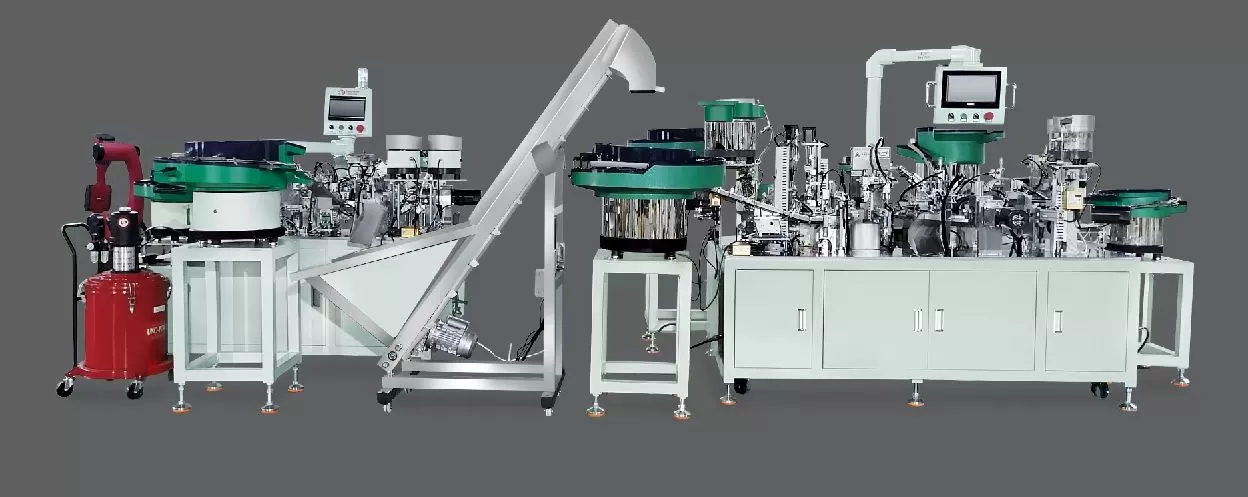
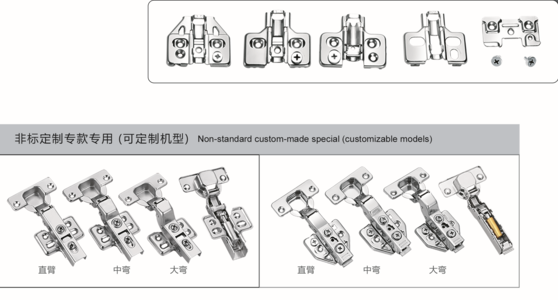
Modern manufacturers often face the challenge of adapting to diverse product demands and frequent production changes. Hydraulic automation offers the flexibility to adjust parameters quickly, such as pressure, speed, and force, without extensive retooling. This adaptability is particularly valuable for producing custom or niche components, as hydraulic systems can be reprogrammed or adjusted to accommodate different part sizes and materials. For example, a hydraulic assembly machine can seamlessly switch between assembling small hinges and large telescopic drawer slides, ensuring manufacturers can respond to market demands efficiently and maintain a competitive edge.

As a leading manufacturer specializing in hinge assembly machines, telescopic drawer slide assembly machines, and roll forming machines, Sanyhore understands the transformative impact of hydraulic automation. Our equipment integrates advanced hydraulic systems to deliver the efficiency, precision, and safety that modern manufacturing requires. Whether you’re looking to upgrade your production line or optimize existing operations, Sanyhore’s solutions are designed to meet your unique needs. Contact us today at +86 13425506550 or via email at info@sanyhore.com to explore how hydraulic automation can elevate your manufacturing processes.

We use cookie to improve your online experience. By continuing to browse this website, you agree to our use of cookie.

Cookies

Please read our Terms and Conditions and this Policy before accessing or using our Services. If you cannot agree with this Policy or the Terms and Conditions, please do not access or use our Services. If you are located in a jurisdiction outside the European Economic Area, by using our Services, you accept the Terms and Conditions and accept our privacy practices described in this Policy.
We may modify this Policy at any time, without prior notice, and changes may apply to any Personal Information we already hold about you, as well as any new Personal Information collected after the Policy is modified. If we make changes, we will notify you by revising the date at the top of this Policy. We will provide you with advanced notice if we make any material changes to how we collect, use or disclose your Personal Information that impact your rights under this Policy. If you are located in a jurisdiction other than the European Economic Area, the United Kingdom or Switzerland (collectively “European Countries”), your continued access or use of our Services after receiving the notice of changes, constitutes your acknowledgement that you accept the updated Policy. In addition, we may provide you with real time disclosures or additional information about the Personal Information handling practices of specific parts of our Services. Such notices may supplement this Policy or provide you with additional choices about how we process your Personal Information.


Cookies

Cookies are small text files stored on your device when you access most Websites on the internet or open certain emails. Among other things, Cookies allow a Website to recognize your device and remember if you've been to the Website before. Examples of information collected by Cookies include your browser type and the address of the Website from which you arrived at our Website as well as IP address and clickstream behavior (that is the pages you view and the links you click).We use the term cookie to refer to Cookies and technologies that perform a similar function to Cookies (e.g., tags, pixels, web beacons, etc.). Cookies can be read by the originating Website on each subsequent visit and by any other Website that recognizes the cookie. The Website uses Cookies in order to make the Website easier to use, to support a better user experience, including the provision of information and functionality to you, as well as to provide us with information about how the Website is used so that we can make sure it is as up to date, relevant, and error free as we can. Cookies on the Website We use Cookies to personalize your experience when you visit the Site, uniquely identify your computer for security purposes, and enable us and our third-party service providers to serve ads on our behalf across the internet.

We classify Cookies in the following categories:
 ●  Strictly Necessary Cookies
 ●  Performance Cookies
 ●  Functional Cookies
 ●  Targeting Cookies


Cookie List
A cookie is a small piece of data (text file) that a website – when visited by a user – asks your browser to store on your device in order to remember information about you, such as your language preference or login information. Those cookies are set by us and called first-party cookies. We also use third-party cookies – which are cookies from a domain different than the domain of the website you are visiting – for our advertising and marketing efforts. More specifically, we use cookies and other tracking technologies for the following purposes:

Strictly Necessary Cookies
These cookies are necessary for the website to function and cannot be switched off in our systems. They are usually only set in response to actions made by you which amount to a request for services, such as setting your privacy preferences, logging in or filling in forms. You can set your browser to block or alert you about these cookies, but some parts of the site will not then work. These cookies do not store any personally identifiable information.

Functional Cookies
These cookies enable the website to provide enhanced functionality and personalisation. They may be set by us or by third party providers whose services we have added to our pages. If you do not allow these cookies then some or all of these services may not function properly.

Performance Cookies
These cookies allow us to count visits and traffic sources so we can measure and improve the performance of our site. They help us to know which pages are the most and least popular and see how visitors move around the site. All information these cookies collect is aggregated and therefore anonymous. If you do not allow these cookies we will not know when you have visited our site, and will not be able to monitor its performance.

Targeting Cookies
These cookies may be set through our site by our advertising partners. They may be used by those companies to build a profile of your interests and show you relevant adverts on other sites. They do not store directly personal information, but are based on uniquely identifying your browser and internet device. If you do not allow these cookies, you will experience less targeted advertising.

How To Turn Off Cookies
You can choose to restrict or block Cookies through your browser settings at any time. Please note that certain Cookies may be set as soon as you visit the Website, but you can remove them using your browser settings. However, please be aware that restricting or blocking Cookies set on the Website may impact the functionality or performance of the Website or prevent you from using certain services provided through the Website. It will also affect our ability to update the Website to cater for user preferences and improve performance. Cookies within Mobile Applications

We only use Strictly Necessary Cookies on our mobile applications. These Cookies are critical to the functionality of our applications, so if you block or delete these Cookies you may not be able to use the application. These Cookies are not shared with any other application on your mobile device. We never use the Cookies from the mobile application to store personal information about you.

If you have questions or concerns regarding any information in this Privacy Policy, please contact us by email at . You can also contact us via our customer service at our Site.